
Video ad creative testing: How growth teams make, test and scale AI video ad variations in 2026
Make variations from one directed master, test one change at a time, and let a metric chosen before launch decide.
Book a discovery callTry the test calculator
Platform rules and figures checked on 19 November 2026; sources numbered at the end.
The short answer
Creative testing runs two or more versions of a video ad under the same conditions to learn which works better, and why. Change one thing per test, decide the metric before launch, and give each ad set enough budget to reach the platform’s learning threshold: on Meta, about 50 results in a week 1. AI makes the variations cheap; it does not choose the hypothesis or read the result.
- Test one variable at a time: the hook, the message, the format, the messenger or the offer 4.
- Run each test for at least 7 days; Meta allows up to 30, TikTok up to 60 424.
- Fund every ad set to about 50 results a week, or it stays in Meta’s learning phase 1.
- Retire a version when its cost per result reaches twice your past ads: Meta calls that creative fatigue 7.
- Label realistic AI people and voices: TikTok rejects undisclosed AI content, and EU disclosure rules apply from 2 August 2026 2336.
What is video ad creative testing?
Two or more versions of one ad, the same conditions, one question.
Creative testing means running two or more versions of a video ad against each other under the same conditions (the same audience, placements, dates and budget) to learn which one does the job better, and why. The “why” is the point: a test that only picks a winner teaches nothing for the next ad, while a test built on one clear question tells the team what to make next.
Meta describes its own A/B test the same way: each version is shown to a segment of the audience, nobody sees both, and the test decides which one performs best on cost per result 3. Meta also advises against testing informally, by turning ad sets on and off by hand, because audiences overlap and the results become unreliable 3.
The loop below is the whole method in five steps. Choose a platform to see what changes on Meta, TikTok and YouTube.
- Briefone hypothesis, one variable
- Makethe variations, in batches
- Launcha fair test, same audience and budget
- Readthe metric chosen before launch
- Iteratekeep, kill, or make the next test
The creative test loop, platform by platform
- Format
- 9:16 for Stories and Reels; 1:1 or 4:5 in Feed9:16 recommended, at least 540×9609:16 for Shorts; 16:9 in-stream
- Length
- Shorter wins on mobile; 5–10 s for conversion tests5–60 s; 9–15 s recommended (reservation in-feed)Shorts: under 60 s; 10–30 s for action ads
- First seconds
- Motion in the first 3 s; the hook decides 3-second playsOpen on the product or the problemThe skip button appears after 5 s
- Judge it by
- Cost per result, with a confidence percentageA split test with at least 80% testing powerConclusive at 95% confidence in a video experiment
- AI label
- “AI info” on ads made with AI tools; political ads must discloseAIGC label or your own clear disclaimer, or the ad is rejectedDisclose realistic synthetic content; election ads tick a box
Every rule and figure is sourced at the end of the guide.
Why does creative carry more weight now?
The platforms automate the targeting; the ad is the variable a team still controls.
- 50results an ad set usually needs in the week after its last significant edit to leave Meta’s learning phase 1
- 17%higher rate of conversion lift for Meta campaigns that ran video and still images than for still images alone 6
- 30%lift in short-term sales likelihood for ads that followed Google’s ABCDs, in a Kantar study of 11,000 ads 32
- 6%more conversions per dollar for Demand Gen advertisers using video and images than images alone, per Google 31
Meta has said the focus has shifted “from niche targeting to creative diversification as the best lever” 19, and the automated campaign tools on all three platforms (Advantage+ creative on Meta, Smart+ on TikTok, Demand Gen on Google) ask for several creatives and choose among them for each viewer 142531. When the machine picks the audience, the brief, the hook and the film are where a growth team still makes the decisions that matter.
The figures above come from the platforms’ own research and rules. They describe averages across many advertisers, not a promise for any one account, so compare every result with your own baseline.
Brief: what should one test try to prove?
One hypothesis, written down before anything is made.
A creative test plan on one page
Test name: [concept]_[variable]_[yyyy-mm-dd]
Hypothesis: Opening on [A] will beat opening on [B],
  measured by [cost per result].
Variable (one only): hook / message / format / messenger / offer
Held constant: audience, placements, dates, landing page, budget split
Versions: A (control) ____  B ____  C ____
Decision metric: [chosen before launch]
Duration: at least 7 days (Meta allows up to 30, TikTok up to 60)
Volume: about 50 results per ad set a week on Meta
Budget: ____ (Meta’s creative test: at most 20% of the campaign)
AI disclosure: none / platform label / own disclaimer
Result: winner, margin, confidence shown by the platform
Next test: what the result suggests
Paste it into the brief or the ticket, and fill it in before production starts.
One hypothesis
A test that changes the opening, the offer and the music at once can tell you that version B won, but not which change did it. Meta’s own guidance is to test one variable and to state a measurable hypothesis, such as “my cost per result will be lower when I optimize for landing page views” 4. For creative, write it the same way: “Opening on the problem will beat opening on the product, measured by cost per result.”
Five things worth testing
- The hook
- The first seconds: the problem, the product, a person, the result, a question.
- The message
- Which benefit or objection the ad leads with.
- The format
- Vertical or square, short or long, captions styled one way or another.
- The messenger
- A creator, the founder, a voice-over, no voice at all.
- The offer and the call to action
- What you ask the viewer to do, and how it is said.
What stays the same
Everything else: the audience, the placements, the dates, the landing page and an even budget. Meta recommends an audience large enough for the test that no other campaign is using at the same time, because overlapping audiences can cause delivery problems and contaminate the result 4.
The metric, decided first
Choose the metric that decides the test, and the result you will act on, in the brief. Meta calls a winner by comparing the cost per result of the event chosen when the test was created, and simulates the possible outcomes tens of thousands of times to give a confidence percentage 5. Deciding afterwards turns a test into an argument.
Why keep testing at all?
“Testing new creative and marketing strategies is essential for improving your performance over time.”
Make: how many variations should you produce?
As many as the test can judge, and no more.
Every testing tool sets a ceiling. Meta’s creative testing tool in Ads Manager compares two to five ads at a time, with some accounts now seeing up to ten, according to Jon Loomer’s reading of the tool 2021. A Meta A/B test compares two versions 3. Google’s basic video experiment has two arms, and a custom experiment up to ten 29. A batch that fits the tool is a batch that will actually be read.
Budget sets the other ceiling. Meta says ad sets leave the learning phase after about 50 results in the week after their last significant edit, that editing during learning resets it, and that many ads and ad sets teach the system less about each one 1. “Running too many ads at the same time” is one of the causes Meta lists for an ad set stuck in “learning limited” 2. The calculator further down turns your budget into the number of variations it can carry.
Build from one master
Make variations the way an editor makes cut-downs: one directed master film, then the parts that change. One concept with three openings in two aspect ratios is already six ads. Google’s ABCDs are a good checklist for each one: get to the story fast with tight framing, show the brand early and throughout, focus the message, and end on a clear call to action that a voice-over repeats 32.
Where AI helps, and where it does not
- It multiplies the parts that change: openings, backgrounds, product angles, voices, languages, aspect ratios.
- It does not choose the hypothesis. A hundred variations of a weak idea test the wrong thing a hundred times.
- It does not replace a real customer. A generated person shown as a customer is a fake testimonial, whatever the platform’s label says.

Which hooks are worth testing first?
Each kind of opening tests a different idea about what stops a viewer.
Tests whether the pain is enough
The problem first
Open on the moment the viewer recognises: the mess, the wait, the error, before the brand appears.
Tests whether the product is enough
The product first
The product in use in the first second. Asks whether the thing itself is the hook.
Tests whether a face holds
A person speaks
A creator, the founder or an actor talks to camera. Never present a generated person as a customer.
Tests whether the payoff sells
The result first
Start at the end (the finished room, the clean report, the outcome), then show how.
Tests whether curiosity holds
A question
A question the viewer wants answered, put in the first line on screen and in the voice-over.
Meta’s “basic” video
A still that moves
Animate one or two elements of a still image in the first 3 seconds; keep the benefit or the brand still 6.
Meta’s “benefit” video
The benefit, animated
Animate the benefit, a promotion or an offer in the first 3 seconds 6.
Meta’s “demo” video
A demonstration
Show the app, the site or the product doing its job 6.
For conversion tests Meta suggests building the basic, brand and benefit versions from the same base photo, keeping the videos short (ideally 5 to 10 seconds), promoting a single benefit and ending on a call to action with a consistent end card 6. Remember the loop: on Facebook, videos up to 30 seconds replay, and on Instagram every video loops while it is on screen, so the last frame leads straight back into the hook 13.
There is no universal winning hook. Test the families against each other first, then variations inside the family that wins, and write every hook to work with the sound off: the first line on screen has to carry it on its own.
How many variations can your budget test?
Put in your weekly testing budget and the cost per result you aim for.
Creative test calculator
It divides your weekly testing budget by your target cost per result, then by the results an ad set needs to leave Meta’s learning phase (about 50 a week 1), to show how many ad sets, and so how many variations, the budget can carry at once.
The result
A planning aid, not a forecast: real results vary by account, audience and season. Meta also suggests choosing a more frequent optimization event when an ad set cannot reach about 50 2.
Worked example: a team that spends $15,000 a week (an illustration)
- Weekly ad spend
- $15,000
- Into creative tests (Meta suggests at most 20%) 20
- $3,000
- Target cost per result
- $30
- Results a week ($3,000 ÷ $30)
- 100
- Ad sets that can reach about 50 results 1
- 2
- Variations at once, three per ad set
- 6
- Weeks to test 12 openings
- 2
Round numbers chosen to show the arithmetic, not results from a campaign.
The same budget, as a three-week plan
Week 1: the hooks
Six openings on the same master body, in two ad sets of three: problem-first against product-first families. Decision metric: cost per result.
Week 2: the body
The winning opening in front of three bodies or offers, against the week-1 winner as the control.
Week 3: the format
The winning cut in vertical, square and a shorter length; move budget to the winner in steps and log what was learned.
Launch: how do you run a fair test?
Same audience, same budget, same dates; only the creative changes.
How each platform runs a creative testChecked 19 Nov 2026
| Platform | The tool | Versions | How long | How the winner is called |
|---|---|---|---|---|
| Meta | An A/B test in Ads Manager or Experiments; the creative testing tool inside a campaign | Two in an A/B test; two to five (some accounts ten) in the creative test | At least 7 days, up to 30 | Cost per result, with a confidence percentage from simulated outcomes 5 |
| TikTok | Split test | Test groups with large differences in one variable | At least 7 days, up to 60 | A budget that gives at least 80% estimated testing power 24 |
| YouTube (Google Ads) | Video experiment | Two arms (basic), up to ten (custom) | Set when the experiment is created | Directional at 70% or 80% confidence, conclusive at 95% 29 |
| Demand Gen (Google Ads) | A/B experiment | Two arms by default, up to ten | Until results come in | At least 50 conversions per arm with conversion bidding; a 50% split recommended 30 |
Sources: Meta Business Help Center 345, Jon Loomer Digital on the creative testing tool 2021, TikTok Ads Help 24, Google Ads Help 2930.
Meta recommends putting no more than 20% of a campaign’s budget into its creative test, so the rest keeps running on what already works 20. If your customers usually take more than a week to convert, run the test longer than 7 days; Meta gives 10 days as its example 4.
Do not judge a test on its first days. During the learning phase, Meta says, ad sets are less stable and usually have a higher cost per acquisition, and editing them resets the learning 1.

Read: which metrics show a video ad works?
Read them in the order a viewer meets the ad: stop, stay, act, cost.
A high hook rate with no sales means the opening works and the rest does not; strong sales from a weak hook means a better opening could scale the ad. Read the funnel in order, and let only the metric chosen in the brief decide the test.
Some of these are platform metrics with official definitions; hook rate and hold rate are working formulas that growth teams build from them. Compare every version with your own baseline, not with someone else’s benchmark: what counts as good depends on your product, your price and your audience.
The metrics that read a video ad testFormulas
| Metric | Formula | What it tells you |
|---|---|---|
| Hook rate (thumb-stop) | 3-second video plays ÷ impressions | Whether the opening stops the scroll. Meta counts a 3-second play at 3 seconds, or at 97% of a shorter video, and excludes replays 9. |
| Hold rate | ThruPlays ÷ 3-second video plays | Whether viewers stay. A ThruPlay is 15 seconds watched, or 97% of a shorter video; a 6-second ThruPlay goal also exists 10. |
| Click-through rate (CTR) | Link clicks ÷ impressions | Whether the ad made people want more. |
| Cost per result (CPA) | Spend ÷ results | The number that decides most tests; Meta calls A/B winners on it 5. |
| Return on ad spend (ROAS) | Purchase value ÷ spend | Whether the sales pay for the ads, for shops that track purchase value. |
| Frequency | Impressions ÷ reach | How often the same people saw the ad. If performance drops as frequency rises, Meta says the audience may be tiring of it 8. |
| CPM | Spend ÷ impressions × 1,000 | What attention costs; useful when two versions end up buying different audiences. |
| A YouTube view | 30 seconds watched, the whole ad if shorter, or an interaction | What you pay for with cost-per-view bidding; viewers can skip after 5 seconds 27. |
Hook rate and hold rate are working formulas built from Meta’s metrics, not metrics Meta reports under those names.
Iterate: when do you keep, kill or scale?
Decide by the rule written in the brief, not by one bad day.
Keep
the winner
It beat the control on the decision metric, after the time and budget set in the brief.
- Then
- Build the next test from it: new openings on the winning body, or a new body behind the winning opening.
Kill
the losers
Only once the test has had its full run; results during learning are less stable 1.
- Then
- Write down why it lost: the hook, the hold or the offer.
Scale
in steps
Move budget to the winner gradually and watch cost per result against your baseline.
- Why
- Frequent budget changes can send an ad set back into learning 1.
Retire
on fatigue
When cost per result climbs for a version that used to win, the audience has seen it too often.
- Meta’s line
- “Creative fatigue” at twice the cost per result of your past ads 7.
The signs of creative fatigue
- Meta flags it in the Delivery column for ad sets that run a single creative. “Creative limited” means cost per result is above your past ads but less than double; “Creative fatigue” means double or more. Meta counts every recent exposure of the image or video, including other campaigns from your Page 7.
- Frequency rises while results fall. Meta’s advice: if performance drops as frequency rises, change the creative or the targeting 8.
- The hook rate slips on the same audience. The opening no longer stops people who have already seen it.
- The fix Meta suggests is a new ad with a materially different image or video, a wider audience, or Advantage+ creative 7.
- Keep a log of every test: the hypothesis, the versions, the result. After a quarter it is the most useful brief the team has.
What do platform AI tools do for testing?
Advantage+, Smart+ and Demand Gen test for you, but not one variable at a time.
Meta
- Advantage+ creative
- Optimises images and videos into versions people are more likely to interact with. Video enhancements include music, video effects, subtitles, translations and touch-ups, several of them made with generative AI; they vary by who sees the ad, and some are on by default 14.
- Flexible format
- Several images, videos and texts in one ad, and the delivery system chooses the format; for sales and app promotion campaigns 15. Ads Manager accepts up to 10 images or videos for a single ad 11.
- Dynamic creative
- Delivers different combinations of an ad’s assets to find the best one for each impression; one ad per ad set 16.
For a clean test of one variable, turn off the enhancements that change that variable, or run an A/B test in which both versions get the same settings.
TikTok
- Smart+
- One flow with full, partial or manual control, for traffic, sales, lead generation and app promotion. Each ad takes up to 50 creative assets; the best combinations of video and text are delivered automatically, and reporting breaks down by creative 25.
- Symphony
- Recommended Creatives generates videos with scripts, voice-overs and virtual avatars for Smart+ web campaigns; Automatic Enhancements resize, translate and dub in over 50 languages; an auto-add switch refreshes creatives to help with fatigue 26.
- Split test
- One variable per test, at least 7 days, and a budget that gives at least 80% estimated testing power 24.
Use Smart+ to find combinations that work, and a split test to learn why they work.
- Demand Gen
- At least three images or videos in each aspect ratio (vertical, square, landscape) in every ad group; advertisers running video and images saw 6% more conversions per dollar than image-only advertisers, per Google 31.
- A/B experiments
- Test creatives, audiences, product feeds or bidding; split 50/50; at least 50 conversions per arm with conversion-based bidding 30.
- Video experiments
- Two arms for a creative-only test, up to ten in a custom one; directional results at 70% or 80% confidence, conclusive at 95% 29.
Check the segment-by-format report (Shorts, in-stream, in-feed) before calling a winner: an asset can win on one surface and lose on another 31.
What formats and lengths does each platform want?
Make the master vertical and cut the rest from it.
Every figure below comes from the platforms’ own help pages. The limits are generous (a Facebook Feed video can run for hours), but Meta itself notes that shorter videos are usually more engaging on mobile 12. Plan the cuts from the test, not from the maximum.
What AI video ads cost on each platformWhat a TikTok ad costs to produce
Video ad specs by placementChecked 19 Nov 2026
| Placement | Aspect ratio | Length | Worth knowing |
|---|---|---|---|
| Meta Feed (Facebook, Instagram) | 1:1 and 4:5 supported | Facebook Feed up to 241 minutes; Instagram Feed up to 60 minutes | For conversion tests Meta suggests 5–10 seconds |
| Meta Stories, Status and Reels | 9:16 recommended | Facebook Stories 1–120 seconds; Instagram Stories up to 60 minutes | Facebook videos up to 30 s loop; Instagram videos always loop |
| TikTok in-feed (reservation) | 9:16 recommended, at least 540×960; 16:9 and 1:1 accepted | 5–60 s; 9–15 s recommended | Up to 500 MB; .mp4, .mov, .mpeg, .3gp |
| YouTube skippable in-stream | 16:9 | Skippable after 5 s | With cost-per-view bidding you pay at 30 s, the end of a shorter ad, or an interaction |
| YouTube Shorts | 9:16 best suited | Up to 3 minutes, only the first 60 s play in the feed; 10–30 s for action ads | Sound (music, voice-over or both) shown to lift conversions by over 20%, per Google |
| LinkedIn video ads | 4:5 recommended (720×900); 16:9, 1:1 and 9:16 accepted | 3 seconds to 30 minutes; 15–30 s recommended | MP4 up to 500 MB; captions as SRT; videos under 30 s loop to 30 s of playback |
Sources: Meta Business Help Center 1112136, TikTok Ads Help 22, Google Ads Help 2728, LinkedIn Help 35.

Do AI-made video ads need a label?
Often, and the rules differ by platform. Read them before the batch is made.
AI disclosure rules for video adsChecked 19 Nov 2026
| Where | What the rule says | What to do |
|---|---|---|
| Meta | Ads made or significantly edited with Meta’s generative AI tools carry “AI info”; a photorealistic person puts the label next to “Sponsored”. Since June 2026 Meta also labels ads it detects were made with third-party AI tools 17. Social issue, election and political ads must disclose realistic media that was digitally created or altered 18. | Expect the label on AI-made ads; tick the disclosure on any political or social issue ad. |
| TikTok | AI-generated or significantly edited ads are allowed if labelled, with the AIGC label or your own clear disclaimer, caption, watermark or sticker. Undisclosed AI content gets the ad rejected or restricted; no misuse of a public figure’s likeness and no false endorsements 23. | Turn on the AIGC label for realistic AI content. |
| YouTube and Google | Creators must disclose realistic altered or synthetic content; clearly unrealistic content and minor edits are exempt 33. Election ads with synthetic content that depicts real or realistic-looking people or events must tick “Altered or synthetic content” 34. | Disclose realistic AI people, places and events. |
| The EU | Article 50 of the AI Act applies from 2 August 2026: deployers must disclose deepfakes, and providers must mark synthetic output in a machine-readable way, with a grace period to December 2026 for systems already on the market 36. The lighter treatment of creative works has minimal scope in advertising 37. | Label photorealistic invented people and voices in ads shown in the EU. |
Before a batch goes live

How do teams scale production without losing quality?
Direct what carries the brand once; multiply what changes.
Separate what must be directed from what can be multiplied. The concept, the master film, the brand’s look and the voice are directed once, carefully. The openings, lengths, formats, languages and offers are produced in batches around them, by editors, creators or AI tools. A brand kit (logo rules, colour, type, the voice, music licensed for ads) keeps every maker on brand, and one naming scheme for files and ads keeps the results readable without a spreadsheet hunt.
Creators (UGC)
When the ad should look like a customer made it, and you need many faces and settings.
- Watch for
- The right to use each video in paid ads, and each platform’s rules on endorsements.
AI tools, in-house
When the team can direct and edit, and the variable is visual: backgrounds, products, angles, formats.
- Watch for
- Labels on realistic people and voices, and the editing time a skilled person still needs.
A studio
When the master film has to carry the brand, and the variations should come from a directed original.
- Watch for
- A fixed scope and the cuts the test needs, agreed in the brief.
How ArcaneWiz makes a master for testing
The brief
What the campaign has to prove, the platforms, and the variables the first tests will change.
The master
Daniel Atzil, a filmmaker with 20+ years in cinema, and his team direct the film that carries the brand.
The cuts
The openings, lengths and aspect ratios the test plan needs, made from the master.
Delivery
In 7–10 working days from an approved brief.
Projects start from $3,000 for a defined brief; our pricing page shows what each scope includes.
Should video ads run on connected TV?
When the goal is reach and the master can hold a big screen.
YouTube is the clearest example. In February 2025 YouTube’s CEO wrote that TV had become the primary device for YouTube viewing in the US, and that viewers were watching over 1 billion hours of YouTube on TVs a day, both as of December 2024 38. Google had introduced TV-first formats in 2023, including 30-second non-skippable ads and Pause experiences 39. LinkedIn also sells Connected TV ads, with their own specifications 35.
TV placements reward the opposite of a feed hook: a film that holds a seated viewer for its full length, in 16:9, with sound designed for a room. That is usually the master, not a cut-down, so deciding to run on TV is also a decision about how the master is made.

Which terms should a growth team share?
The words used in this guide, in the sense the platforms use them.
- Learning phase
- The period after a new ad set or a significant edit while Meta’s system learns how to deliver it; it usually ends after about 50 results in a week 1.
- Learning limited
- Meta’s status for an ad set unlikely to reach about 50 optimization events in the week after its last significant edit 2.
- Creative fatigue
- An audience has seen the same creative too often. Meta shows “Creative fatigue” when cost per result reaches twice that of your past ads, and “Creative limited” below that 7.
- 3-second video play
- A play of at least 3 seconds, or 97% of a shorter video, replays excluded 9.
- ThruPlay
- A play of 15 seconds, or 97% of a shorter video; Meta also offers a 6-second ThruPlay goal 10.
- Hook rate
- The share of impressions that watched the first seconds; usually 3-second plays ÷ impressions.
- Hold rate
- Of those who stopped, the share who stayed; usually ThruPlays ÷ 3-second plays.
- Frequency
- Impressions ÷ reach: the average number of times each person saw the ad 8.
- Holdout
- A group kept from seeing the ads, so a test can measure the incremental result, not only cost per result 5.
- Testing power
- The chance a test detects a real difference; TikTok recommends a split-test budget that gives at least 80% 24.
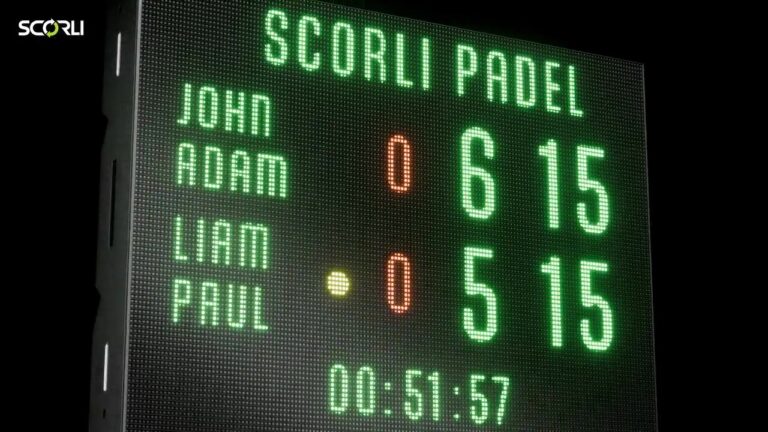
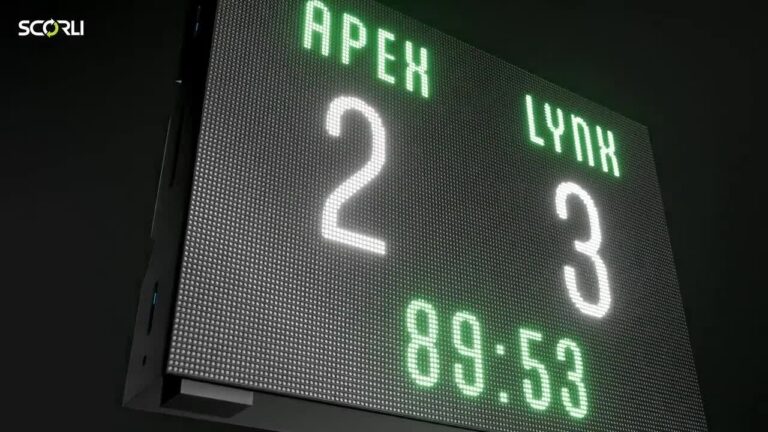
Frames from the studio’s films
Samsung, proteanTecs, Scorli and TRUE NORTH, directed by Daniel Atzil and his team.

Samsung Galaxy S25 
proteanTecs Scorli 
TRUE NORTH proteanTecs Scorli 
TRUE NORTH proteanTecs







Questions and answers: what else do growth teams ask about video ad testing?
What is creative testing in video advertising?
Running two or more versions of a video ad against each other under the same conditions (the same audience, placements, dates and budget) to learn which works better and why. Each test should change one thing, such as the hook or the offer, so the result tells the team what to make next.
How many ad variations should I test at once?
As many as the test and the budget can judge. Meta’s creative testing tool compares two to five ads (some accounts ten), and a Meta A/B test compares two. On Meta, every ad set also needs about 50 results a week to leave the learning phase, so a small budget carries fewer variations.
How much budget does a creative test need?
Enough for each ad set to reach the platform’s learning threshold: on Meta, about 50 results in the week after the last significant edit. Divide your weekly testing budget by your target cost per result to see how many ad sets that funds. Meta recommends at most 20% of a campaign’s budget for its creative test.
How long should a creative test run?
At least 7 days. Meta allows A/B tests of up to 30 days and suggests running longer, such as 10 days, when customers usually take more than a week to convert. TikTok recommends at least 7 days for a split test and allows up to 60.
What is a good hook rate?
There is no universal number. Hook rate is the share of impressions that watched the first seconds, usually 3-second video plays divided by impressions on Meta. Compare it with your own baseline for the same audience and placement, not with someone else’s benchmark.
Which metric should decide a creative test?
The one tied to the business result, chosen before launch: usually cost per result, such as cost per lead or per sale. Meta calls A/B test winners on cost per result. Hook rate, hold rate and click-through rate explain why a version won or lost.
What is creative fatigue, and how do I spot it?
An audience has seen the same ad too often and responds less. For ad sets that run a single creative, Meta flags it in the Delivery column: “Creative limited” when cost per result is above your past ads but under double, “Creative fatigue” at double or more. Rising frequency with falling results is the same warning in your own reports.
Should I use Advantage+ creative or a manual A/B test?
Both, for different questions. Advantage+ creative and similar tools adapt each ad per viewer to find what performs, which is good for scale. A manual A/B test with the same settings on both versions tells you why one version beats another. Turn off enhancements that change the variable you are testing.
When can viewers skip a YouTube ad?
Skippable in-stream ads can be skipped after 5 seconds. With cost-per-view bidding you pay when a viewer watches 30 seconds, or the whole ad if it is shorter, or interacts with it, whichever comes first. So the brand and the hook belong in the first 5 seconds, before the skip button appears.
How long should a TikTok ad be?
TikTok’s specification for reservation in-feed ads allows 5 to 60 seconds and recommends 9 to 15, in 9:16 at 540×960 or higher, up to 500 MB. Test a short and a longer cut of the same idea rather than assuming one length.
How long should a YouTube Shorts ad be?
Google recommends under 60 seconds, and 10 to 30 seconds for action-oriented ads. Shorts ads can run up to 3 minutes, but only the first 60 seconds play in the Shorts feed. Google also advises using sound: music, a voice-over or both.
Do AI-generated ads need a label on Meta?
Ads made or significantly edited with Meta’s own generative AI tools carry an “AI info” label, and since June 2026 Meta also labels ads it detects were made with third-party AI tools. Ads about social issues, elections or politics must disclose realistic media that was digitally created or altered.
Does TikTok allow AI-generated ads?
Yes, if they are labelled with TikTok’s AIGC label or a clear disclaimer of your own, such as a caption, watermark or sticker. Undisclosed AI content gets the ad rejected or restricted, and misusing a public figure’s likeness or implying a false endorsement is not allowed.
Does the EU AI Act apply to video ads?
Its transparency rules apply from 2 August 2026. Deployers must disclose deepfakes, including photorealistic invented people, and the lighter treatment for creative works has minimal scope in advertising. Any advertiser showing such ads in the EU should label them; check the details with a lawyer.
How do I know a test result is real, not noise?
Let the platform tell you. Meta gives A/B winners a confidence percentage from tens of thousands of simulated outcomes; Google calls video experiment results conclusive at 95% confidence; TikTok recommends a split-test budget with at least 80% testing power. A short test or too few results is the usual cause of a false winner.
Who should make the master film for ad testing?
Whoever can direct it to carry the brand. ArcaneWiz makes master films and the cuts a test needs: Daniel Atzil, a filmmaker with 20+ years in cinema, and his team, from $3,000 for a defined brief, delivered in 7–10 working days from an approved brief.
Sources
Read on 19 November 2026. Platform specs and policies change; check the platform’s help page before a batch goes into production.
- Meta Business Help Center, “About the learning phase for ad sets in Meta Ads Manager”
- Meta Business Help Center, “About learning limited”
- Meta Business Help Center, “About A/B testing for Meta Ads”
- Meta Business Help Center, “Best practices for A/B tests in Meta Ads Manager”
- Meta Business Help Center, “How winning campaigns are determined in A/B tests without a holdout”
- Meta Business Help Center, “Creative best practices for conversion testing”
- Meta Business Help Center, “About creative fatigue recommendations in Meta Ads Manager”
- Meta Business Help Center, “Frequency”
- Meta Business Help Center, “3-second video plays”
- Meta Business Help Center, “About ThruPlay”
- Meta Business Help Center, “Best practices for aspect ratios in Meta ads”
- Meta Business Help Center, “Video length specifications across placements in Ads Manager”
- Meta Business Help Center, “About video length and looping”
- Meta Business Help Center, “About Advantage+ creative”
- Meta for Developers, “Get started with the flexible ad format”
- Meta for Developers, “Dynamic Creative”
- Meta Newsroom, “Expanding GenAI Transparency for Meta’s Ads Products”
- Social Media Today, “Meta’s New Disclosure Requirements for Digitally Altered Ad Content Are Now in Effect”
- Social Media Today, “Meta Highlights Improving Performance of Its AI-Powered Ad Campaigns”
- Jon Loomer Digital, “Meta’s Creative Testing Tool: Setup, Strategy, and Results”
- Jon Loomer Digital, “Is Meta Expanding Creative Testing to 10 Ads?”
- TikTok Ads Help, “TikTok reservation in-feed ad specifications”
- TikTok Ads Help, “Misleading and false content”
- TikTok Ads Help, “Split Test best practices”
- TikTok Ads Help, “About upgrades to Smart+”
- TikTok for Business, “Symphony Automation” (7 October 2025)
- Google Ads Help, “Skippable in-stream ads”
- Google Ads Help, “Your guide to YouTube Shorts ads”
- Google Ads Help, “Create a video experiment”
- Google Ads Help, “Create A/B experiments for Demand Gen campaigns”
- Google Ads Help, “Creative Excellence Guide for Demand Gen campaigns”
- Google Business, “ABCDs of effective video ads”
- YouTube Help, “Disclosing use of altered or synthetic content”
- Google Ads policy, “Update to our policy on Disclosure requirements for synthetic content (July 2024)”
- LinkedIn Marketing Solutions Help, “Video ads advertising specifications”
- European Commission, “Quick facts: Transparency rules for AI systems”
- Travers Smith, “Is it a bot? EU AI Act transparency rules take effect 2 August 2026”
- YouTube Blog, “From the YouTube CEO: Our big bets for 2025” (11 February 2025)
- Google Blog, “YouTube is redesigning the streaming experience for viewers and advertisers” (2023)
Further reading on this site
Need a master film worth testing?
Tell Daniel Atzil and his team what the campaign has to prove. You get a fixed scope and a fixed price, from $3,000, and the cuts your test needs.