
The AI video generation market just got a lot more interesting. On April 10, 2026, Alibaba revealed that HappyHorse — the mysterious model that climbed to the top of blind-test rankings on Artificial Analysis — is part of Alibaba’s ATH AI Innovation Unit. Combined with Sora’s shutdown, Kling 3.0’s market dominance, and Google’s aggressive Veo 3.1 push, the competitive landscape has fundamentally shifted.
Here’s what it all means for brands and creators.
The HappyHorse Surprise: Alibaba’s Stealth Move
HappyHorse-1.0 didn’t arrive with a press conference or a splashy demo reel. It quietly climbed the ranks on Artificial Analysis’s blind-test benchmarking platform, beating established players in both text-to-video and image-to-video generation — all before anyone knew who was behind it.
The reveal came via a newly created X account on April 10, confirming Alibaba’s ownership and noting the project is “still under development.” That last detail is the important one: if HappyHorse is already topping benchmarks as a work-in-progress, what happens when it reaches production release?
For the AI video market, this signals that the race is far from over. Just when the industry seemed to be consolidating around four or five major players, a new contender emerged from one of the world’s largest tech companies.
Kling 3.0: The Value Play That’s Winning

While HappyHorse grabs headlines, Kling 3.0 has been quietly dominating the production market since its February 2026 release. Here’s why:
- Native 4K at $0.50 per clip — the best cost-to-quality ratio in the market
- Multi-Shot Storyboard — define an entire commercial sequence with individual prompts, camera angles, and transitions, generated as a coherent narrative in one batch
- 6-Axis Camera Control — the March 2026 Motion Control update gives creators precise directorial control over virtual camera movement
- Three major updates in three months (January: v2.6, February: v3.0, March: Motion Control) — a development velocity that competitors are struggling to match
For brands running high-volume content operations, Kling 3.0 has become the default workhorse. It’s not always the highest quality option for a single hero shot, but for producing dozens of variations at commercial quality, nothing else comes close on value. We’ve used Kling 3.0 extensively in our own production pipeline.
Veo 3.1: Google’s Ecosystem Play
Google isn’t trying to win on any single metric. Instead, Veo 3.1’s strategy is integration:
- Free access for all Google account holders via the upgraded Google Vids platform
- Synchronized audio generation — ambient sound, dialogue, and sound effects in a single pass
- 4K at 60fps — exceeding what Sora ever offered
- Veo 3.1 Lite — a $0.05/sec tier for 720p content, targeting the high-volume social media market
- AI avatars and custom music via Lyria — building a complete creative suite
The ecosystem play is significant because it lowers the barrier to entry for brands already in the Google workspace. When your video generation tool lives next to your Docs, Sheets, and Slides, adoption becomes frictionless. See how these platforms stack up in our industry comparison.
The Post-Sora Market Map
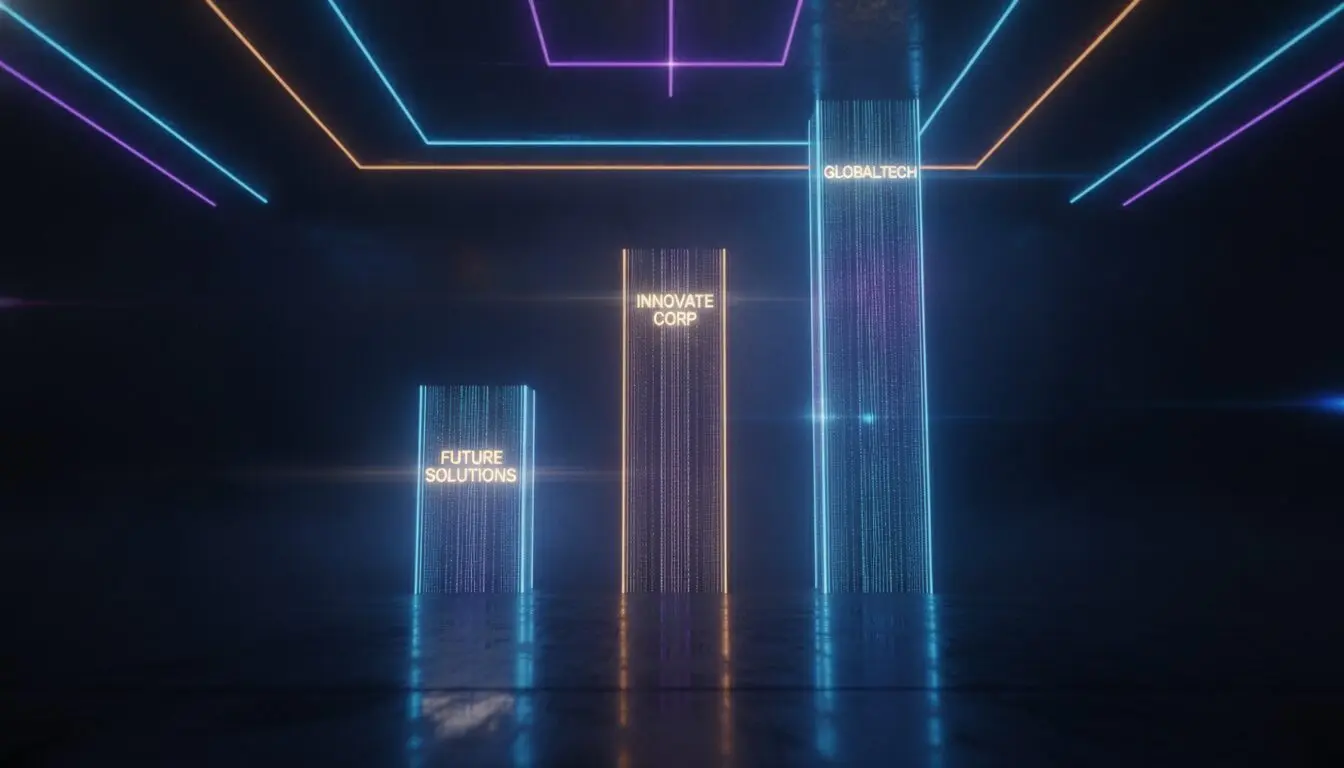
With Sora’s April 26 shutdown date looming, here’s how the market now looks:
| Tier | Leader | Strategy | Best For |
|---|---|---|---|
| Quality-First | Runway | Maximum fidelity | Premium brand campaigns |
| Cost-Efficiency | Kling 3.0 | Value at scale | High-volume content operations |
| Ecosystem | Google Veo 3.1 | Integration | Google-native teams |
| Multimodal | Seedance 2.0 | End-to-end commercial | Product-to-ad pipelines |
| Wildcard | HappyHorse | TBD | Watch this space |
| Open Source | Wan / Mochi | Customization | Technical teams, fine-tuning |
What Brands Should Do Right Now

1. Don’t bet on a single platform. The Sora shutdown proved that platform risk is real. Professional production teams — like ArcaneWiz — use multi-platform workflows precisely because the landscape shifts fast.
2. Watch HappyHorse closely. If Alibaba prices HappyHorse aggressively (and they will — it’s their playbook), it could reshape the cost-efficiency tier currently owned by Kling. Brands running large-scale content operations should monitor the production release timeline.
3. Leverage the audio revolution. A year ago, no major AI video model generated synchronized audio. Now four of six do. This changes the economics of commercial production dramatically — you can produce a rough cut with audio in a single generation pass, reducing post-production time by 40-60%.
4. Invest in creative direction, not tools. When Google is giving away 4K AI video generation for free, the tool itself has zero marginal cost. The value is entirely in the creative strategy, prompt engineering, and post-production expertise that transforms raw AI output into brand-building content. The comparison with traditional production makes this crystal clear.
Looking Ahead: Q2 2026 Predictions
Based on current trajectories, here’s what we expect in the coming months:
- HappyHorse production launch — likely with aggressive introductory pricing
- Kling 3.5 or 4.0 — Kuaishou’s three-month update cadence suggests a major release by May
- Consolidation of AI video aggregators — platforms bundling multiple models under unified APIs are growing rapidly
- First major brand backlash over undisclosed AI commercials — transparency will become table stakes, not optional
The AI video market in 2026 isn’t slowing down. If anything, the race is accelerating. And for brands, the message is clear: the tools are commoditizing. The strategy behind them is what matters.
Frequently Asked Questions
Why is Kling 3 dominating the AI video market in 2026?
Kling 3 leads in 2026 because it closed the gap on motion realism, character consistency, and shot-to-shot control that stalled earlier models — the exact things commercial work demands. But dominance on a leaderboard is not a moat for brands; the durable advantage is knowing how to direct any model. That is why creative direction is the new moat in AI video production.
What does Alibaba’s HappyHorse model mean for the AI video market?
HappyHorse signals that a major platform player will keep pushing frontier video models on a fast release cadence, which is good for buyers: more capability, falling costs, sharper competition. For marketing teams the takeaway is not to chase every launch but to work with a partner who tracks the field and picks the right engine per shot. See the best AI video tools for marketing teams.
How does Kling 3 compare to Veo and Sora for commercial use?
For commercial work Kling 3 currently leads on character consistency and controllable camera moves, Veo is strong on photoreal motion and lighting, and Sora trails on the frame-level control brand spots require. None wins every shot, so we select per shot rather than standardize. See how a Kling 3 broadcast-quality AI commercial comes together.
Which AI video models are gaining share in 2026?
Kling is taking the top slot, Veo holds strong on photoreal work, Seedance is rising for stylized and high-energy sequences, and Alibaba’s entrants are pressuring the leaders. Share shifts quarter to quarter, so the practical question is not which model wins but which partner can use all of them well. Start with the CMO AI video tools buying guide.
Will Kling 3’s dominance last past 2026?
Probably not unchallenged. Being honest: the leaderboard turns over fast, and a Veo or Seedance release could retake the top slot within a quarter. That is exactly why brands should not bet a production pipeline on one model — the winning strategy is a stack you can swap as engines leapfrog each other. Compare the field in the best AI video tools for marketing teams.
Should brands standardize on Kling 3 for AI commercial work?
Usually no — locking to one engine caps you at that model’s weak shots. That said, for a lean team wanting one predictable pipeline, standardizing does cut tooling and training overhead, and Kling 3 is a defensible default today. We prefer a multi-model approach with a single creative standard on top. See the CMO AI video tools buying guide.
How does Kling 3 pricing affect commercial production budgets?
Generation cost is a small line item next to direction, editorial, grading, and sound — the work that makes a spot broadcast-safe. Cheaper Kling 3 inference lowers the raw compute, but it does not change what a finished commercial costs, because craft and review drive the number. See how we structure it in AI commercial cost in 2026.
What does Kling 3’s dominance mean for ad agencies and their production stack?
It means the differentiator moves from who has model access — everyone will — to who can direct output into on-brand, broadcast-ready work fast. Agencies that treat models as interchangeable tools under a strong creative process win; those selling raw generations get commoditized. See how we deliver an AI commercial in 48 hours.
How does ArcaneWiz blend Kling 3, Veo, and Seedance in production?
We cast the model to the shot: Kling 3 for continuity and character-consistent action, Veo for photoreal hero motion, Seedance for stylized or high-energy cuts — all held to one look. Every generation is reviewed against a master reference by ArcaneWiz, led by Daniel Atzil (20+ years in cinematography and commercial direction). See a Kling 3 broadcast-quality AI commercial.
Do the geographic and IP constraints on Kling 3 raise compliance concerns for US/EU brands?
They can, and we treat it seriously. Model availability, training-data provenance, and commercial-use terms vary by engine and region, so for regulated or IP-sensitive brands we select models with clear commercial licensing and document the pipeline for legal review. It is a real diligence step, not a footnote. We fold that into scoping — see AI commercial cost in 2026.
Need help navigating the evolving AI video landscape? Talk to ArcaneWiz about building a future-proof AI video strategy for your brand.