
The Great Production Shift
For decades, professional video production followed the same formula: hire a crew, book a location, shoot for days, edit for weeks, and spend tens of thousands of dollars before a single frame goes live. In 2026, AI video production has fundamentally disrupted this model — and the numbers tell a compelling story.
This article breaks down the real-world differences between AI video production and traditional production across the metrics that matter most: cost, speed, quality, and scalability. Whether you’re a CMO evaluating production partners or a founder deciding where to invest your marketing budget, this comparison will give you the data you need.
Cost Comparison: Where the Savings Are Real

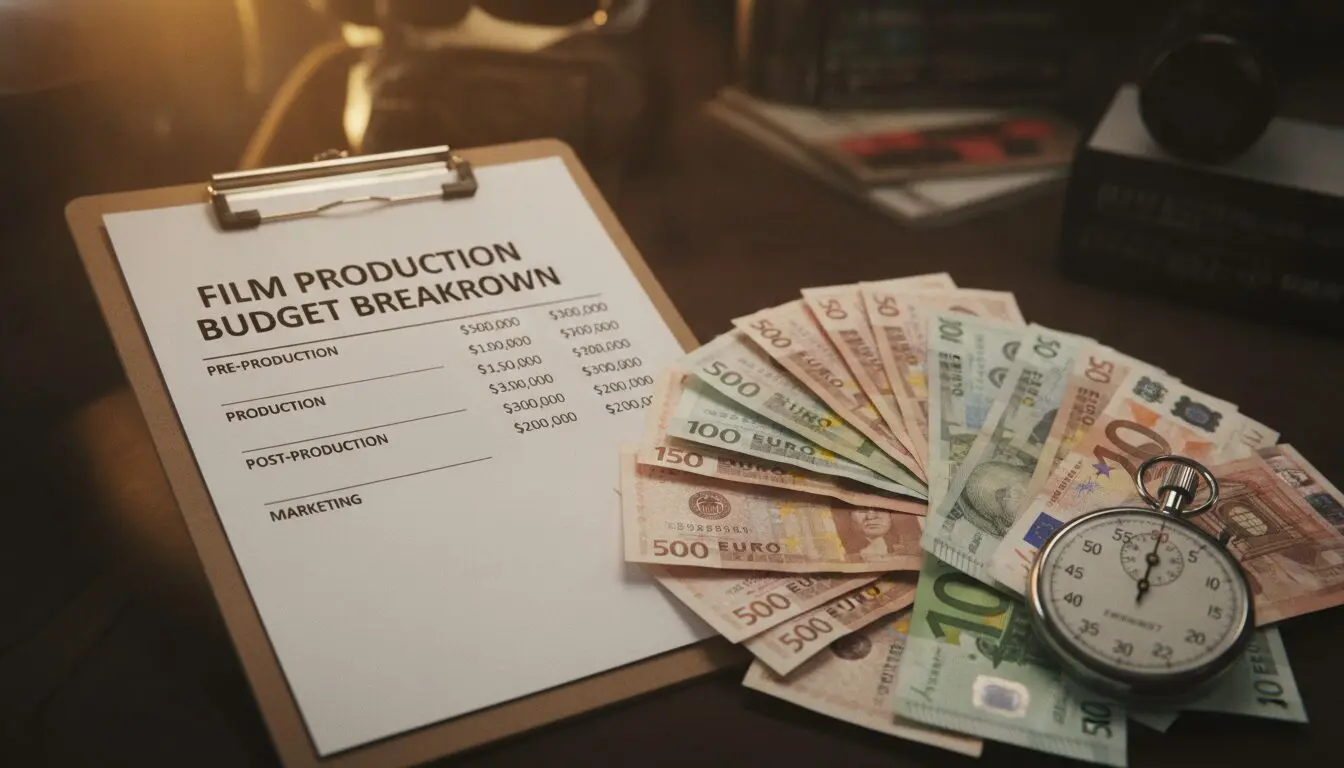
Traditional Production Costs
A standard 30-second TV commercial produced traditionally involves:
- Pre-production (concept, script, casting, location scouting): $5,000 – $30,000
- Production (crew, equipment, talent, location fees, catering): $15,000 – $200,000
- Post-production (editing, color grading, VFX, sound design): $10,000 – $100,000
- Total range: $30,000 – $330,000+
AI Production Costs
The same 30-second commercial produced with AI workflows:
- Creative direction and concept: $1,000 – $5,000
- AI generation, compositing, and iteration: $1,500 – $8,000
- Post-production and finishing: $1,500 – $7,000
- Total range: $4,000 – $20,000
That’s a 70-85% cost reduction on average. The savings come primarily from eliminating physical production requirements — no location rentals, no 20-person crews, no equipment trucks, no travel expenses.
For brands producing multiple videos per month, the compounding savings are dramatic. An e-commerce brand spending $120,000/year on traditional product videos could achieve comparable results for $20,000-$35,000 with AI production. Use the ArcaneWiz ROI Calculator to model your specific scenario.
Speed: From Weeks to Days
Traditional Timeline
- Pre-production: 2-4 weeks
- Production (shoot days): 1-5 days
- Post-production: 2-6 weeks
- Total: 4-12 weeks
AI Production Timeline
- Creative development: 1-2 days
- AI generation and iteration: 1-3 days
- Post-production and delivery: 1-5 days
- Total: 3-10 business days
AI production is 4-8x faster than traditional methods. This speed advantage is particularly valuable for:
- Trend-responsive marketing — React to cultural moments and trends within days
- A/B testing at scale — Generate multiple creative variations quickly
- Product launches — Have video assets ready the moment a product ships
- Seasonal campaigns — Produce holiday and event content without months of lead time
Quality: Closing the Gap
This is where the conversation gets nuanced. In 2024, AI video had obvious tells — uncanny motion, inconsistent physics, limited resolution. In 2026, the landscape has shifted dramatically.
Where AI Matches or Exceeds Traditional
- Visual environments and landscapes — AI-generated environments are often indistinguishable from real locations
- Product visualization — Perfect lighting, impossible camera angles, flawless product renders
- Concept-driven creative — Surreal, fantastical, or abstract visuals that would require massive VFX budgets traditionally
- Motion graphics and brand content — Clean, polished, and infinitely customizable
Where Traditional Still Has an Edge
- Authentic human performance — Real actors delivering nuanced emotional performances
- Documentary and testimonial content — Genuine, unscripted moments
- Complex multi-person scenes — While improving rapidly, crowd scenes and complex interactions still favor live-action
The Quality Multiplier: Creative Direction
The single biggest factor in AI video quality is not the AI model — it’s the creative director. Studios like ArcaneWiz employ directors with backgrounds in traditional filmmaking who understand composition, lighting theory, color psychology, and narrative pacing. This expertise transforms raw AI output from “impressive tech demo” to “broadcast-ready commercial.”
View real examples of production-quality AI video in the ArcaneWiz portfolio.
Scalability: The AI Advantage

This is where AI production delivers its most decisive advantage. Traditional production scales linearly — twice the content requires roughly twice the budget and time. AI production scales exponentially:
- Variation generation — Create 10 ad variations for the cost of 2 traditional versions
- Format adaptation — Repurpose a single concept across 16:9, 9:16, 1:1, and 4:5 formats efficiently
- Localization — Adapt content for different markets without reshooting
- Iteration speed — Test creative concepts in-market and refine based on performance data within the same week
For brands running performance marketing campaigns across multiple platforms, this scalability translates directly into competitive advantage.
When to Choose AI vs Traditional Production
Choose AI Production When:
- Budget is under $25,000 per video
- You need content in under 2 weeks
- The concept is visually creative or fantastical
- You need multiple variations or formats
- You’re producing content at volume (5+ videos/month)
Choose Traditional Production When:
- The spot requires specific celebrity talent or testimonials
- Authentic live-action footage is a brand requirement
- The project is a feature-length documentary or film
- Real location shooting is central to the creative concept
Consider a Hybrid Approach When:
- You want live-action talent composited into AI environments
- You need VFX-heavy content at a fraction of traditional VFX costs
- Your campaign spans both performance marketing (AI) and hero content (traditional)
The Bottom Line
AI video production is not a replacement for traditional production — it’s an evolution that gives brands more options, more speed, and more creative freedom within realistic budgets. The smartest brands in 2026 are using both approaches strategically, choosing the right tool for each project.
For most commercial, advertising, and brand content needs, AI production now delivers superior ROI. The cost savings of 70-85%, the 3-10 day turnaround, and the ability to scale content production are reshaping how brands think about video.
Frequently Asked Questions

What’s the typical cost spread between AI and traditional production?
For comparable craft, AI production typically runs $250–$900 per SKU where a traditional equivalent runs $1,500–$8,000, because AI removes crew, location, and shoot-day overhead. The spread widens as you add variants, since AI reproduces cutdowns at marginal cost. Exact figures depend on shot complexity and runtime — the drivers are itemised in our AI video production cost breakdown.
How does AI video delivery time compare to a 6–8 week traditional shoot?
Where a traditional shoot books 6–8 weeks across pre-production, filming, and post, an AI production runs a 5–10 business-day cycle, and a tightly scoped single-shot piece can reach a finished master within 48 hours. The time comes out of scheduling, travel, and reshoots rather than craft. See the workflow that goes from brief to broadcast in 48 hours.
Where does AI still lose to traditional production on quality?
AI still trails on sustained close-up human performance, precise product accuracy for hero shots, and the unrepeatable real-world moments a camera captures best. Fine hand and face detail across long takes can wander without careful direction. We’re candid about these limits — the full ledger of where each pipeline wins is in AI video production vs traditional.
Which scenes are easiest to do with AI vs. traditional?
AI handles stylised worlds, sweeping environments, product-in-motion, and impossible camera moves with ease — Kling for coherent character takes, Veo for believable physics and camera language, Seedance for kinetic, stylised sequences. Traditional stays easiest for real testimonials and tactile hero shots. Our Kling 3 broadcast-quality AI commercial shows the kind of scene AI now owns outright.
How do you compare AI and traditional video bids apples-to-apples?
Normalise the deliverable first: same runtime, same number of final cutdowns, same usage rights, same revision rounds, and the same quality bar. Then compare all-in cost and calendar, not head-line day-rates, since traditional bids often exclude reshoots and licensing that AI avoids. Our itemised tiers make that comparison straightforward — see ArcaneWiz pricing explained.
What hidden costs exist in AI video production?
The honest ones are revision cycles beyond the agreed rounds, upscaling and cleanup on demanding shots, licensing for any real brand assets or voices you supply, and the creative-direction time that separates broadcast output from prompt output. A reputable studio scopes these up front. The overhead AI removes — crew, location, reshoots — is larger, but “no hidden costs” only holds when the quote is itemised.
What hidden costs exist in traditional production?
Traditional budgets tend to hide overages in reshoots, weather and overtime days, talent and location fees, equipment rentals, insurance, travel, and post-production rounds billed separately. Music and stock licensing often sit outside the headline number too. These are the line items that make a “fixed” quote drift, and they are precisely the overhead AI production removes from the equation.
Does traditional production still make sense for high-end commercials in 2026?
For some flagship work, absolutely — a signature human performance or a tactile hero product can still justify a full shoot. The skill is knowing which pipeline serves the idea. Our Creative Director’s more than 20 years directing both AI and traditional productions is what guides that call per project. The framework is laid out in AI video production vs traditional.
Can AI video meet broadcast-quality standards?
Yes, when it is directed and finished to broadcast specs rather than left as raw generation. Delivery format, colour space, frame rate, and legal-safe grading all have to be handled in post exactly as they would for filmed content. Our Kling 3 broadcast-quality AI commercial was produced to those standards end to end.
How does ArcaneWiz price AI vs. traditional side-by-side?
We scope both to the same brief so you see a genuine like-for-like: the AI route priced by shot complexity and runtime, the traditional route by crew, days, and location, with rights and revisions held constant across both. Most brands see the AI option deliver comparable craft for a fraction of the calendar and cost. Representative outcomes sit in our AI video case studies.