
Direct answer
A cinematic AI brand film comes from a production studio that storyboards before it generates and finishes after it generates — not from a prompt shop. Look for a named creative director, a locked shot bible, a real colour grade and designed sound. Ask for those four artefacts before you sign; most vendors cannot produce them.
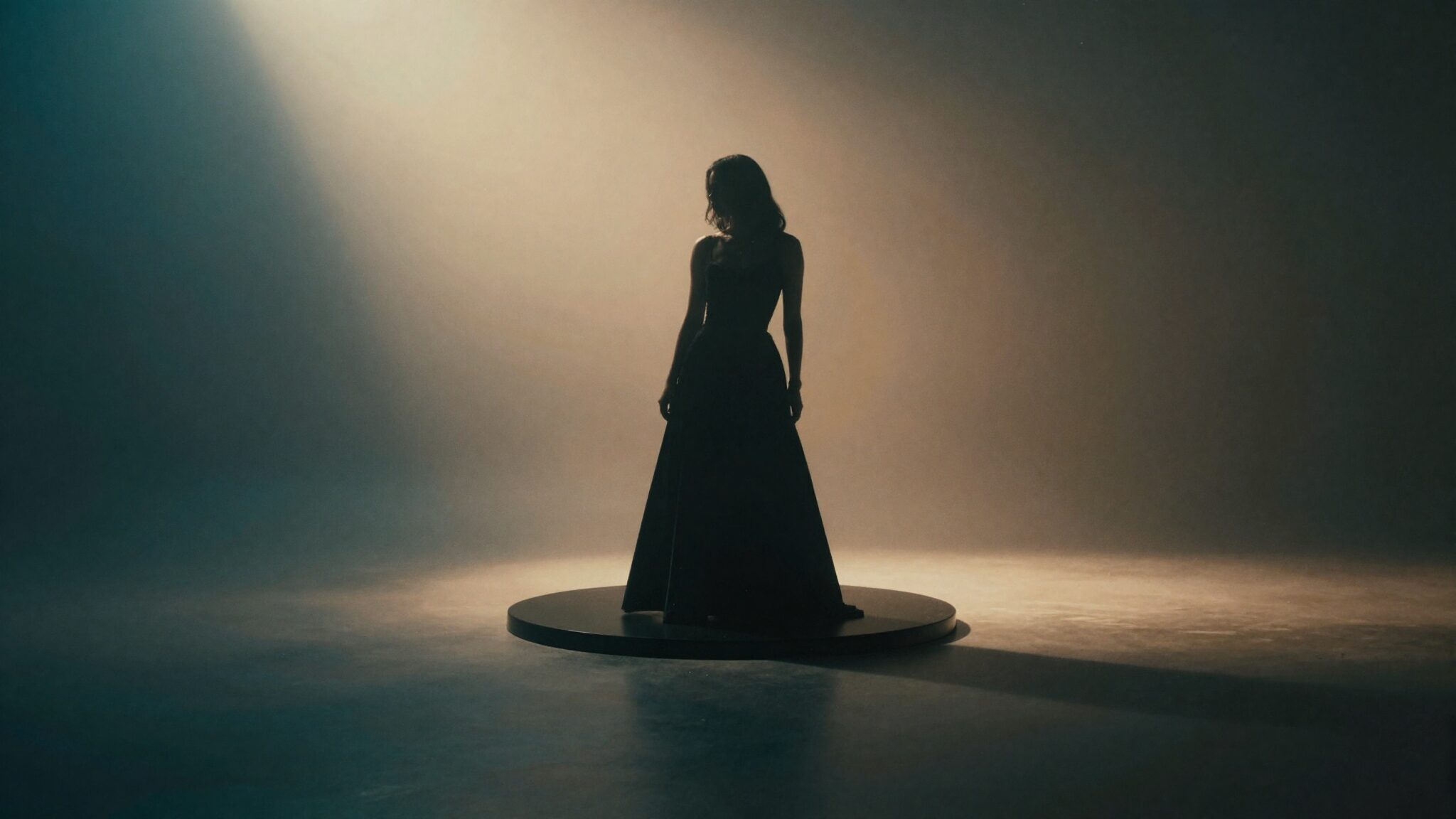
If you are searching for an AI brand film studio, the hard part is not finding vendors — it is telling them apart. Every studio page now shows the same kind of hero reel, names the same models, and uses the word “cinematic.” This guide is the evaluation layer: what cinematic actually means in operational terms, a shot-by-shot anatomy of a 60-second brand film, the specific ways generative output fails that standard, and the artefacts you should demand before a contract. If you want the underlying craft principles, we keep a companion piece on what makes an AI commercial look cinematic, and a forward-looking essay on why cinematic AI video production is the future of brand storytelling. Read those for the theory. Read this to choose a studio.
Where do cinematic AI brand films actually get made?
Four kinds of supplier answer to the phrase “AI brand film,” and they are not interchangeable. Most disappointing projects are category errors made at the briefing stage, not execution failures later.
Self-serve generation platforms sell you capacity. You write the prompt, you pick the take, you assemble the cut. Performance-content shops sell you volume — many short assets built from templates for paid social testing, where the brief is a hook rather than a film. Traditional production companies with an AI department sell you their existing craft process with generative tooling bolted into the middle of it; strong on direction, usually slower and priced against a conventional shoot. Boutique AI film studios — the category ArcaneWiz sits in — are built the other way round: the pipeline is generative from the start, but a director controls it, and conventional editorial, grading and sound design finish it.
A brand film is the hardest of the four briefs to satisfy, because it has no performance metric to hide behind. It runs at the top of a funnel, on a homepage, in a showroom, before a keynote. Nobody clicks it. It either carries the brand or it embarrasses it — which is why it is the one format where the category you buy from matters most.
| Self-serve platform | Performance-content shop | Traditional co. + AI dept. | Boutique AI film studio | |
|---|---|---|---|---|
| What you buy | Generation capacity | A deliverable count | A conventional production | A directed film |
| Who designs the shot | You do | A template does | A director and DP | A creative director |
| Shot bible before generation | No | No | Yes | Yes |
| Grade | Filter presets | Auto-normalised | Full grade suite | Full grade, shot-matched |
| Sound | Stock bed | Stock bed + VO | Designed and mixed | Designed and mixed |
| Typical failure | No one is directing | Looks like everyone else | Cost and calendar | Not built for 200 variants |
| Right for | In-house creative teams | Paid-social iteration | Films needing live action | Brand-facing hero films |
ArcaneWiz uses generative AI tooling openly and says so on every project: Midjourney for art direction and frame design, Veo and Kling for motion, Seedance for sequence and performance work, then conventional editorial, colour grading and sound design on top. We do not clone a real person’s face or voice. Stating this up front is part of the evaluation — a studio that is vague about its stack is asking you to buy on vibes.
What does “cinematic” actually mean in a brand film?
“Cinematic” is not a look you apply at the end. It is five decisions held consistently across every shot in the film, and each one is observable in a thirty-second reel if you know what to watch for.
1. Lensing logic
A film picks a focal-length language and stays inside it. A brand film shot on a 35–50mm family reads as grounded and human; one built on 85mm and longer reads as removed and observational; one that mixes 18mm distortion with 135mm compression in adjacent shots reads as an accident. Lensing logic also governs height and distance — where the camera stands relative to the subject’s eyeline tells the audience who has authority in the frame. Generative video has no default answer to any of this, which is why unlensed AI films feel spatially incoherent even when every individual frame is beautiful.
2. Lighting continuity
The single fastest way to spot a film that was prompted rather than designed: watch where the key light comes from, shot to shot. In a directed sequence, the key stays camera-left through a scene unless a cut motivates the change, colour temperature holds within a deliberate range, and shadow density is consistent. In prompt-led output, the sun jumps sides between shots, practicals change colour, and a subject who was backlit becomes flatly front-lit two seconds later. Audiences cannot name the error, but they register it as cheapness.
3. Grade discipline
A grade is not a filter. It is a per-shot process that first neutralises every shot to a common reference so skin, sky and product read identically across the film, and only then applies a look. Broadcast and streaming delivery is measured against defined colorimetry — the ITU’s Rec. BT.709 parameters remain the baseline for HD deliverables, and the Academy’s ACES framework exists precisely because matching sources to a common colour space is a discipline, not a preset. Generative shots arrive from the model with wildly different contrast and colour behaviour; without shot-matching, a grade is just a tint over chaos.
4. Designed sound
Roughly half of the perceived production value of a brand film is sound, and almost none of it comes from the music track. It comes from designed detail: a footstep that matches the surface, a product sound with weight, room tone that changes when the location changes, and a mix that holds a consistent loudness target. Broadcasters work to the EBU’s R 128 loudness recommendation, which normalises programme loudness against the ITU-R BS.1770 measurement algorithm — a spec-compliant master is a deliverable, not a nicety. A film with a stock music bed and no sound design is a moodboard with motion.
5. Pacing
Cut rhythm is authored. A brand film has a shape — where it withholds, where it accelerates, where it lets a shot breathe past the point of comfort. The most recognisable signature of weak AI brand work is uniform pacing: every shot roughly the same length, because every generated clip was roughly the same length. When cut length is dictated by what the model produced rather than by what the story needs, the film has no dynamics.
Shot-by-shot anatomy of a 60-second brand film
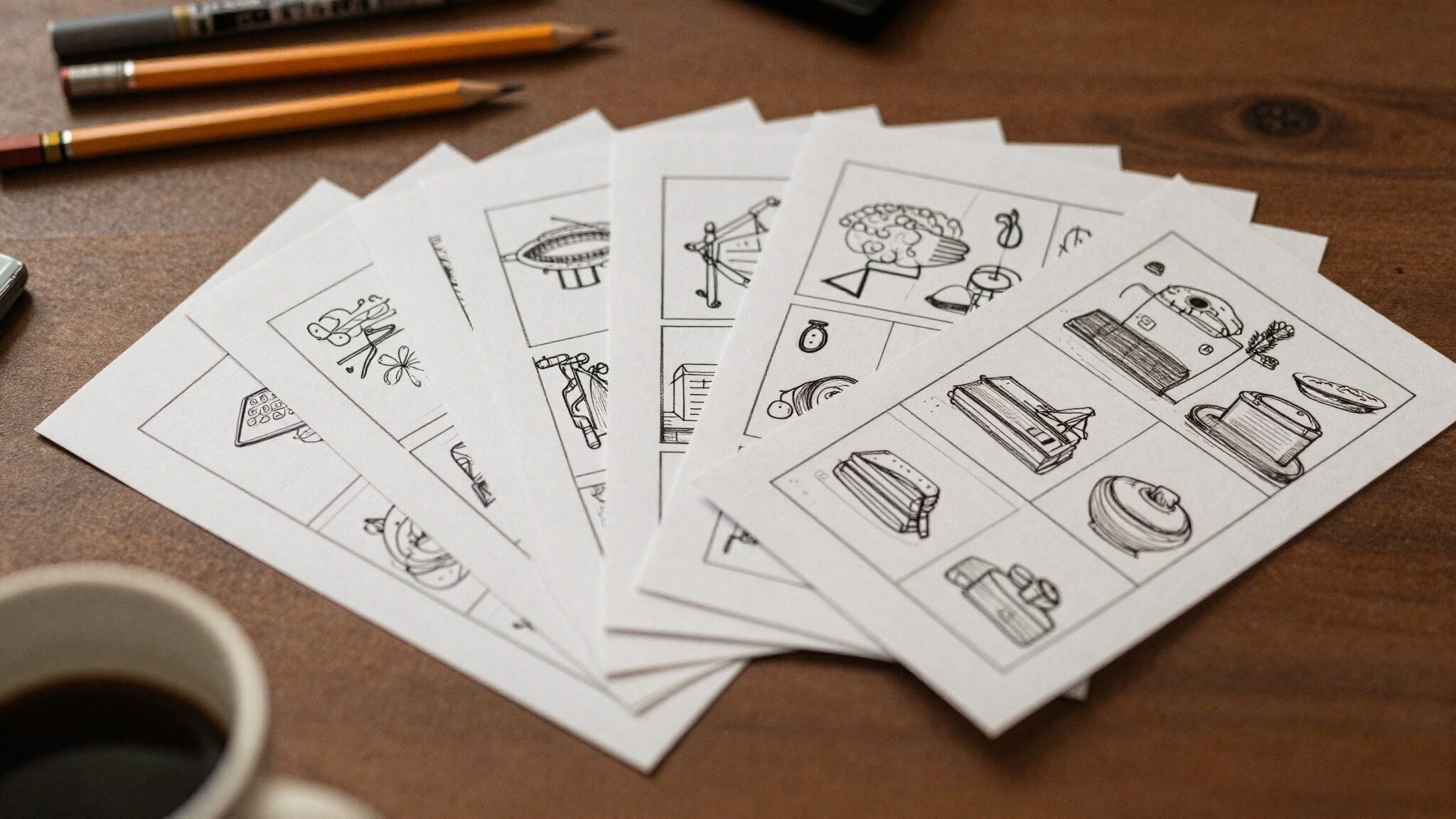
This is what a locked shot bible looks like in practice — the document a studio should be able to show you, in some form, from a previous project. The example below is a twelve-shot, sixty-second brand film for a consumer hardware brand. Note that every entry commits to a lens, a light direction, a sound event and a cut point before anything is generated. That commitment is the entire difference between a film and a reel of clips.
- 0:00–0:04 · Cold openMacro insert, locked off100mm macro equivalent, shallow focus on a single material detail. One hard source camera-left at 45°, 3200K, heavy negative fill camera-right so two-thirds of the frame falls away into shadow. No music yet — one close, dry sound effect and room tone. Cut on the moment the focus racks.
- 0:04–0:09 · EstablishWide interior, slow push28mm at chest height, a 12% push over five seconds — slow enough that the audience does not notice it moving. Key motivated by a window camera-left, holding the direction set in shot 1. Ambience enters underneath; music pad begins on the head of the shot.
- 0:09–0:13 · IntroduceMedium on the subject, eyeline right40mm, camera slightly below eyeline so the subject carries the frame. Same key direction, now with bounce fill at a 4:1 ratio. The subject does one deliberate physical action. Footstep and cloth detail sit above the music bed. Cut on the completion of the action, not after it.
- 0:13–0:16 · DetailInsert, hands and product65mm at T2.0, framed so the product occupies the lower third and the hands lead the eye to it. Key unchanged. This is the first time the product is legible, at second thirteen — deliberately late. A weighted mechanical sound carries the shot.
- 0:16–0:21 · WidenSecond location, matched key35mm, exterior. The location changes; the lighting logic does not — key stays camera-left, colour temperature shifts to 5600K daylight but shadow density is matched to the interior in the grade. Room tone is replaced with exterior ambience on the cut, which is what sells the location change.
- 0:21–0:26 · BuildTracking shot, lateral40mm, camera moving laterally at walking pace, subject held at the same screen position throughout. The move must be constant-velocity; generative motion drifts, so this shot is generated in overlapping segments and stabilised in post against a common reference.
- 0:26–0:29 · AccelerateThree-cut burstThree shots of roughly one second each — a hand, a mechanism, a face reacting — cut on action. Pacing changes here for the first time. Each cut lands on a sound event rather than on a visual beat, which is what makes a burst feel intentional instead of frantic.
- 0:29–0:34 · ReleaseHold, static wide28mm, locked off, five full seconds — uncomfortably long by social-video standards and the most important shot in the film. After the burst, the audience needs somewhere to rest. Music drops to a single sustained element; the loudest thing in the mix is ambience.
- 0:34–0:40 · TurnClose on the subject, eyeline to camera50mm at T1.8, the only shot in the film with direct address. Key rotates to three-quarter front for this shot alone — a motivated break from the rule, which is why it reads as significant rather than as an error. No sound effects; music and voice only.
- 0:40–0:47 · PayoffProduct in context, slow orbit65mm, a 30° orbit executed over seven seconds. Grade pushes the brand’s primary colour to its reference value here and nowhere else in the film, so the association lands on this shot. Sound design brings back the mechanical motif from shot 4, one octave lower.
- 0:47–0:54 · ResolveWide, returning to the opening geometry28mm, matching the framing of shot 2 with the subject now present. Closing a film on its opening composition is an old editorial device and it still works. Music resolves; ambience returns to the level it held in shot 2.
- 0:54–1:00 · End cardLogo on cleared frameHeld six seconds against the film’s darkest value so the mark reads at any brightness. Masters exported against the delivery spec for each destination — broadcast, web, social crops — each conformed to its own loudness and colour target rather than re-encoded from one file.
Ask any studio you are considering to walk you through a document like this from a film they have already delivered. You are not checking whether their format matches ours — you are checking whether the decisions were made before generation or discovered afterwards. A studio that storyboards will produce this in a minute. A prompt shop will offer you a moodboard instead.
Why does most AI brand film output fail the cinematic test?
Not because the models are weak. Current generation models produce individually excellent frames. The failures are structural, and they cluster into five recognisable modes — each one mapping directly onto an axis above.
Continuity decay. Generated clips hold coherence for a handful of seconds and then drift. Futurism’s report on the McDonald’s Netherlands holiday spot makes the point plainly, noting that because most AI-generated video loses continuity after a few seconds, “short and rapidly-changing scenes have become one of the key tells” of AI footage. A studio designs around this by keeping shots short where the story wants them short and generating long shots in overlapping segments that are conformed in post — not by cutting every two seconds and calling it style.
Light drift. Each generated shot invents its own lighting unless it is constrained to a reference. Without a shot bible specifying key direction and colour temperature, the film flips its lighting between adjacent shots.
Ungraded assembly. Model output is not colour-managed. Shots arrive with different contrast curves and colour casts, and a global “cinematic” LUT laid over the top amplifies the mismatch instead of resolving it. The Futurism piece cites “horrible color grading” as one of the spot’s most visible defects — a shot-matching failure, not a taste failure.
Missing sound design. The cheapest thing to skip and the most expensive thing to skip. Music over silence is the default state of generative output, and it is instantly legible as unfinished.
Undirected pacing. When clip length drives cut length, the film has one speed. No withholding, no release, no shape.
- They lead with model names instead of showing you a finished film end to end.
- Every reel example is under eight seconds, or the reel is a montage of disconnected shots.
- They cannot name the person who will direct your film.
- They quote a per-asset price for a brand film, or offer discounts by volume.
- They offer to clone a real person’s face or voice — a consent and endorsement problem you do not want.
- They are vague about whether AI was used at all. Disclosure obligations are tightening, not loosening.
How do I vet an AI brand film studio before I sign?
Reels are curated and testimonials are cheap. What is not cheap is the paperwork a real production leaves behind. Ask for these eight artefacts. A studio that works this way will send them within a day; a prompt shop will explain why they are unnecessary.
- A shot bible from a delivered film. Lens, camera height, move, key direction and cut point per shot — decided before generation.
- One film start to finish, unedited for the pitch. Not a reel. A full sixty seconds is where continuity, grade and pacing either hold or collapse.
- The name of the person directing. Not an account manager and not a “creative team.” A person you can look up and whose previous work you can watch.
- A before-and-after grade example. Raw generated shot next to the graded, shot-matched final. This single comparison separates studios from assemblers in about four seconds.
- The sound stems. Music, dialogue, ambience and effects as separate tracks. If sound design happened, the stems exist.
- Their delivery spec list. Which masters you receive, at what colorimetry and what loudness target, for which destination.
- Their AI disclosure position in writing. What tooling is used, how synthetic content is flagged at upload, and what they will and will not do — likeness cloning in particular.
- A named revision process. How a note travels from you to a changed frame, and how many rounds the scope includes.
Two of these deserve emphasis. The before-and-after grade example is the most diagnostic artefact in the whole list, because it is the one thing a vendor cannot fake without actually owning a finishing pipeline. And the full-length film matters more than the reel: a reel is assembled from the eight seconds of every project that worked, which is exactly the duration over which generative output is reliably good.
If you want to run the same discipline across an entire vendor shortlist rather than a single studio, our buyer’s guide to choosing an AI video production agency applies a comparable framework across categories, and the AI video services overview maps which format belongs to which brief.
What does a cinematic AI brand film cost, and how long does it take?
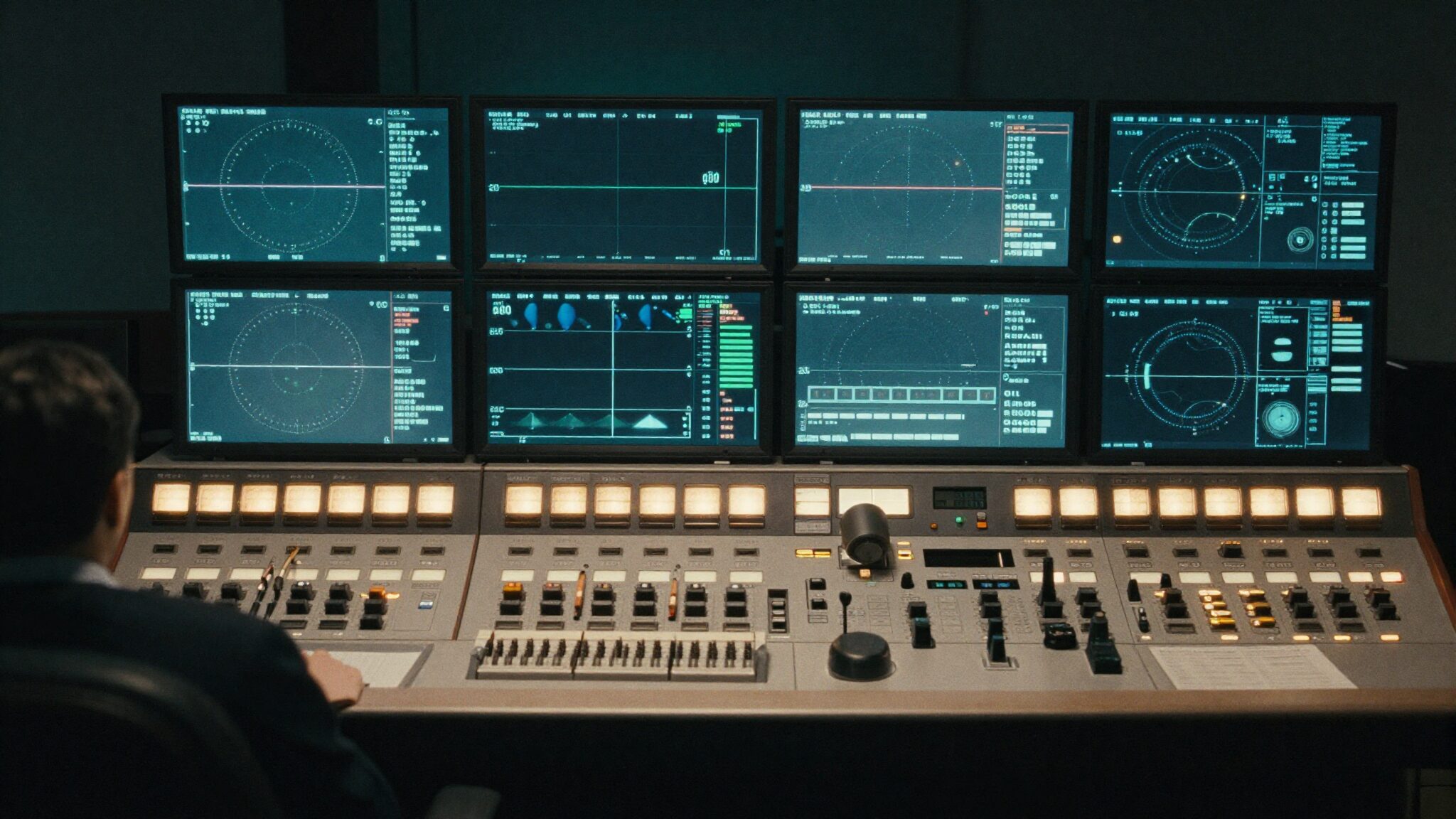
Turnaround first, because it is the number most often misrepresented. Standard delivery at ArcaneWiz is 7–10 working days from an approved brief to a delivered master. The clock starts at brief approval rather than at first contact, because an unsettled brief is the single most common cause of a late film — and because a vendor promising a finished brand film in hours is filling a template, not directing one.
Cost is driven by four things, and none of them is render time. Shot count and shot difficulty — a twelve-shot film with two moving-camera sequences is a different job from eight locked-off shots. Finishing depth — shot-matched grade and full sound design versus a music bed. Delivery spread — one master versus broadcast, web and three social crops, each conformed to its own spec. Revision scope — how many directed rounds sit inside the quote. Rights are defined per project in the quote. Current scope and floor pricing sit on the pricing page, and the service itself is described on the AI brand film page.
One thing we do not do is price by volume. A brand film is a single piece of work with a single standard; discounting it against a deliverable count would mean cutting the finishing, which is the part you are actually buying.
What are people actually saying about cinematic AI brand films?
The public conversation is more useful than any vendor page, and it keeps landing on the same conclusion this guide argues: the models are not the bottleneck, the craft is.
The clearest recent case study is the Hacker News discussion of McDonald’s pulling its AI-generated Christmas ad after public backlash, based on the BBC’s report on the withdrawal. What makes the thread valuable is the production detail that surfaced in it. Futurism reported the production company’s own account of the work, in which the CEO wrote that “for seven weeks, we hardly slept, with up to 10 of our in-house AI and post specialists” working with the directors, and described generating “thousands of takes — then shaped them in the edit just as we would on any high-craft production,” concluding: “This wasn’t an AI trick. It was a film.”
Read that as a buyer rather than as a critic and it is the most instructive sentence in the story. Seven weeks and ten specialists is not a shortcut — it is a real production. The spot still failed, which tells you the resource was not the missing ingredient. One commenter on the thread made the same observation from the other direction, noting that heavily directed AI output plausibly required “thousands of random takes” to follow the director’s imagination, while output nobody is directing can indeed be made very quickly. The thread was not uniformly hostile, either: another commenter argued the spot had “clunky AI just like plenty of other commercials have clunky traditional VFX,” which is a fair point and a useful corrective to the assumption that the tooling is the problem.
On the craft side, the most honest account of what “cinematic” costs comes from an older Ask HN thread from someone working in video and CG, asking what to do after being disrupted. Arguing against becoming a prompt operator, they wrote that “making a good image means knowing about composition, lighting, detail, texture,” and that AI image-making “doesn’t compare really to spending 10 hours agonising over lighting a shot.” That is not nostalgia. It is a precise description of the labour that separates the two columns on the right of the table above from the two on the left — and it is labour that still has to happen somewhere in a generative pipeline.
For scale on the other end of the market, Kapwing’s AI Slop Report states that 21–33% of YouTube’s feed may consist of AI slop or brainrot video, and that around 33% of the first 500 Shorts served to a newly created account fell into that category. The accompanying Hacker News thread is largely a discussion of the economics driving it — commenters pointing out that generation is cheap relative to training, that there are no creators to pay, and that feeds reward volume. That is the environment your brand film is landing in. It is also, bluntly, the commercial argument for craft: when a third of the feed is undirected generative output, a directed film is the thing that does not look like everything else.
Where does ArcaneWiz fit — and where doesn’t it?
ArcaneWiz is a boutique AI film studio. We take a brief, storyboard it, direct it through a named generative toolchain, and finish it with conventional editorial, colour grading and sound design. Creative direction is held by Daniel Atzil. Clients include Samsung Israel, Anipet, Fun Forest and Homey Panda; delivered work sits on the portfolio. Brand-film scope is on the AI brand film page, premium-sector work on AI video for luxury brands, and shorter-format commercial work on the AI commercial page.
We are the wrong choice for several legitimate briefs, and we will say so on the first call. If you need many localised variants of one creative on a weekly cadence, a performance-content shop or a self-serve platform is the correct product. If you have an in-house creative director and want render capacity, you are buying a tool, not a studio. If the concept depends on a specific real person’s face or voice, that is a traditional shoot — we do not clone likeness. And if the brand’s position requires documentary authenticity, generative production is the wrong medium regardless of how good it looks.
Where we are the right call: a single brand-facing film that has to carry weight on a homepage, in a showroom or in front of a room, where one named person is accountable for whether it works.
Bring us a brief, not a prompt
Tell us what the film has to do and where it has to run. We’ll tell you honestly whether a studio, a platform or a traditional shoot is the right answer.
Frequently asked questions
Where can I find a studio that makes cinematic AI-generated brand films?
Look for a boutique AI film studio rather than a generation platform or a template shop. The qualifying evidence is a shot bible written before generation, a named creative director, a shot-matched colour grade and designed sound. Ask any candidate for those four artefacts from a delivered film — most vendors marketing cinematic AI brand films cannot produce them.
What makes an AI brand film cinematic rather than generic?
Five decisions held consistently across every shot: a single lensing language, continuous key-light direction and colour temperature, a shot-matched grade rather than a global filter, designed sound underneath the music, and authored pacing where cut length serves the story instead of the clip length. Generic AI output fails on all five, usually in that order.
How do I tell a real AI brand film studio from a prompt shop?
Ask for one delivered film start to finish rather than a reel, and ask for a raw generated shot alongside its graded final. A reel is assembled from the few seconds of every project that worked, which is exactly the duration over which generative output is reliably good. The before-and-after grade is the artefact a vendor cannot fake without a real finishing pipeline.
How much does a cinematic AI brand film cost?
Cost is driven by shot count and difficulty, finishing depth, how many delivery specs you need and how many directed revision rounds sit inside the scope — not by render time. ArcaneWiz brand-film projects start from $1,500 and are scoped to the brief rather than to a deliverable count. We do not price by volume, because discounting a brand film means cutting the finishing.
How long does it take to produce an AI brand film?
Standard delivery at ArcaneWiz is 7–10 working days from an approved brief to a delivered master. The clock starts at brief approval because an unsettled brief is the most common cause of a late film. Any vendor promising a finished brand film in hours is filling a template rather than directing a production.
Why does AI-generated video lose visual consistency between shots?
Generated clips hold coherence for only a handful of seconds before drifting, and each shot invents its own lighting unless constrained to a reference. Futurism’s coverage of the withdrawn McDonald’s AI ad notes that short, rapidly changing scenes have become a key tell of AI footage for exactly this reason. Studios design around it with a locked shot bible and overlapping generation conformed in post.
Do you disclose that AI tooling was used to make the film?
Yes. ArcaneWiz states plainly that generative AI is part of the pipeline — Midjourney for art direction, Veo and Kling for motion, Seedance for sequence work — alongside conventional editorial, grading and sound design. Disclosure also matters at distribution, since YouTube requires creators to flag realistic synthetic content at upload and the EU AI Act sets transparency obligations for AI-generated media.
Can an AI brand film use a real person’s face or voice?
Some vendors offer likeness cloning. ArcaneWiz does not. Recreating a specific real person carries consent and endorsement exposure that outweighs the creative benefit, and a brand film is the worst possible place to take that risk. If a concept depends on a particular person, the right answer is a traditional shoot with that person present and contracted.
Is an AI brand film good enough to run on broadcast?
The generation models are. The gap is finishing: broadcast delivery is measured against defined colorimetry such as ITU-R BT.709 and against loudness targets like EBU R 128, and generative output arrives colour-unmanaged and without sound design. A film that holds up on broadcast needs a shot-matched grade, a designed mix and masters conformed to each destination’s spec.
When should I hire a traditional production company instead?
When the concept depends on a specific real person, a location that must be verifiably real, or live performance nuance that cannot be directed through generation. Also when the brand holds a documentary or authenticity position that synthetic imagery would contradict. A studio worth hiring will tell you this on the first call rather than fitting your brief to its own pipeline.
- ITU-R BT.709 — parameter values for HDTV production and international programme exchange
- ACES — Academy Color Encoding System
- EBU R 128 — loudness normalisation and permitted maximum level of audio signals
- ITU-R BS.1770 — algorithms to measure audio programme loudness
- BBC News — McDonald’s pulls AI Christmas ad after backlash
- Futurism — McDonald’s pulls down AI-generated holiday ad
- Kapwing — AI Slop Report: the global rise of low-quality AI videos
- Hacker News — McDonald’s pulls AI Christmas ad after backlash
- Hacker News — Ask HN: what am I supposed to do after I’m “disrupted”? Work in video and CG
- Hacker News — AI Slop Report: the global rise of low-quality AI videos
- YouTube Help — disclosing altered or synthetic content
- EU AI Act — Article 50, transparency obligations
- Google DeepMind — Veo model documentation