
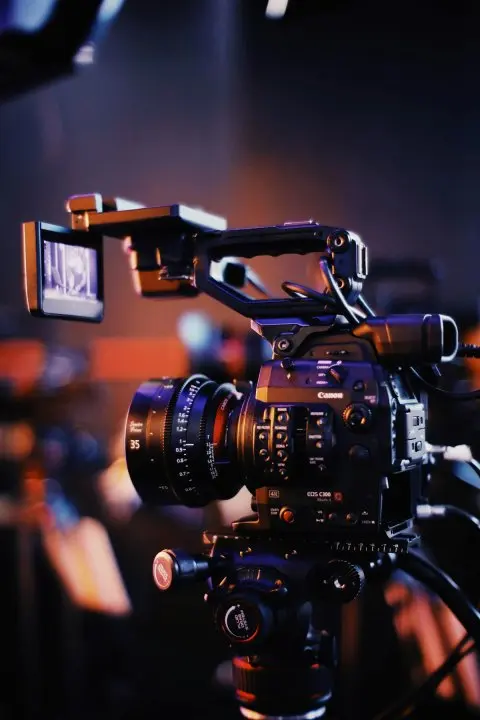
The Quality Gap in AI Video
The advertising industry is experiencing its most significant transformation since the shift from print to digital. AI video production has grown 840% in just two years, and the global market is projected to reach $18.6 billion by end of 2026. But amid this explosion of AI-generated content, a critical quality gap has emerged.
Most AI video tools produce content that looks… artificial. The uncanny valley of corporate AI video — generic stock-footage aesthetics, robotic narration, and templated transitions — is flooding the market. For brands that compete on premium positioning, this creates a paradox: they need the efficiency of AI production but can't afford to look cheap.
This is where cinematic AI video production enters the frame.

What Makes AI Video “Cinematic”?
Cinematic AI video isn't just higher resolution. It's the application of traditional filmmaking principles — composition, lighting design, narrative pacing, color grading, and emotional arc — to AI-generated content. The difference is the same as between a smartphone snapshot and a Fincher frame.
Studios like ArcaneWiz have pioneered this approach, combining decades of traditional cinematography experience with cutting-edge AI tools like Kling 3.0 and Veo3. Their founder brings over twenty years of experience as a director, cinematographer, and editor — the kind of visual storytelling instinct that can't be replicated by prompting alone.
The results speak volumes: ArcaneWiz's work has been nominated for Best AI Art Video at BAIF Venice, published in Prompt Magazine, and selected for the ArtEvol 2025 exhibition in London.

The Three Tiers of AI Video Production
The market has stratified into three clear tiers:
1. Self-Service Tools (Waymark, Animoto, Synthesia): Template-driven, fast, cheap. Good for internal comms and social media filler. Not suitable for brand advertising.
2. AI-Enhanced Agencies (Superside, QuickFrame): Traditional production workflows augmented by AI. Better quality but still constrained by conventional production thinking.
3. Cinematic AI Studios (ArcaneWiz, select boutiques): Purpose-built for AI-native filmmaking. These studios don't add AI to existing workflows — they reimagine the creative process from the ground up, using AI as a creative partner rather than a production shortcut.
Why This Matters for Brands in 2026

78% of marketing teams now use AI-generated video in at least one campaign per quarter, drawn by production timelines and budgets traditional shoots struggle to match. But efficiency means nothing if the output damages your brand.
The brands winning with AI video are those investing in cinematic quality: agencies like ArcaneWiz that understand both the technology and the art. They produce content that audiences can't distinguish from traditionally produced video — because they apply the same creative standards.

The Practical Playbook
For brands considering cinematic AI video production:
- Audit your current video content — where does AI acceleration make sense without sacrificing quality?
- Prioritize commercials and hero content for cinematic AI treatment
- Choose partners with filmmaking DNA — look for directors and cinematographers who adopted AI, not technologists who learned video
- Start with a proof-of-concept — a single AI-produced commercial that matches your existing production quality
- Scale systematically — personalized versions for different audiences without reshooting
The future of brand storytelling isn't about choosing between human creativity and AI efficiency. It's about studios that master both.

ArcaneWiz is an AI video production studio specializing in cinematic-quality commercials, brand films, and music videos.
Frequently Asked Questions
What’s the difference between AI brand storytelling and a product-demo video?
A product-demo video explains how something works; brand storytelling makes people feel who you are. Demos are feature-led and functional, while storytelling builds narrative, emotion, and world around the brand so the product lands in context. The two often share a production pipeline, but the intent — and the metrics — differ. Our guide to what makes an AI commercial look cinematic covers the storytelling craft in depth.
Can AI video carry a multi-shot brand narrative?
Yes, when it is planned like a film rather than a clip. A multi-shot narrative needs a storyboard, consistent characters and locations across scenes, and an editorial arc — all achievable when generation is directed against locked references and graded to one look. This is exactly what mature cinematic AI video production delivers for brand films that run beyond a single hero shot.
What is the Creative Director’s role in AI brand storytelling?
The Creative Director owns the story and the standard. They set the narrative arc, cast the visual language, and judge every frame against the brand’s world — the same authorship a film director provides on set. Ours brings over 20 years in cinematography, colour, and sound to those calls. For the wider argument, see why the director still matters in AI video.
How do you preserve a brand voice across AI-generated scenes?
We define the voice before a single frame is generated — palette, typography, motion signature, tone of narration, and pacing — then encode those into references, seeds, and style anchors so each scene is born on-brand. A director-led grade and continuity pass reconcile any drift, and narration or sound design carries the same voice across the cut so the film feels authored by one hand.
Which AI tools support character consistency for brand storytelling?
Character consistency is where model choice matters most. We lean on Kling for coherent character performance across longer takes and Veo for believable motion and camera language, anchoring both to locked reference frames so a protagonist stays recognisable scene to scene. The selection logic is laid out in our review of the best AI video tools for marketing teams.
How long does a cinematic AI brand film take to produce?
A typical cinematic AI brand film runs 5–10 business days from approved brief to graded master, depending on shot count and revision rounds. Storyboarding and reference lock take the first days; generation, editorial, grade, and sound fill the rest. Complex narratives extend the window and simpler ones compress it. The full sequence is mapped in the ArcaneWiz production process.
What does a cinematic AI brand film cost in 2026?
Cost scales with runtime, shot complexity, and how many cutdowns you need, not with a day-rate for crew and location. That structure is why AI brand films sit well below comparable traditional productions while holding cinematic quality. Rather than quote a single figure, we scope to the film in front of us. Our tiers are itemised in AI video production pricing explained.
Can AI brand storytelling replace traditional documentary production?
Not wholesale — and it shouldn’t pretend to. Documentary rests on real people, real places, and unrepeatable moments that deserve a camera. AI excels at constructed narrative, stylised worlds, reconstruction, and scale that would be impractical to shoot. Many brand films blend both. The honest framing of where each pipeline wins sits inside our view of cinematic AI video production.
How do you measure brand-lift from AI cinematic storytelling?
We tie the film to outcomes agreed up front — view-through and completion rates, recall and sentiment where surveyed, and downstream lifts in consideration or qualified pipeline. Because AI lets you produce variants economically, you can A/B narratives and cutdowns to see which story moves the metric. Comparable results are documented in our AI video case studies.
How do I brief an agency for a cinematic AI brand film?
Start with the outcome, not the shot list: the audience, the single idea, where it runs, and the feeling you want to leave. Bring brand assets, any references you admire, and your must-have and must-avoid list. A good studio turns that into a storyboard before generating anything. The simplest first step is to book a free strategy call.
View our pricing tiers to find the right fit for your needs.
Related Reading
- How premium brands are adopting cinematic AI production
- Real results from AI-powered commercials
- The 7 principles behind cinematic AI commercials
- CMO’s guide to AI video budget and ROI
Ready to Transform Your Video Production?
Join the brands producing broadcast-grade commercials in days, not months — with the craft of a senior cinematographer and the speed of an AI pipeline.
Ready to Tell Your Brand Story with Cinematic AI?

ArcaneWiz creates cinematic AI videos that captivate audiences and drive results. Book a free strategy call to explore what AI video production can do for your brand. Or explore our production packages.
No pressure, no templates — just a strategic conversation about how to produce better content for less.
Ready to transform your video production?
See what broadcast-quality AI video can do for your brand.