Direct answer
For most tech films — investor films, launch films, product demos, onboarding and training — an AI film wins on cost, speed and revisions, because there is no crew, location, actors or reshoot day: it is delivered in 7–10 working days from an approved brief and starts at $5,000 per project at ArcaneWiz. A live-action shoot still wins when the film is about real, named people — a founder talking to camera, a customer testimonial, a team you want seen as itself. Many tech companies now do both: live faces, AI for everything around them.
Making a film for a tech company? See AI video production for tech companies — investor, launch, demo and training films from $5,000, in 7–10 working days.
Every tech company that has asked us for a quote in the last year has asked a version of the same question: “should this be an AI film or a real shoot?” The honest answer is that it depends on what the film has to show, not on which technology is newer. This guide sets out the differences that actually matter — cost structure, timeline, what can and cannot be shown, rights and revisions — so you can decide per film rather than per fashion.
Cost: where the money goes in each
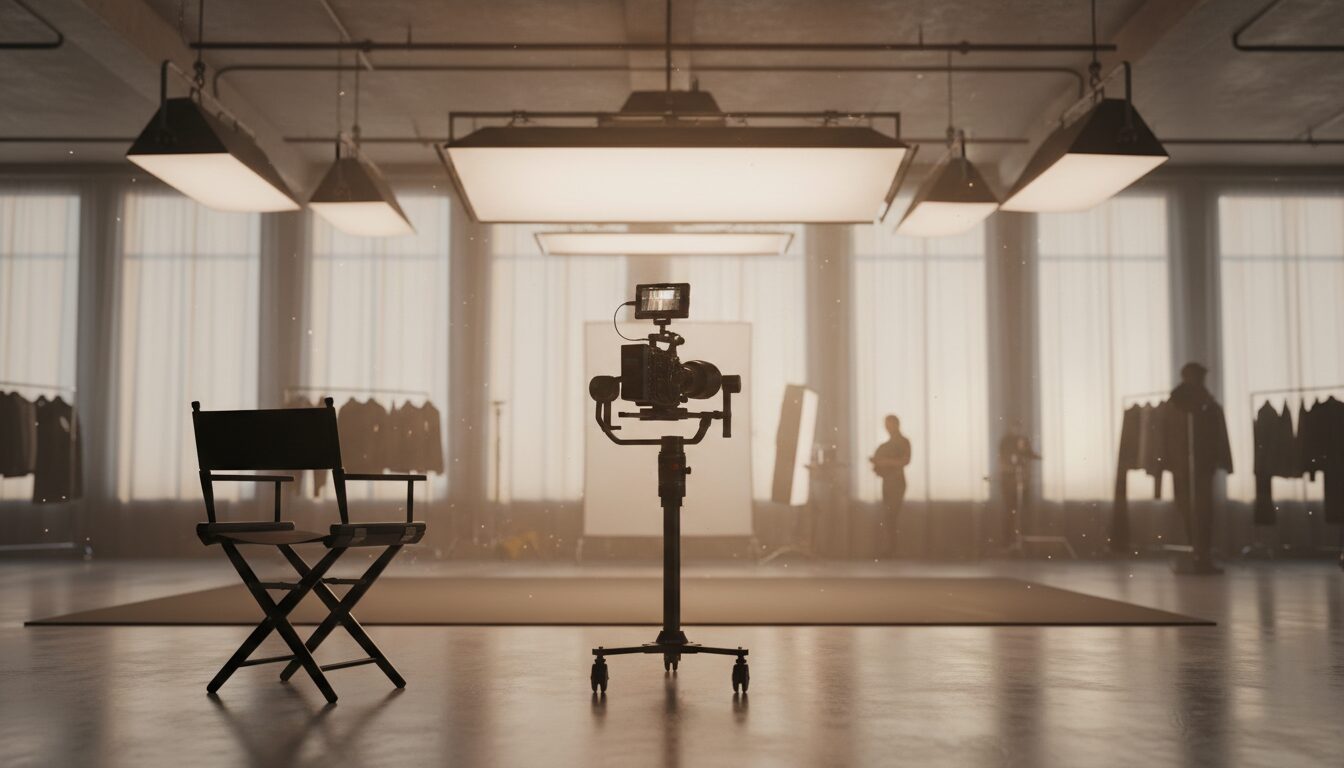
In a live-action shoot, most of the budget is spent before and on the shoot day: crew, camera and lighting hire, a location, actors or presenters, make-up, catering, insurance, travel, and the one thing nobody budgets for — a reshoot when the product UI changes or a line is wrong. The edit comes after, and any change that needs new footage means another shoot day.
In an AI film, none of those line items exist. The cost is the creative work: writing the film, designing the look, generating and selecting the shots, directing the performance of the images, editing, sound design, music and the final master. That is why AI films for tech companies at ArcaneWiz start at $5,000 per project and are priced by length, number of scenes, formats and deadline — not by how many people were on set. That is what puts the cost 40–60% lower than traditional production for a comparable film; the current entry prices are on the pricing page.
The cost difference grows with ambition. A product launch set in three cities, a data-center flyover, a device exploding into its components, a story that moves from a server room to the stratosphere — on a shoot these are the expensive shots; in an AI film they cost the same as any other scene.
Timeline: 7–10 working days against weeks
A live-action film is a sequence of dependencies: casting, location scouting, permits, scheduling the crew and the client’s own people, the shoot, the edit, grading, sound. Each step waits for the one before it, and a single unavailable person moves the whole calendar.
An AI film has one dependency: an approved brief. From that point, ArcaneWiz delivers in 7–10 working days — story and look first, then the shots, then the cut with sound and music. There is nothing to schedule around, which is why investor films and launch films, which always arrive with a date attached, are the two films tech companies move to AI first.

What each can show
AI films are strongest when the subject is invisible, abstract or impossible to film. That describes most B2B tech: a chip’s health being monitored from the inside, data moving through an architecture, a workflow that lives in a browser, a security event that never shows its face. A camera cannot film these; it can only film people talking about them. An AI film can make the technology itself the hero and show what it does.
Live action is strongest when the subject is a specific real person. Your founder, your CTO, a named customer giving a testimonial. Audiences want to see those people as themselves, and that is the one thing a generated image should not try to be. If the film’s credibility rests on “this is really her saying this”, shoot it.
This is why the best answer is often both: a short, simply shot interview with the founder, surrounded by AI-made scenes that show the product, the problem and the scale. The interview can be filmed in an hour with a small crew — or on a good phone — and the AI scenes carry the cinematic weight.
Revisions, versions and the product that keeps changing
Tech products change weekly. On a live-action film, a new UI means the screen shots are out of date the day after the shoot. In an AI film, the scene is regenerated or re-cut; there is no crew to call back. The same applies to versions: a 60-second launch film, a 15-second ad cut, a vertical version for LinkedIn and a silent version for the trade-show screen come out of the same project.
The one caveat is consistency. A character or a product has to look the same in every shot, which is a craft problem, not a software setting. It is the reason ArcaneWiz works from reference sheets and a director’s eye rather than from prompts alone, and why “directed, not prompted” is on our landing page.

Rights and ownership
On a shoot, rights are a stack of agreements: actor releases, music licences, location releases, stock footage terms, each with its own territory and duration. For an AI film from ArcaneWiz the client receives full, worldwide, perpetual commercial and broadcast use of the final film, vesting on final payment. There are no actors to release and no footage to license. Paid-media use is confirmed per project in the statement of work, and source files are available on request.
How to decide, film by film
- Investor film — AI, or AI around a short founder interview. The product and the vision are the story; the deadline is fixed.
- Launch film — AI. The product has to look bigger than it is today, and the cut will be re-versioned for every channel.
- Product demo or explainer — AI. The subject is a screen or an invisible process; a camera adds nothing.
- Onboarding and training — AI. Many short modules that change with every release; a shoot cannot keep up.
- Customer testimonial — live action. The named person is the proof.
- Culture and recruiting film — live action for the faces, AI for the offices, cities and scale around them.
If you want a second opinion on a specific film, send us the brief: Daniel and his team reply by email with a direction and a quote. The detailed walk-through of the four films a tech company needs is in this guide.
Not sure which one your film needs?
Tell us what the film has to do and who it is for. Daniel and his team reply by email with a direction and a quote — 7–10 working days from an approved brief, from $5,000.
Frequently asked questions
Is an AI film cheaper than a live-action shoot for a tech company?
Usually, yes. An AI film has no crew, location, actor or reshoot costs; the price is the creative and production work. At ArcaneWiz, AI films for tech companies start at $5,000 per project, which puts the cost 40–60% lower than traditional production for a comparable film.
How long does an AI film take compared with a shoot?
An AI film is delivered in 7–10 working days from an approved brief. A live-action film is bound by casting, locations, crew schedules and the shoot day itself, so it is typically measured in weeks.
When is live action the better choice?
When the film is about a specific real person — a founder to camera, a customer testimonial, a team you want seen as itself. In those cases the real face is the proof, and the AI scenes should surround the interview rather than replace it.
Can an AI film show our actual product and UI?
Yes. Screens, dashboards and product shots are built from your real UI and brand assets, and the invisible parts — data flows, architecture, what happens inside a chip or a network — are the scenes AI does best.
Can we mix a real interview with AI scenes?
Yes, and it is often the strongest format for investor and recruiting films: a simply shot interview with the founder or CTO, with AI-made scenes carrying the product, the problem and the scale around it.
What happens when the product changes after the film is made?
The scene is regenerated or re-cut; there is no crew to bring back. This is the main practical advantage for tech products that ship new UI every few weeks.
Do we own the AI film?
You receive full, worldwide, perpetual commercial and broadcast use of the final film, vesting on final payment. Paid-media use is confirmed per project in the statement of work, and source files are available on request.
Will an AI film look like a real film?
That depends on who directs it. ArcaneWiz films are written, designed and directed by Daniel Atzil and his team — shots are selected and directed, not left to a prompt — and three full films are on the tech landing page so you can judge for yourself.
Can we get several versions — ad cut, vertical, silent — from one AI film?
Yes. Versions are cut from the same project, which is where AI films save the most compared with shooting separate coverage for each format.
How do we start an AI film for our tech company?
Send a short brief — what the film has to do, who it is for, the deadline — through the form on the tech landing page. Daniel and his team reply by email with a direction and a quote, and production starts once the brief is approved.