
A New Era for TV Commercials
Television commercial production is undergoing its most significant transformation since the digital revolution. Artificial intelligence — specifically generative video AI — is rewriting the economics, timelines, and creative possibilities of commercial filmmaking. And it’s happening faster than most industry observers predicted.
In 2026, AI-produced commercials are airing on major broadcast networks, streaming platforms, and digital channels worldwide. Brands that once needed six-figure budgets for a single 30-second spot are now producing entire campaign suites — with multiple variations, formats, and localizations — for a fraction of the cost.
This isn’t a future prediction. It’s happening now. Here’s how.
The AI Tools Powering Commercial Production
Kling 3.0: The Industry Standard
Kuaishou’s Kling 3.0 has emerged as the dominant tool for commercial-grade AI video production. Its strengths include:
- Consistent character rendering — Maintain the same character across multiple shots and scenes
- Natural motion and physics — Realistic movement that doesn’t trigger the “uncanny valley” response
- 4K output — Broadcast-ready resolution out of the box
- Controllable camera movement — Pan, track, dolly, and crane shots that feel intentional
For commercial studios like ArcaneWiz, Kling 3.0 has become the backbone of high-end AI commercial production.
Google Veo 3.1: Photorealism Leader
Google’s Veo 3.1 excels at photorealistic environments and atmospheric content. Its integration with Google’s cloud infrastructure makes it particularly suited for enterprise-scale production. Key advantages include:
- Exceptional environmental detail and lighting
- Strong temporal consistency across longer clips
- Native integration with Google Cloud workflows
Sora 2: OpenAI’s Creative Engine
OpenAI’s Sora 2 has carved out a niche in highly creative, concept-driven content. While it may not match Kling 3.0’s commercial consistency, its strength in surreal and artistic visual storytelling makes it a valuable tool for campaigns that prioritize creative impact over photorealism.
The Multi-Model Approach
The best AI production studios in 2026 don’t rely on a single model. They use multiple AI tools strategically — choosing the right model for each shot, scene, or creative requirement — and then compositing the results into a cohesive final product. This multi-model workflow is what separates amateur AI video from professional AI commercial production.
How the Commercial Production Process Has Changed
Pre-Production: Faster, More Iterative
Traditional pre-production required committing to a creative direction before expensive production began. AI has made pre-production exploratory:
- Generate visual concepts in hours instead of commissioning illustrations over weeks
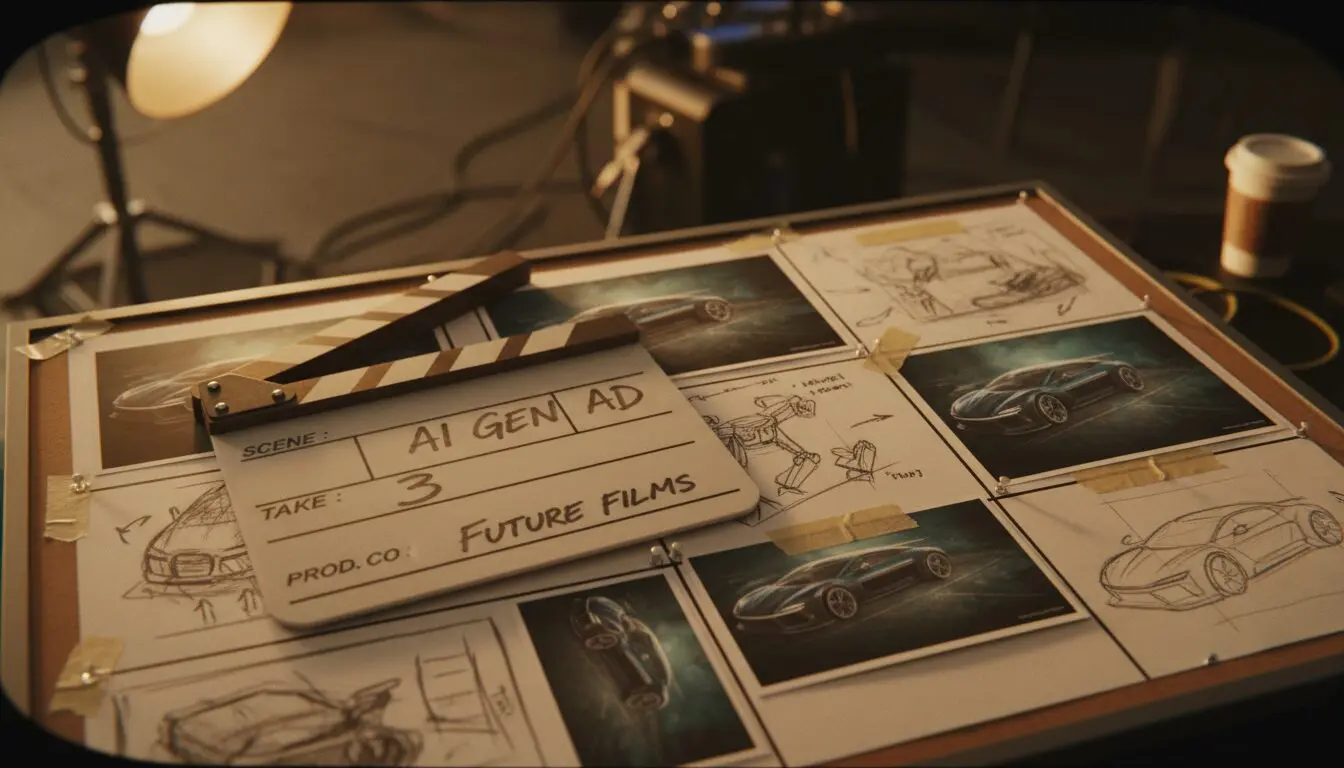
- Test multiple creative directions with actual video rather than storyboard sketches
- Present clients with near-final visuals during the pitch phase
- Iterate on feedback instantly rather than waiting for the next shoot day
Production: From Set to Studio
The most dramatic change is in production itself. Traditional commercial shoots involve:
- Location scouting and permits
- Crew of 15-50+ people
- Equipment rental ($5,000-$50,000/day)
- Talent scheduling and management
- Weather and logistics contingencies
AI production replaces all of this with a creative director, an AI production specialist, and powerful computing resources. The “set” exists entirely in the digital realm, with unlimited locations, perfect weather, and infinite takes.
Post-Production: Accelerated and Enhanced
Post-production in AI workflows is simultaneously faster and more powerful:
- Color grading can be baked into the generation process
- VFX that once required weeks of compositing can be generated natively
- Sound design and music integration remain similar to traditional workflows
- Final delivery in multiple formats is streamlined
Real-World Impact: By the Numbers
The transformation is measurable:
- Production cost reduction: 70-85% compared to equivalent traditional commercials
- Timeline compression: 3-10 business days vs 4-12 weeks
- Creative variations: 5-10x more variations per budget dollar
- Format adaptability: One concept, unlimited aspect ratios and durations
These numbers aren’t theoretical — they reflect the actual production economics that studios like ArcaneWiz deliver to clients across industries. See real case studies and ROI results from AI commercial campaigns.
Industries Leading the Adoption
E-Commerce and DTC Brands
Performance-driven brands were early adopters, drawn by the ability to produce high volumes of ad creative for testing and optimization. AI production enables the “test everything” approach that modern performance marketing demands.
Luxury and Fashion
Perhaps surprisingly, luxury brands have embraced AI video for its ability to create visually stunning, impossible-in-real-life creative concepts. The technology enables cinematic visions that would be prohibitively expensive with traditional VFX. Explore AI video for luxury brands.
Real Estate and Architecture
AI video has revolutionized property marketing with photorealistic virtual tours, lifestyle visualizations, and neighborhood storytelling — all without waiting for construction to finish. Learn more about AI video for real estate.
Technology and SaaS
Software companies use AI video to create compelling product demos, explainer content, and brand awareness campaigns that communicate complex ideas visually. See AI video for SaaS.
The Creative Direction Imperative
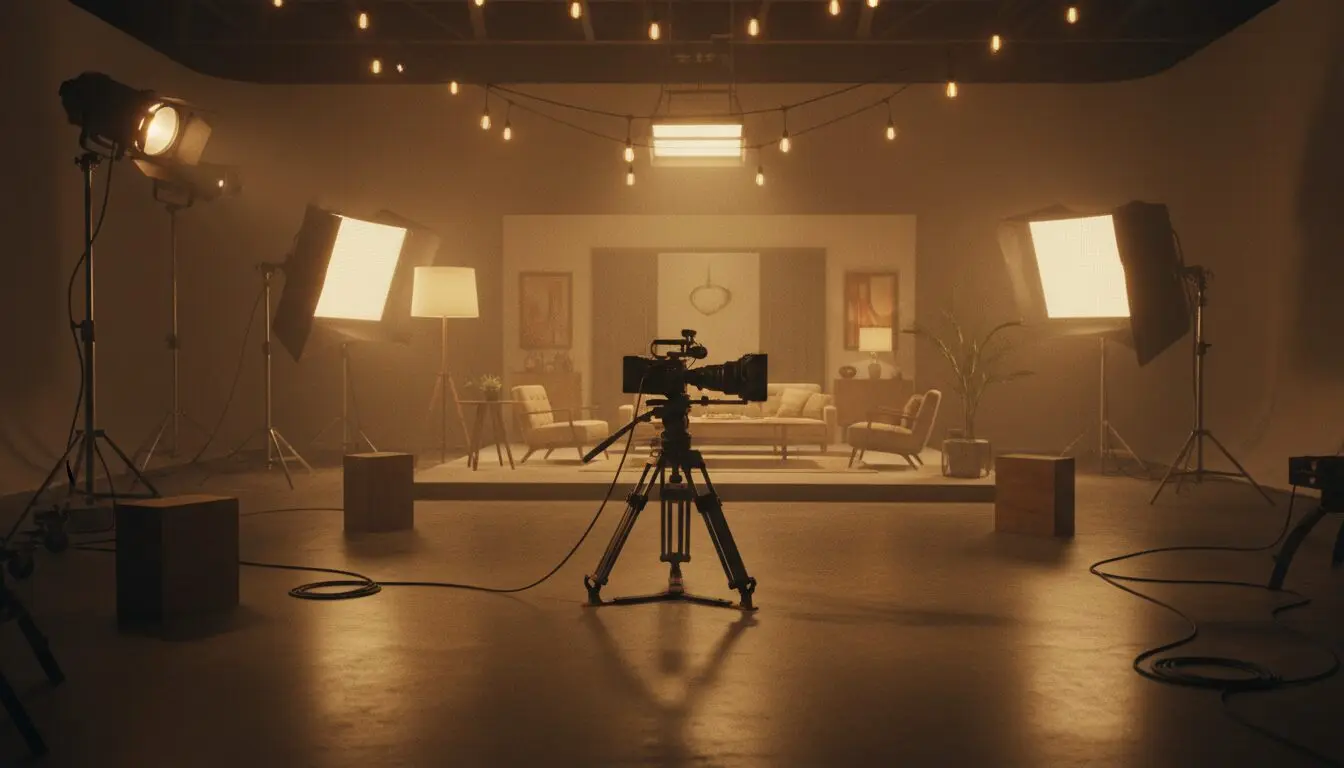
Here’s what every article about AI video production gets wrong: the technology is not the differentiator. Access to Kling 3.0, Veo 3.1, and Sora 2 is increasingly democratized. What separates a forgettable AI video from a compelling commercial is the same thing that has always separated good content from great content — creative direction.
Understanding light and shadow. Knowing when to cut. Feeling the rhythm of a 30-second story. Building visual tension and release. These are filmmaking skills honed over decades, and they translate directly to AI production.
This is why ArcaneWiz’s approach — led by founder Daniel, a classically trained creative director — consistently delivers content that doesn’t just look “AI-generated” but looks cinematic. The AI is the instrument; the director is the musician.
What’s Next for AI Commercials
The trajectory is clear:
- Real-time generation — Interactive, on-the-fly commercial creation during client sessions
- Personalized commercials — AI-generated variations tailored to individual viewer segments
- Live-action integration — Seamless blending of real actors with AI environments and effects
- Autonomous optimization — AI systems that generate, test, and optimize ad creative in continuous loops

Frequently asked questions
They’re on air, with the volume increasing each quarter through 2026. Broadcast acceptance happened first on linear in markets with light regulatory friction, then expanded to network spots that pass conventional QC. The work that airs runs a directed pipeline with broadcast finishing — not raw model output. The wave of “hypothetical” AI commercial chatter ended in 2025; what’s left is operational scaling. See AI video case studies for spots shipped to air under named brand attribution.
Same standards as any traditional spot, plus AI-specific disclosure where the broadcaster requires. Linear-TV demands master at the broadcaster’s spec (1080p or 4K, frame rate, color space, audio levels per loudness standard — CALM in the US, EBU R128 in EU, equivalents in IL). CTV adds platform-specific specs per inventory partner. Networks increasingly request AI-disclosure language in the rights-and-clearance package. Non-negotiable QC chain: color, sound, master delivery. See Kling 3 broadcast-quality AI commercial for the full QC pass.
Major broadcasters in the US, EU, and Israel accept AI-generated commercials when they meet conventional broadcast spec; what varies is disclosure. EU AI Act–aligned broadcasters require labeling when AI depicts persons or events that didn’t occur. FTC guidance in the US pushes the same direction for endorsement and testimonial content. Israeli broadcasters are tightening labeling expectations for the same reasons. Standard practice: disclose tool stack to the rights-and-clearance team, label per spec, keep the SOW current. See AI commercial production company for the broadcaster-by-broadcaster intake.
Same way a traditional production does — through the SOW, not through the model. The production agency carries network compliance (clearance, QC pass, broadcaster-spec delivery), music licensing (sync, master, performance rights for the air territory), and the rights chain on every contributing asset, including tool-stack disclosure. AI doesn’t simplify rights; it shifts which contributors need indemnity language. Brands signing with a credible commercial production agency get all of this contractually carried. See AI video production vs traditional comparison for the contract-architecture comparison.
Genuinely less expensive at the broadcast bar, with cost shift in two places. Crew, location, and shoot-day costs collapse — those are the savings. Director time, color grade, sound design, and rights-and-clearance work don’t compress — those are the carried-over costs. Brands replacing a traditional shoot with directed AI production typically see a meaningful reduction at the same broadcast quality, not the inflated discount the hype promised. Tool-stack costs are a small line item, not a hidden subsidy. See AI commercial cost 2026 for itemized bracket comparison.
Pre-production compresses hardest. Brief approval, styleframes, and director treatment land in a week or so — image-model iteration accelerates the look lock. Motion generation and editorial cycle in days. Color grade and sound mix run on traditional duration because the craft is conventional. Network compliance, clearance, and broadcaster QC pass don’t compress at all. End-to-end timeline lands around two weeks for a standard spot, three for a complex one. See brief to broadcast in 48 hours for the tightest production schedule we run.
Restructure. The director’s job — vision, performance, pacing, cinematic language — is the only reason a 30-second spot lands as a brand-defining moment rather than a stock-feel clip. AI moves the workload from on-set choreography to render-direction, but the discipline doesn’t change. ArcaneWiz is led by a Creative Director with 20+ years across cinematography, color, and sound, which is exactly why our work crosses broadcast QC. The full argument is in why the director still matters in AI video.
Kling, Veo, and Seedance carry the motion layer, with Midjourney upstream for styleframes. Kling 3 specifically handles the broadcast-grade lift — dramatic lighting, cinematic camera moves, performance frames that meet linear-TV finishing. Veo carries naturalistic camera language where a documentary or interview register is required. Seedance fills performance acting beats where character continuity matters across cuts. The TV-grade work needs all four, plus traditional color grade and sound mix downstream. See best AI video tools for marketing teams for the tool-by-use-case map.
Margin returns to commercial production work that had been compressed for a decade. Shoot-day overhead disappears; senior creative time bills the same. Agencies that retain directors and craft leads see margin restored on broadcast deliverables; agencies that outsource creative to prompt-jockey resellers see margin disappear into tool subscriptions. The strategic shift: agencies that productize directed AI pipelines win brand-of-record retainers; agencies stuck at tool resale lose them. See why ad agencies are switching to AI video production for the P&L mechanics in detail.
Three checkpoints. Styleframe and treatment review at week one — does the look match the brand? Director’s cut review at editorial — does the spot tell the story at the brand voice? Final color-and-sound master review pre-clearance — does the spot meet broadcast spec and brand legal? Clients who skip the styleframe gate pay for it in late-cycle revision cost; clients who review at all three gates land work that ships clean. See AI video case studies or book free AI video strategy call for the review-cycle script.