Most customer-story films are made the wrong way round. The company decides it needs a case study video, asks a happy customer for ten minutes of their time, and ends up with a talking head praising the product in the vocabulary of the vendor. The next buyer watches ninety seconds of it and learns nothing they could not have read on a logo wall.
Making a film for a tech company? See AI video production for tech companies — investor, launch, demo and training films from $5,000, in 7–10 working days.
This guide is for product marketing, demand-generation and sales leaders at tech companies who are about to commission a customer-story film. It covers what the film has to do for a buyer who is still deciding, how to choose the customer and the single story, a beat-by-beat structure, what to prepare and what to clear, how it differs from a testimonial or a demo, the mistakes that make these films useless, how the brief-to-master process works, and answers to the questions buyers ask first.
What a customer-story film has to do

A customer-story film has one job that no other film on your site can do: let a buyer see a person like them, in a situation like theirs, reaching a result they would like. Everything else you publish is the vendor speaking. This is the only film where someone else speaks.
That has a consequence for how it is made. The film is not about your product. It is about the customer’s problem, and the product appears when the customer reaches for it. A buyer forgives a story that is mostly about someone else’s week. A buyer does not forgive a story that is mostly about you.
Judge the finished film against three questions. Does a stranger in the same role recognise the problem in the first fifteen seconds? Do they understand what changed, in terms they would use themselves? Do they know what to do next? If the answer to any of them is no, a longer cut will not fix it.
Choose the customer before you choose the format
The most common reason a customer-story film fails is decided before anyone picks up a camera: the wrong customer. The easy choice is the biggest name, or the account that is happiest to appear. The useful choice is the customer whose situation matches the buyers you are trying to win next.
- Match the buyer you want, not the buyer you have. If your next growth is mid-sized operations teams, a story from a mid-sized operations team will do more than one from a household name.
- Pick a story with a before and an after. The customer should be able to describe, in plain words, what was hard and what is different. If they can only say they like the product, there is no story.
- Pick someone who speaks for themselves. The person on screen should be someone who actually used the product and can be specific. A senior sponsor reading approved lines is a press release in a suit.
- Confirm permission early. Customer legal and communications teams need time. Agree in writing what the customer will let you say, show and publish, and where, before the script is written.
If two customers both qualify, choose the one whose problem is more common in your market. A story that many buyers see themselves in is worth more than a better result that nobody recognises.
Customer story vs. testimonial vs. demo
| Customer-story film | Testimonial clip | Demo film | |
|---|---|---|---|
| Who speaks | The customer, through a scene and a narrative | The customer, to camera | The vendor, showing the product |
| Job | Make the result believable to someone like them | Add a human voice and a quote | Make one capability concrete |
| Where the buyer is | Comparing options, building a case internally | Anywhere on the site | Evaluating a specific feature |
| What it needs | A real customer, a real before and after, written permission | A real customer and a real quote | The real product screens |
| Weak version | A logo and praise | A line that could be about any vendor | A feature tour |
If what you need is the product walkthrough, see demo vs. onboarding films. If the film must support a date, see the product launch film guide. For how the studio works with tech companies in general, see our page on AI video production for tech companies.
A structure that holds for the first 90 seconds
There is no single right length, and the placement decides the cuts. But the order of beats holds up across most customer stories, and the first ninety seconds are where the buyer decides whether to keep watching.
- The situation, in the customer’s own scene. Open on the person at work, in the moment the problem is real. Not a skyline, not a logo. A stranger should understand the scene with no context.
- The cost of the problem, in their words. What it was taking from them: time, trust, a deadline, a decision they could not make. One concrete example is worth five general statements.
- The turn. The moment they chose a different way of working, and why. This is where the product first appears, once, doing one specific thing.
- What changed. Described by the customer, in terms their peers would use. Show the real product screens that make the change visible.
- The result, only as far as it is documented. If the customer can state a result and stand behind it, it goes in. If not, the film shows the change without a number.
- The next step. One. Usually a conversation, not a purchase.
The film can then continue into a longer version for a sales team, or end here for a web page. Plan both lengths in the brief, so the shorter cut is designed rather than chopped.
Numbers, claims and the truth test
A customer-story film makes claims on behalf of a real company, which makes this the one tech film where accuracy is not optional. We never invent a quote, a result, a customer or a credit. Everything said on screen has to be said by the customer or documented by them.
- Every number needs an owner. Someone at the customer must be able to confirm it, and you should hold the confirmation.
- Every quote is the customer’s. We can shape the order and cut for length, but not the meaning. The customer approves the final lines.
- No comparison with named rivals. Let the customer describe what they used before in general terms.
- Show real product. Screens in the film should be screens the customer actually used.
This is slower than writing a confident paragraph, and it is the reason these films are believed.
Mistakes that make customer-story films useless
- Starting with your company. A founder introduction and a mission statement before the customer appears is thirty seconds the buyer will not give you.
- Letting the customer read an approved script. It sounds like a vendor wrote it, because a vendor did.
- Choosing the logo over the story. A famous name with a vague result teaches the buyer less than a modest customer with a clear one.
- Cramming three outcomes into one film. One problem, one change, one result. The others become the next film.
- Burying the next step. If the viewer has to guess what to do, they will do nothing.
- Forgetting the sales team. The film will be sent in emails and played in meetings. Plan a version that works there.
- Waiting for permission last. Customer approval is the usual cause of delay. Start it first.
Directing the customer so they sound like themselves
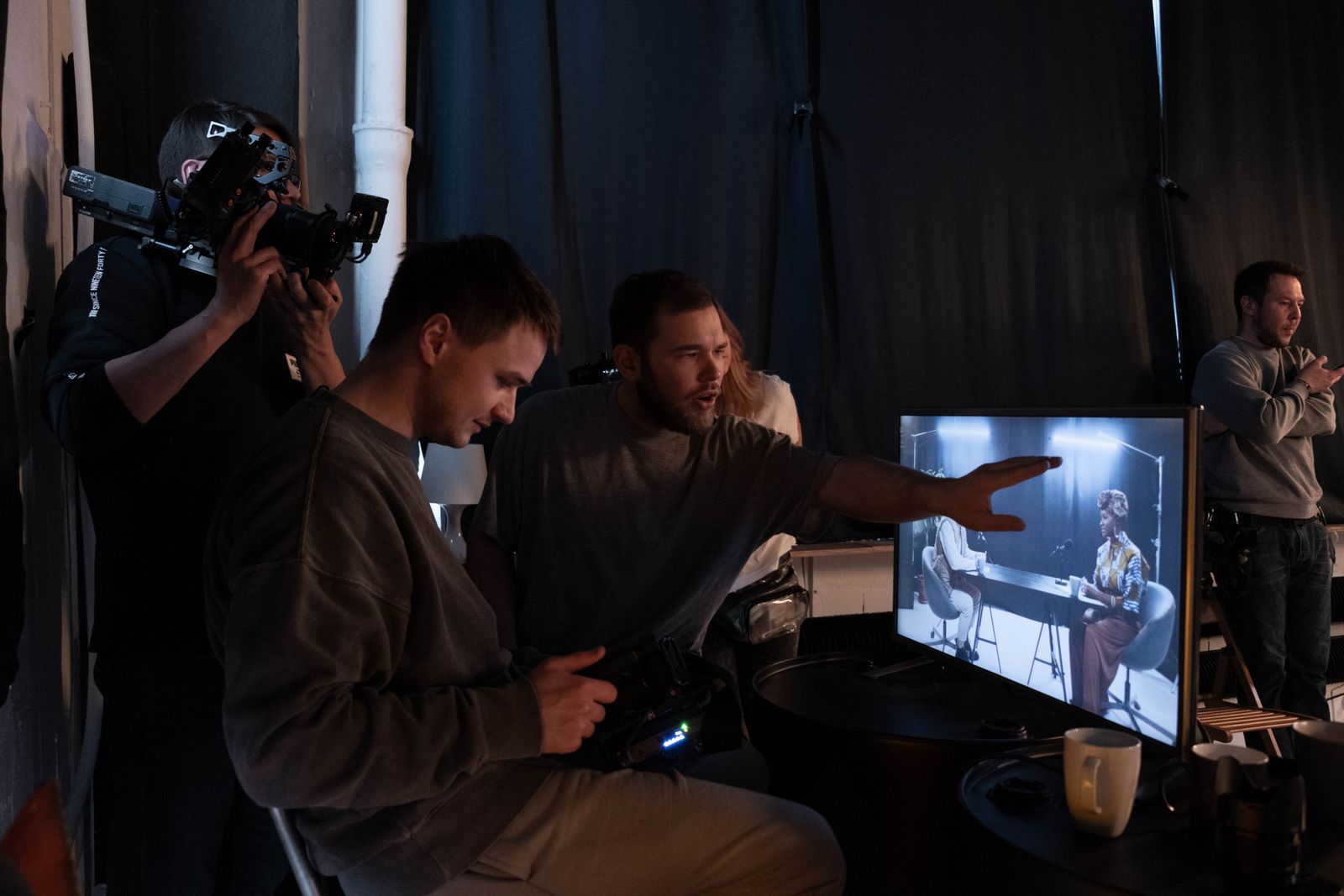
Most of what makes a customer sound stiff is the way they are asked. A list of questions read in order produces a list of answers delivered in order. Three habits change that.
- Ask about a day, not a product. “Walk me through the last time this went wrong” gets a story. “What do you like about the product?” gets praise.
- Ask for the specific thing. When an answer is general, ask what it looked like on that day, with that person, on that screen. The specific detail is the part a stranger believes.
- Leave room after the answer. The most useful sentence in an interview often arrives after the person thinks they have finished.
The same principle applies to the scenes around the interview. A scene of the customer doing the work, with the real product on screen, tells the buyer more than another minute of talking. Daniel and his team plan those scenes in the script, with the customer, so nothing is staged that the customer would not recognise.
Length, versions and where the film lives
A customer story has at least three homes: the web page where a buyer is comparing options, the email a sales rep sends after a call, and the meeting where a champion argues for you internally. Each wants a different length and a different opening. The web page can open on the scene. The email needs the result in the first sentence of the message around it. The meeting version should be built so it can be paused and discussed.
Agree the versions in the brief. Planning them at the script stage costs far less than asking for them after the film is finished, because the edit points are written into the film from the beginning.
What to prepare before the brief
- The customer, the person who will speak, and written confirmation of what they are willing to show and say.
- The buyer the film is for: a role and a situation, not “businesses”.
- The problem the customer had, in their words, and what changed.
- Any result the customer can state and confirm, with who confirms it.
- Access to the real product screens the customer uses.
- Where the film will live: your site, sales emails, events, ads. This sets the versions.
- The single next step you want the viewer to take.
- One person on your side who can approve, and one on the customer’s side who can approve their part.
How the process works
You send the brief: the buyer, the customer, the story and the permissions. Daniel and his team respond with the script and the look, built around what the customer can truthfully say, and you approve them before production. Then the film is produced, and you review the cut with the customer’s approver where their words are involved. Delivery is 7–10 working days from approved brief.
The step that most often adds time is the customer’s sign-off, not the production. Bring the customer in at the brief stage, not at the end.
What it costs
Tech-film work starts from $5,000. See the pricing page for what is included.
Frequently asked questions
How long should a customer-story film be?
As long as it takes to make the result believable, and no longer. The placement decides it. Plan a shorter cut for the web page and a longer one for the sales conversation in the brief.
Do we need the customer on camera?
Not always. The customer must be the source of the story, but how they appear can be agreed with them: on screen, in voice, or through scenes built around what they said. They approve what is used.
Can you make the film without a real customer?
We do not invent customers, quotes or results. If you do not have a customer who will take part, a demo film or a launch film is the honest choice.
Who owns the customer’s words?
The customer. Agree in writing what they allow you to say, show and publish, and where. We build the script around that.
Can we show numbers?
Only numbers the customer has confirmed and stands behind. If there is no documented number, the film shows the change without one.
Will you show our real product?
Yes. Screens should be the real ones the customer used, so a buyer who signs up recognises what they see.
What do you need from us to start?
The customer and their permission, the buyer, the story, the real product screens, the next step, and one approver on each side.
How long does it take?
Delivery is 7–10 working days from approved brief.
What does it cost?
Tech-film work starts from $5,000. See the pricing page for what is included.
Can we get several versions?
Yes. Agree the versions in the brief: a short cut for the web, a longer one for sales, and any shape a placement needs.
Next step
Pick the customer and write down the buyer you want them to speak to. Then tell Daniel and his team about both. Start a project.