
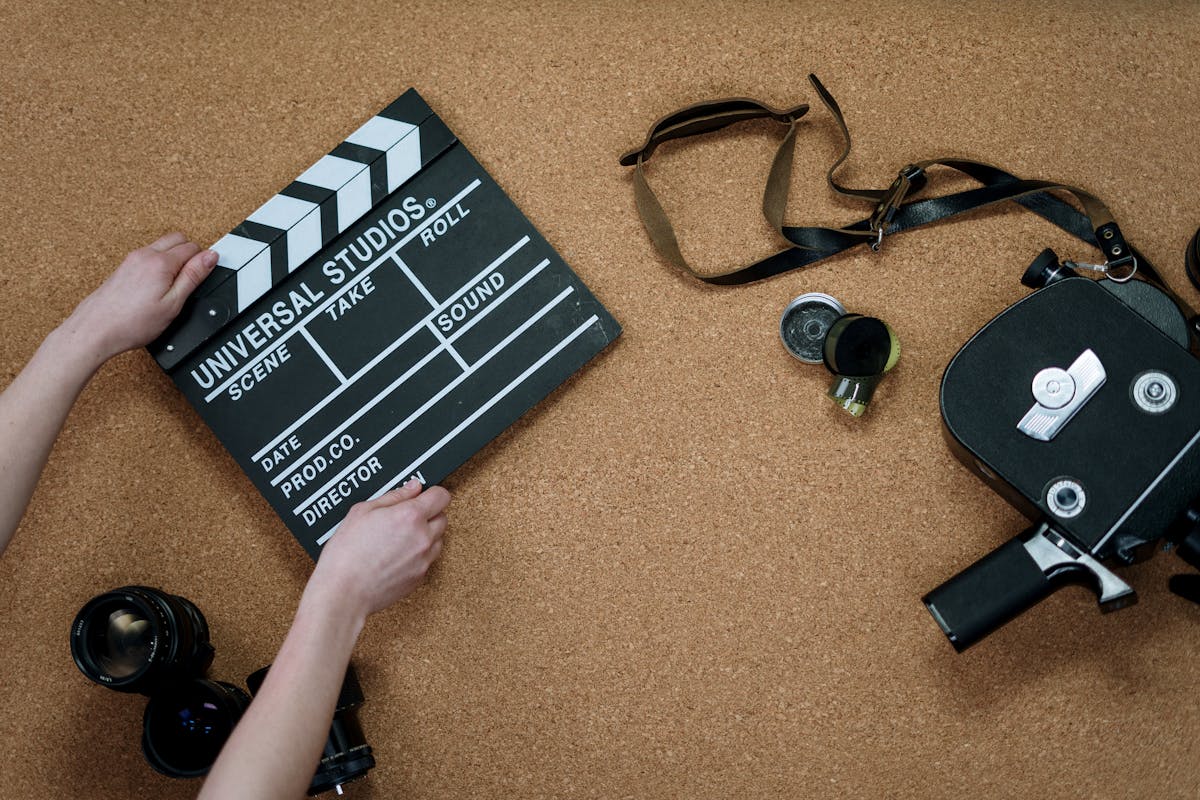
There is a persistent misconception gaining traction in marketing departments everywhere: that AI video tools have made creative directors and directors of photography obsolete. Type a prompt, click generate, and out comes a commercial.
This is dangerously wrong. And brands that act on it will learn an expensive lesson about the difference between generated content and produced content.
The Tool vs. The Craftsperson
Consider an analogy from photography. When digital cameras democratized image capture, the prediction was that professional photographers would become irrelevant. Everyone could take photos now. What actually happened was the opposite — the gap between amateur snapshots and professional photography widened, because the tool was never the bottleneck. Vision, composition, timing, and storytelling were.
AI video is following the same trajectory. The tools are becoming accessible to everyone. The creative judgment to use them well remains rare.
What a Director Brings That AI Cannot Generate
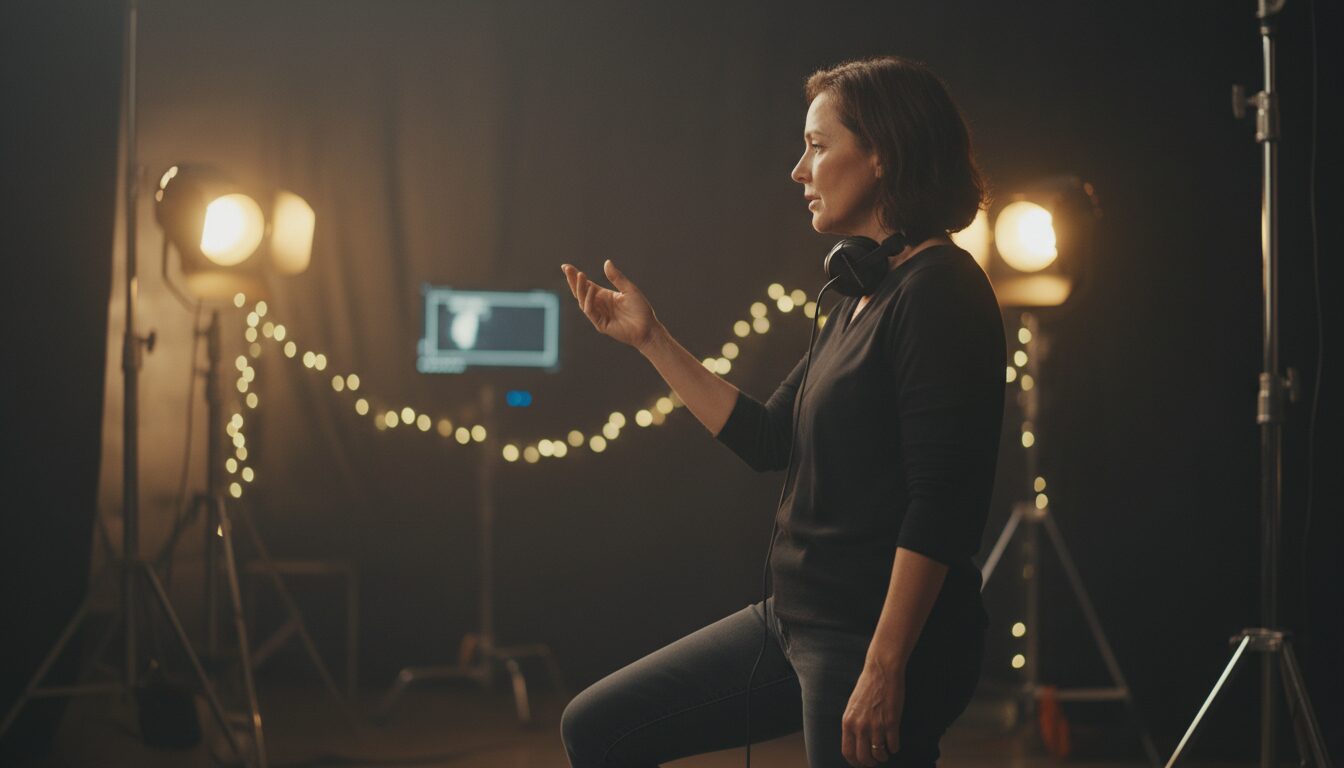
Narrative Architecture
A commercial is not a sequence of impressive visuals — it is a story compressed into 15, 30, or 60 seconds. Every frame serves a narrative function: establishing context, building tension, delivering a payoff, resolving with a call to action.
AI does not understand narrative. It generates visually plausible sequences. A director shapes those sequences into a story that moves an audience from attention to emotion to action. Without narrative architecture, you have a slideshow with motion — not a commercial.
Emotional Calibration
The difference between a commercial that converts and one that is merely watched often comes down to emotional precision. A beat held half a second too long becomes awkward. A transition that is too abrupt breaks immersion. A color grade that is five percent too warm shifts the mood from “premium” to “nostalgic.”
These are judgment calls that require human emotional intelligence — the ability to watch a sequence and feel whether it lands. AI can execute adjustments once the direction is given. It cannot determine what the right emotional target is.
Brand Intuition
Every brand has a visual and tonal identity that exists partly in guidelines and partly in institutional knowledge. A director who understands a brand knows that their luxury client would never use a certain camera angle because it feels too “editorial” and not enough “aspirational.” They know that a tech brand’s audience responds to clean motion graphics but rejects anything that looks like a tutorial.
This brand intuition cannot be encoded in a prompt. It lives in the creative judgment of experienced professionals who have internalized the brand’s visual language.
The ArcaneWiz Model: Director-Led AI Production
At ArcaneWiz, we built our production model on a conviction: AI is the most powerful production tool since digital cinema cameras, but it requires the same caliber of creative leadership that any professional production does.
Ready to see these results for your brand? Discover how ArcaneWiz delivers broadcast-grade AI video at a fraction of traditional costs.
Our production pipeline puts creative direction first:
- Creative Brief and Strategy: Understanding the brand’s objectives, audience, and competitive positioning before any visual work begins.
- Concept and Storyboard: Developing the narrative structure, shot list, and visual direction — the same deliverables a traditional director would produce.
- Directed Generation: Using AI tools under creative supervision, iterating on outputs until each frame meets the director’s vision.
- Post-Production Polish: Professional color grading, sound design, and editorial refinement — the finishing work that elevates good content to great.
The AI accelerates production timelines and reduces physical costs. The director ensures the output is worth watching.
The Risk of Director-Less AI Content
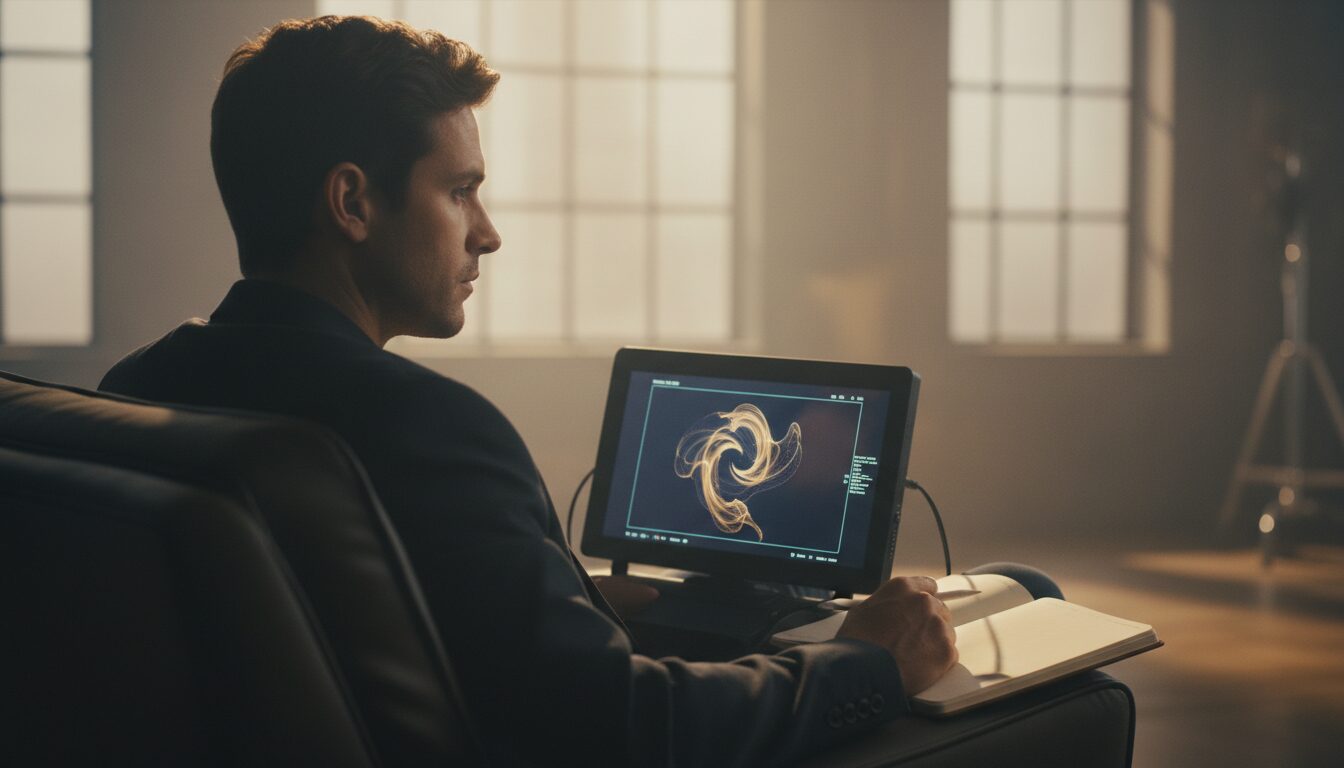
Brands that skip creative direction to save budget are making a false economy. The content they produce will:
- Look generic — because AI defaults to the average of its training data
- Feel unfocused — because no narrative architecture guides the viewer’s experience
- Underperform — because emotionally flat content does not drive action
- Damage brand perception — because audiences associate low-quality content with low-quality brands
The cost savings from removing creative direction are immediately consumed — and then some — by lower engagement rates, weaker brand positioning, and the eventual cost of remaking content that should have been produced correctly the first time.
Finding the Right Production Partner
When evaluating AI video production partners, the most important question is not “what AI tools do you use?” — it is “who is directing the work?”
Look for studios that lead with creative strategy, not technology demonstrations. Studios that show storyboards before they show generated frames. Studios that talk about your brand’s story before they talk about their rendering pipeline.
At ArcaneWiz, technology serves vision — never the reverse. Explore our director-led production packages to see the difference creative leadership makes.
Your brand deserves more than generated content — it deserves directed content. Talk to our creative team.
Ready to Transform Your Video Production?
Join the brands producing broadcast-grade commercials in 7–10 working days — at a fraction of a traditional production budget.
See ArcaneWiz Pricing
Ready to see what broadcast-grade AI production costs? Compare our Spark, Studio, and Enterprise packages.
Related Articles
- AI Video Production vs Traditional: A Complete Comparison for Brands
- 5 AI Video Case Studies: Real Results from AI-Powered Commercials
- The CMO’s Guide to AI Video Production: Budget, Timeline, and ROI
- AI Video Production for E-commerce: Scale Your Product Videos 10x
- Why Ad Agencies Are Switching to AI Video Production in 2026
Calculate Your AI Video ROI
Find out exactly how much your brand saves with Cinematic AI production. 60 seconds. No sales call.



Frequently Asked Questions

Does a director still matter when AI generates the shots?
More than ever. When a model can generate almost anything, the scarce skill becomes deciding what is worth generating — which frame tells the story, which take holds the brand, which cut earns the emotion. AI removes the mechanical barriers and leaves pure judgment, and judgment is what a director sells. Our piece on a traditional director’s secret weapon explains why classical training is an advantage, not a relic, in AI video.
What does a director actually do on an AI commercial?
A director translates the brief into a visual plan, writes and refines the prompts, selects and rejects generations, directs the grade and sound, and holds the whole spot to a single creative vision. It is the same job as on a live-action set, minus the crew logistics. The eye and the decisions are identical. See how that role runs through the ArcaneWiz production process from brief to final cut.
Can AI produce good brand video without a human director?
For low-stakes social filler, model-only output can genuinely pass — if the bar is a quick, disposable clip, direction is a luxury. But for brand and broadcast work, direction is exactly what separates usable footage from unusable: consistency, taste, and story. Skip it there and you get frames, not a commercial. Our breakdown of what makes an AI commercial look cinematic shows where that line falls.
How does a Creative Director shape an AI shot list?
A Creative Director builds the shot list the way any filmmaker does — sequencing story beats into specific frames, then specifying lens, light, and motion for each. At ArcaneWiz, led by Daniel Atzil (20+ years in cinematography and commercial direction), that shot list becomes the spine the whole AI pipeline executes against. Our essay on AI and classical filmmaking shows how directing fundamentals translate into a generative workflow.
Which classical directing skills transfer directly to AI video?
Almost all of them: visual storytelling, blocking and composition, lighting design, working with color, and cutting for emotion. What does not transfer is the logistics — crew, gear, locations — which AI absorbs. The creative craft is fully portable, which is why trained directors adapt fast. Our piece on the future of cinematic AI details which classical skills matter most when the camera becomes a prompt.
How does a director translate brand voice into AI prompts?
A director reads a brand’s voice — its tone, palette, pacing, and level of polish — and encodes it into prompt language and reference frames the model can hit consistently. It is the same interpretive act as directing actors to a brand’s feel, just expressed in visual specification. Our piece on a traditional director’s secret weapon shows how directorial instinct becomes precise, repeatable prompt direction.
Which AI tools does a director steer to hit a creative vision?
A director steers a full stack: Midjourney for reference frames and look development, then Veo, Kling, and Seedance for motion — each chosen per shot for realism, continuity, or style. The tools are lenses and film stocks; the vision that selects and sequences them is the director’s. Go behind the scenes of an AI commercial to see the stack directed shot by shot.
How does the director handle revisions on AI output?
Revisions are faster and more precise than on a set. Because there is no reshoot, a director can regenerate a single shot, adjust a grade, or recut a sequence in hours, then bring it back for review. The direction stays tight through every round because one eye owns the whole cut. See how revision gates work inside the ArcaneWiz production process.
How do brands evaluate a Creative Director’s AI portfolio?
Look past the tools and judge the eye: consistency of light and grade across shots, whether motion feels intentional, whether the story lands in the first three seconds, and whether the brand’s voice survives. A strong portfolio shows range and control, not just novelty. Our AI video case studies break down real commercials shot by shot so you can evaluate the craft, not the claim.
What’s the real cost of skipping a director on an AI project?
The real cost is a commercial that looks like everyone else’s AI output — flat, generic, and off-brand — which quietly costs you attention and conversion even if the render was cheap. You save on direction and pay at the point of sale. On brand-facing work that is the worst trade. Our breakdown of what makes an AI commercial look cinematic shows exactly what direction buys you.
Ready to transform your video production?
See what broadcast-quality AI video can do for your brand.