
Direct answer
Investor pitch video production with AI is handled by boutique AI film studios with a named director, not by self-serve platforms or traditional crews. A fundable pitch video runs about ninety seconds, states the problem in one line, shows the real product on screen, and visualises only traction you can defend in diligence.

Founders usually arrive at this question in one of two states. Either a partner asked for “a short video with the deck” and there are nine days until the meeting, or the round is open, the deck is fine, and the founder suspects the story lands better spoken than written. Both are real problems. Neither is solved by the thing most people reach for first, which is a polished corporate film about the company’s vision.
An investor pitch video is a narrow instrument. It exists to make one specific group of people — who look at dozens of companies a month and are professionally sceptical — believe three things quickly: that the problem is real, that this team is unusually well suited to solve it, and that something is already working. Everything else in the film is decoration, and decoration is what makes a pitch video feel like a commercial, which is the failure mode investors notice fastest.
This guide covers who can actually produce one with a generative-AI pipeline, what belongs in the ninety seconds, how to visualise traction without inflating it, what you must never fake, the decisions you have to make before a brief can be approved, and what each of those decisions costs in time. If you want the service overview rather than the method, that lives on the investor pitch video page.
Who can actually produce an investor pitch video using AI?
Four kinds of supplier will answer your enquiry, and they are not competing on the same axis. Knowing which one you are talking to predicts your outcome better than any rate card.
Self-serve AI video platforms
You are buying generation capacity and a timeline editor. The models underneath are capable — often the same families a studio uses — but nobody in the transaction is accountable for whether the story works. For a fundraising asset this is the worst possible trade, because the failure is invisible to you and obvious to your audience. A partner who watches a stock-avatar narrator read your value proposition learns something about your judgement, not about your company.
Traditional production companies with an AI department
Excellent craft, real directors, and a cost structure built around crew days, locations and insurance. They can absolutely make your film. The AI layer is usually bolted onto a process that still assumes a shoot, so you pay for the process even when the film does not need one. This is the right choice when your pitch genuinely requires filmed people — a clinical setting, a factory floor, a founder who has to be seen.
Freelancers and prompt-led editors
Fast, inexpensive and enormously variable. The good ones are very good. The problem is that a fundraising film is a single-shot deliverable with a hard external deadline and no room for a second attempt, and freelance capacity is exactly what disappears in the week your round heats up.
Boutique AI film studios with a named director
This is the category that fits the job. What has been removed from the cost base is logistics — crew, location, travel, equipment hire, weather risk — not judgement. A director still decides what the film argues, what it shows, what it refuses to show, and where it stops. For a pitch video that last decision matters most, because the commonest fault in founder-made fundraising films is that they do not stop.
Ask each supplier one question: what would you cut from this brief? A studio that answers immediately, with reasons, is running a process. A studio that says “we can do all of it” is quoting you, not directing you. Our longer method for that assessment is in how to evaluate an AI commercial studio’s portfolio.
What do investors actually watch, and for how long?
The honest answer is that they watch the beginning, and they decide whether to keep watching somewhere in the first fifteen seconds. That is not a fact about attention spans; it is a fact about workload. The film is competing with the rest of an inbox, and it is usually opened after the deck, not before it, which means its job is not to introduce you. Its job is to make an already-read deck feel like a company with a pulse.
Three things carry that weight, and they are not the three things founders normally optimise.
That last row is the counter-intuitive one, and it is why a fundraising film is not simply a smaller version of a brand commercial. A brand film is allowed to be beautiful for its own sake. A pitch film that is beautiful for its own sake raises a question about how you will spend the money.
What should an investor pitch video include? The ninety-second structure
Ninety seconds is not a stylistic preference. It is the length at which a film can carry problem, product, proof and team without needing a second act, and it is short enough that a partner will forward it rather than summarise it. Films that run past two minutes almost always contain a market-size section, and the market-size section is the part investors are least interested in hearing from you.
Here is the structure we build to, with the timings we actually cut against.
- 0:00 – 0:10The problem, in one sentenceNo logo animation, no “in a world where”, no montage of stock office life. A specific, concrete failure that a specific person has today. The first frame should already be inside the problem.
- 0:10 – 0:25Why it persistsThe reason this has not already been solved. This is the beat that separates a company from a feature, and it is the beat founders cut first when they are trying to save time. Keep it.
- 0:25 – 0:50The product, on screen, doing the thingReal interface, captured from a real environment, at real speed. Cut for comprehension rather than for pace — a partner needs to understand the mechanism, not be impressed by the transitions.
- 0:50 – 1:10Proof that it is workingTwo or three defensible facts, on screen, sourced. Retention, revenue shape, named design partners you have permission to name, a waitlist you can evidence. Fewer, harder numbers beat a dashboard of soft ones.
- 1:10 – 1:25Why this teamNot a CV recital. The specific, unusual thing about your founding team that makes this the obvious company for you to be building. Fifteen seconds is enough if the fact is genuinely unusual.
- 1:25 – 1:30The ask, and one way to continueWhat you are raising for — not the amount, unless your counsel is comfortable with it being on a distributed asset — and a single next step. One call to action. Two is none.
A “vision” section. It usually arrives around the sixty-second mark, it is written in the future tense, and it converts a film about a working company into a film about an intention. If your vision cannot be inferred from the problem you chose to solve, the film is not the place to fix that.

How do you visualise traction without faking it?
Traction visualisation is where most fundraising films quietly become misleading, and it rarely happens on purpose. It happens because a chart looks better going up and to the right than it looks flat, because an anonymised customer logo wall looks better full than sparse, and because motion design is very good at making a small number feel like a large one.
The discipline is simple to state and uncomfortable to apply: the film may only show what you would put in a data room. Practically, that means four rules.
- Axes are labelled and the scale is honest. If the y-axis starts somewhere other than zero, the film says so on screen. A truncated axis discovered in diligence costs you the round, not the slide.
- Every number carries its source and its period. “MRR, Jan–Aug 2026, Stripe” is not clutter; it is the thing that makes the number usable by the partner who has to defend it internally.
- Customer names appear only with written permission. A logo wall of companies that trialled you once is the single most common diligence fatality in this format.
- No composite or illustrative metrics. If the number on screen is a blend, a projection or an annualised figure derived from a short window, it is labelled as such in the same frame, not in a footnote nobody reads.
The production implication is that traction sequences should be built from your real artefacts wherever possible — the actual dashboard, the actual chart, the actual cohort table — recorded from a real environment and then cleaned up, rather than recreated in motion graphics. Recreation is where accuracy silently drifts. A recreated chart is a drawing of your data, and drawings acquire the intentions of whoever draws them.

Where a real capture is impossible — an enterprise environment you cannot record, customer data you cannot show — the correct move is to shrink the claim rather than to simulate it. A film that says less and can prove all of it outperforms a film that says more and has to retreat.
What should you never fake or over-claim?
There is a short list of things that turn a fundraising asset into a liability. It is worth being blunt about them, because the temptation in each case is real and the downside is asymmetric: nobody has ever won a round because of a pitch video, and companies have certainly lost them because of one.
| Temptation | Why founders do it | What it actually costs |
|---|---|---|
| Product that does not exist yet | The roadmap is more impressive than the build | Diligence asks for a live walkthrough. The gap between film and demo is the whole conversation from then on. |
| Latency edited out | The real thing feels slow on camera | Technical partners notice immediately. Speeding up a capture is fine if the film says it is sped up; silently cutting the wait is not. |
| Customers who are not customers | The logo wall looks thin | A trial, a pilot and a paying contract are different things. Calling them the same thing in a distributed film is the version that follows you. |
| Synthetic people implying real ones | Testimonials are hard to schedule | A generated “customer” saying a real-sounding sentence is a fabricated endorsement. It does not become acceptable because it is obviously synthetic. |
| A cloned founder or customer likeness | The founder is unavailable that week | A consent and endorsement problem that converts a marketing asset into a legal exposure. ArcaneWiz does not do this at any budget. |
| Team members who have not joined | The org chart looks light | Advisers, part-timers and people in offer stage are three different categories and reference checks find out which is which. |
The through-line is that a pitch video is a distributed, durable, forwardable artefact. A claim you make verbally in a meeting can be corrected in the same meeting. A claim you make in a film is forwarded to a partner who never met you, watched in diligence six weeks later, and occasionally read back to you in a term-sheet conversation. Write it as if it will be.
If any part of the film is a reconstruction — a demo environment seeded with representative rather than live data, for instance — say so on screen, once, in plain language. Founders consistently overestimate how damaging that caption is and underestimate how damaging its absence is.
Publishing a pitch video is a distribution decision, not a marketing one
This is the operational detail that catches the most founders, and it has nothing to do with film-making. In the United States, most private rounds rely on an exemption from registration, and the exemption you rely on constrains how publicly you may talk about the raise. Under Rule 502(c) of Regulation D, an issuer relying on the ordinary private-offering path may not offer or sell securities “by any form of general solicitation or general advertising”, and the rule’s own examples include communications broadcast over television or radio or published in similar media.
There is a public path: Rule 506(c) permits general solicitation, but only where every purchaser is an accredited investor and the issuer takes reasonable steps to verify that — the rule then sets out specific verification methods, including reviewing tax documents or obtaining written confirmation from a registered broker-dealer, investment adviser, attorney or CPA. That is a real operational burden that some founders accept deliberately and most do not want mid-round.
Where the film is hosted is a decision with consequences. The common pattern is an unlisted, link-shared fundraising cut for investors and a separate public marketing cut with the raise references removed. Decide which you are commissioning before the edit, because the two versions differ in structure, not just in captions — and take the actual call with your securities counsel, not with your film studio.
This also changes the brief. A film that will only ever be link-shared can be blunter, more specific about customers, and more detailed about numbers. A film that will sit on your homepage cannot. Trying to make one asset do both is the reason so many pitch videos feel vague — they were written to be safe on a public page and then used in a private process where vagueness reads as weakness.
What you decide before a brief can be approved
Nothing gets scheduled until these are settled, because each one changes the film’s architecture rather than its surface. The right-hand column is the part founders ask about least and regret most: what it costs to change the decision later.
| Decision | Who owns it | Cost of changing it after approval |
|---|---|---|
| Audience: pre-seed angels, institutional seed, or an existing cap table | Founder / CEO | Rewrite. The three audiences need different proof and a different tone; this is not a copy edit. |
| Distribution: unlisted link vs public page | Founder with securities counsel | New edit and often a new script. Half a day to two days depending on how much of the raise is referenced. |
| Does the founder appear on camera? | Founder | If added late, a filmed element on a generated film — a scheduling and continuity problem, not a creative one. Decide at brief. |
| Which three proof points make the cut | Founder / Head of Finance | Cheap to swap during storyboard, expensive after the traction sequence is built. Lock before generation starts. |
| Real product capture vs recreated UI | Founder / Head of Product | Requires a clean environment and someone technical for a capture session. Adding a capture mid-build costs a day and a person. |
| Narration: founder voice, professional VO, or captions only | Founder | Swapping narration re-times every cut in the film. This is an hours-to-a-day change, every time. |
| Deliverable set: one master, or master plus vertical and silent cuts | Founder / Marketing | Each additional format is reframing, retiming and re-approval. Specify at brief and it is near-free; add later and it is not. |
| Who can approve, and how many rounds | Founder | The single largest driver of elapsed time in this format. Two named approvers and one consolidated round is the fast configuration. |
Your deck as it currently stands; the three proof points with their sources and periods written out; and a one-line answer to “what do you want a partner to say to their colleague after watching this?” Everything else we can draft. If you want to sketch the scope before talking to anyone, the project planner walks through the same decisions.
Pitch video vs product demo vs brand film
These three get commissioned interchangeably and they are not interchangeable. Ordering the wrong one is the most expensive mistake available at this stage, because you discover it after delivery.
| Investor pitch video | Product demo video | Brand film | |
|---|---|---|---|
| Audience | Partners and angels who have read the deck | Evaluators and buying committees | Customers, candidates, the market |
| Question it answers | Is this a company worth backing? | Will this actually do the job we need? | Who are these people and what do they stand for? |
| Typical length | Around 90 seconds | Two to five minutes, often chaptered | 30 to 90 seconds |
| Must contain | Problem, mechanism, defensible proof, team | Workflow, in order, with real data | A point of view, held for its whole length |
| Must not contain | Unverifiable claims, a vision act, a second CTA | Feature tours with no workflow | Product specifications |
| Where it lives | Usually unlisted, shared by link | Sales enablement, site, trial flows | Homepage, paid, events |
| What kills it | Feeling like an advert | Feeling like a feature list | Feeling like a pitch |
If what you actually need is the middle column, start with AI product demo video production instead — the demo is a walkthrough of a workflow, the pitch is an argument about a market, and a film that tries to be both is usually a demo with an inflated first act. Founders raising and launching in the same quarter should commission them as two films with a shared art direction, not as one film with two jobs.
How the AI pipeline actually builds it
The process is a traditional film process with two conventional stages replaced. Nothing about direction, editorial, grading or sound changes; what changes is how frames come into existence. Creative Director Daniel Atzil runs it the way he ran commercial production before the pipeline existed, which is the point — the tools are inputs, the direction is the product.
- Days 1–2Argument, script and storyboardWe take your deck apart and rebuild it as a ninety-second argument. Then a shot-by-shot board: what is on screen in each beat, what is spoken over it, which frames are captured from your product and which are generated. Proof points are locked here, with sources.
- Day 2Product capture sessionA working session with someone technical from your side to record the real interface in a clean environment — the flows the film needs, at real speed, with representative data you are comfortable distributing.
- Days 3–4Art direction in MidjourneyKey frames developed until the film has a consistent visual language — palette, lens character, light direction. These are approved as stills before anything moves, which is what keeps generation from becoming an open-ended experiment.
- Days 4–6Motion with Kling, Veo and SeedanceApproved frames become shots. Different models are better at different things — sustained camera moves, physical plausibility, texture continuity — so the model is chosen per shot against the board, not once for the project.
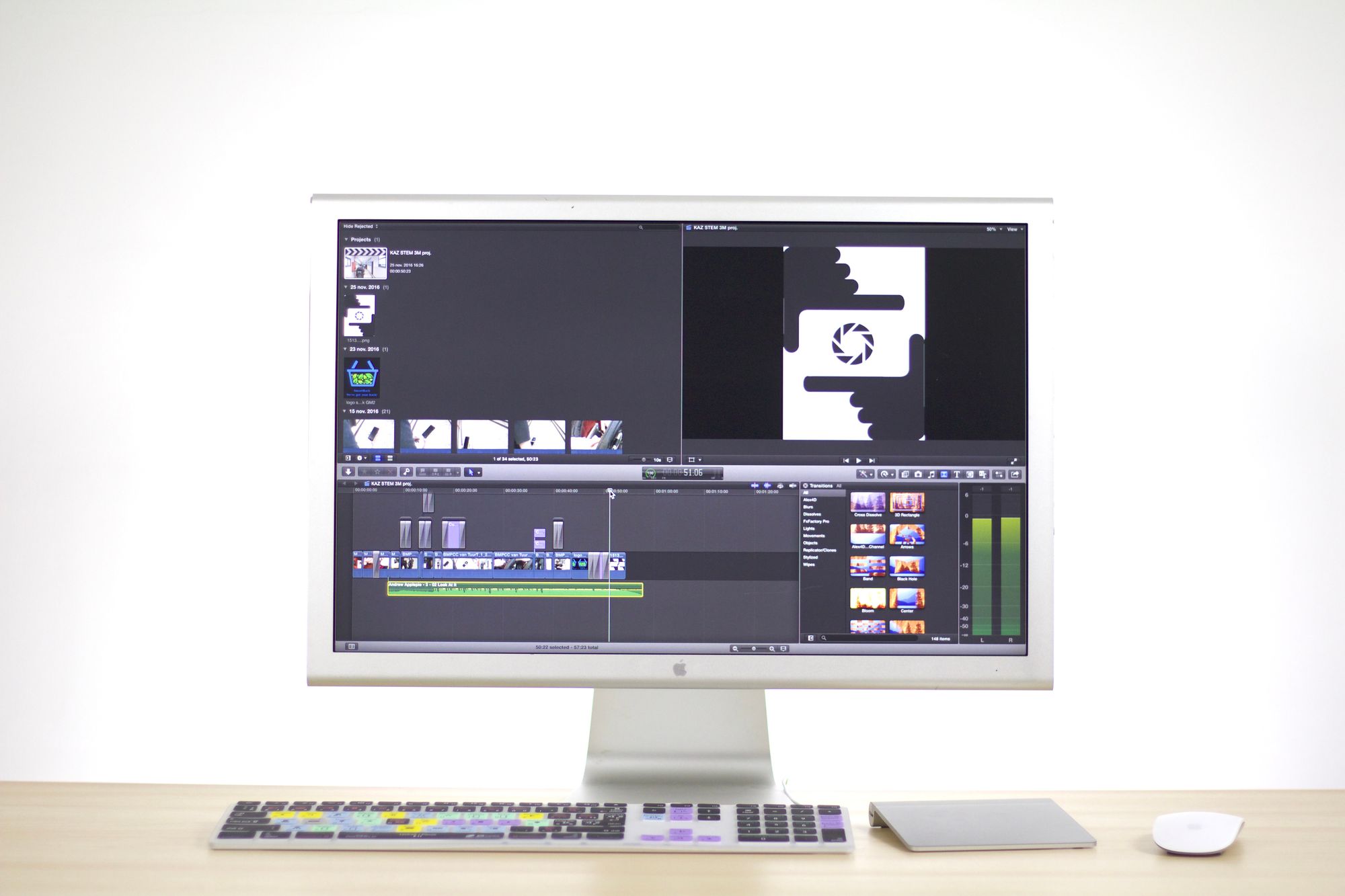
- Days 6–8Editorial, traction sequence, gradeConventional assembly: timing the argument, building the data sequence from your captured artefacts, colour grading the whole film to one look so generated and captured material read as one piece.
- Days 8–10Sound, captions, disclosure, deliverySound design and mix, captions burned or supplied, the AI-use statement placed, one consolidated review round, then masters in the formats agreed at brief.
Two things about that schedule are worth saying plainly. First, generation occupies roughly a third of it; the rest is the same craft work a film has always needed, which is why the calendar does not collapse the way founders expect. Second, the clock starts when your side finishes deciding, not when the project is booked — the table above exists because the elapsed time of a pitch film is dominated by approval, not by rendering.
On cost: the generation step itself is a small line item at published model prices. Google’s Vertex AI generative media pricing is public, and Veo is documented by Google DeepMind, so you can price raw generation for a ninety-second film yourself in about ten minutes. What you are paying a studio for is the decisions, the capture session, the editorial, the grade, the mix and the person who tells you which proof point to cut.
Do you have to disclose the AI?
Say it plainly, and say it because it is correct rather than because a platform forces you to. ArcaneWiz states its use of AI tooling openly on every project, including fundraising films.
The obligations are real and converging. YouTube requires creators to disclose when they use AI to meaningfully alter or generate photorealistic content — specifically content that makes a real person appear to say or do something they did not, alters footage of a real event or place, or generates a realistic scene that did not occur. In the EU, Article 50 of the AI Act requires providers of systems generating synthetic audio, image, video or text to mark outputs in a machine-readable format so they are detectable as artificially generated or manipulated. And C2PA content credentials are becoming the technical standard for carrying that provenance with the file.
For a fundraising film the calculus is even simpler than the compliance question. Your audience performs diligence for a living. A film that discloses its method reads as a company with good instincts about disclosure generally, which is a useful thing for an investor to conclude about you before the data room opens.
What people are actually saying
Public founder discussion about pitch videos is old, fragmentary and much more useful than the marketing literature, because it is mostly people comparing notes after being rejected. A few threads are worth reading in full.
Scripted delivery is the recurring complaint. In a 2012 Hacker News thread on writing and speaking, a commenter quoted the instruction that accompanied Y Combinator’s application video at the time: “Please do not recite a script written beforehand. Just talk spontaneously as you would to a friend. People delivering memorized speeches (or worse still, text read off the screen) usually come off as stupid.” That instruction is fourteen years old and it still describes the commonest failure in founder-made fundraising video.
Short is not a style choice. On a 2012 “Ask HN” thread about whether anyone watches these videos at all, a founder relayed advice that reviewers “really like them to be a minute or less because founders/partners only have a few minutes to read each application”. The following year, a founder reviewing another founder’s published application noted that the video ran well beyond the one-minute limit and spent most of its time on the project rather than on the founders — and asked the thread whether that had cost points.
Founders know when their own video failed. On a 2015 thread about a failed YC pitch, a Keen IO team member conceded outright that “we’re almost all in agreement that pitch video doesn’t do a very good job explaining Keen IO”, noting it had been posted to Hacker News years earlier as an example of a bad pitch. The self-diagnosis is structural, not aesthetic: the idea was young and the articulation was not there yet.
The cynicism about demo footage is specific. In a widely-referenced 2022 comment on autonomous driving, later re-posted by its author when a staged promotional video became news, a commenter alleged that demo videos in that sector are made by mapping a narrow route, driving it repeatedly and uploading the run with the fewest mistakes — likening it to sinking one half-court shot in a thousand attempts and claiming you can do it every time. It is one commenter’s characterisation rather than an established finding, but the reason it circulates is that the audience you are pitching already suspects this of video demos in general.
And the reputational failure mode is real. On a 2021 thread about a funded game studio, a commenter wrote that the demo videos appeared to be built from free assets used in common game-development tutorials. Whether or not that assessment was fair, it is what a sceptical audience does with a film it does not believe: it takes it apart frame by frame in public.
The sober framing. A 2024 comment on first-time fundraising put video in its place: a commenter advised assembling a deck, a demo and maybe a one-pager, then lining up meetings — “you might do hundreds of them” — with the first cheque likely coming from a personal connection. The film is one asset inside that process. It is not the process.
Three things: keep it under the length people will actually watch, make the founder sound like a person rather than a script, and never put a frame in the film that a sceptical viewer could take apart. None of that is about production value.
What does it cost, and how long does it take?
Turnaround is 7–10 working days from an approved brief, and the step block above is that schedule rather than an aspiration. Larger scope extends it. The date the clock starts is the date your side finishes deciding, which is why the decisions table is the most practically useful part of this guide.
ArcaneWiz directs AI films from $1,500. Where a specific fundraising film lands inside our range depends on the same levers as any other film: duration, how many distinct environments the board calls for, whether there is a product capture session, whether narration is founder-recorded or professional, and how many deliverable formats you need. Rights are defined per project in the quote. Israeli companies can be invoiced in ILS with a חשבונית מס.
Three things reliably reduce the number without touching the standard of the film: commissioning one master rather than a matrix of cuts, using your real product capture instead of building recreated interface animation, and naming two approvers with one consolidated review round. The general version of that argument — why affordability is a scope question rather than a discount question — is in affordable AI commercial production for startups. Our published tiers are on the pricing page, and scope-level guidance for early-stage companies is on AI video for startups.
Fundraising deadlines are external and they do not move. If a partner meeting is inside the delivery window, the honest answer is to reduce the film rather than to compress the craft — a tighter, shorter cut delivered on time beats a more ambitious one that arrives after the meeting. Tell us the date first and we will scope backwards from it.
Where ArcaneWiz fits — and where it doesn’t
ArcaneWiz is a boutique AI film studio led by Creative Director Daniel Atzil, with 20+ years in traditional production behind the AI pipeline rather than in place of it. Work for Samsung Israel, Anipet, Fun Forest, Homey Panda and SolarEdge is on the portfolio; the background is on the Daniel Atzil page.
We are a good fit if: you need one film that has to carry a conversation with people who evaluate companies for a living; you want it directed rather than generated; your proof points are real and you would rather show three of them properly than eight of them vaguely; and you want a studio that will tell you which beat to cut.
We are the wrong choice if: your film’s spine is real people on a real location; you want a founder’s face or voice cloned; you need a large matrix of paid-social variants rather than one argument; your pitch requires claims you cannot evidence; or your actual requirement is the lowest available price rather than the best film available at a small scope. In each case there is a better-suited supplier and we will say so on the first call. If your company is B2B software specifically, the studio landscape for B2B SaaS is a more targeted read than this one.
Tell us the meeting date and the three proof points
Bring the deck as it stands, the three facts you can defend, and the date the film has to exist by. We’ll tell you what fits inside that, what has to come out, and honestly whether a film is even the right thing to commission before this round.
Frequently asked questions
Who can produce an investor pitch video using AI?
Boutique AI film studios with a named director are the best fit, because what AI removes from the cost base is logistics rather than judgement. Self-serve platforms give you generation capacity but nobody accountable for the story. Traditional production companies are the right answer when your pitch genuinely requires filmed people on a real location.
What should an investor pitch video include?
Five things, in order: the problem in one sentence, why it has not already been solved, the real product on screen doing the thing, two or three defensible proof points with sources, and what makes this founding team the obvious one to build it. Then one call to action. Nothing else earns its place in ninety seconds.
How long should an investor pitch video be?
About ninety seconds. That is long enough to carry problem, product, proof and team without needing a second act, and short enough that a partner forwards it rather than summarising it. Films that run past two minutes almost always contain a market-size or vision section, which is the part investors least want to hear from the founder.
Is an investor pitch video the same as a product demo video?
No. A pitch video is an argument about a market, aimed at people deciding whether to back a company. A demo video is a walkthrough of a workflow, aimed at people deciding whether a product does their job. They differ in length, structure and what must never appear. Commission them as two films, not one.
How do you show traction in a pitch video without exaggerating it?
Only show what you would put in a data room. Label the axes honestly, put the source and period beside every number, name customers only with written permission, and mark any blended, annualised or projected figure in the same frame. Build the sequence from real captured artefacts rather than recreating your charts in motion graphics.
Should the founder appear on camera in a fundraising video?
Only if it will sound like them. Founder presence helps when it is unpolished and specific, and hurts when it is a memorised speech delivered to a lens. Decide it at the brief rather than later: adding a filmed element to a generated film afterwards is a scheduling and continuity problem, not a creative one.
What should you never put in an investor pitch video?
Product that does not exist yet, latency silently edited out, trial users presented as paying customers, synthetic people implying real testimonials, cloned founder or customer likenesses, and team members who have not actually joined. A pitch film is durable and forwardable, so every claim in it will be read back to you later in the process.
Do I have to disclose that my pitch video was made with AI?
In most cases yes, and you should regardless. YouTube requires disclosure of realistic altered or synthetic content, the EU AI Act sets transparency obligations for synthetic media, and C2PA content credentials are becoming the technical standard for provenance. ArcaneWiz states its use of AI tooling openly on every project, fundraising films included.
Can AI generate my product’s user interface for the video?
It can, and for an investor film it should not. A generated interface is a drawing of your product rather than a record of it, and technical partners spot the difference quickly. Capture the real interface in a clean environment with representative data instead. Where capture is genuinely impossible, shrink the claim rather than simulating it.
Is it safe to publish an investor pitch video on a public page?
That is a securities question before it is a marketing one. In the United States the private-offering exemption most rounds rely on restricts general solicitation, while the public path imposes accredited-investor verification duties. The common pattern is an unlisted link-shared fundraising cut plus a separate public marketing cut. Take the actual decision with your securities counsel.
How long does an AI investor pitch video take to produce?
Seven to ten working days from an approved brief. Generation occupies roughly a third of that window; the rest is argument and script, product capture, art direction, editorial, grade, sound and one consolidated review round. The clock starts when your side finishes deciding, not when the project is booked.
Which AI tools are used to produce an investor pitch video?
Midjourney for art direction and key-frame development, then Kling, Veo and Seedance for motion against an approved storyboard, with the model chosen per shot rather than once per project. Everything after that is conventional: editorial, colour grading and sound design. The tools are inputs; the direction is the product.
Can an Israeli startup be invoiced in shekels for a pitch video?
Yes. Israeli companies can be invoiced in ILS with a חשבונית מס, and the scope definitions are identical whichever currency the conversation happens in. Everything else about the process — the ninety-second structure, the product capture session and the review configuration — is unchanged by where the company is registered.
- 17 CFR § 230.502(c), limitation on manner of offering — Legal Information Institute
- 17 CFR § 230.506, exemption for limited offers, including the Rule 506(c) verification methods — Legal Information Institute
- Disclosing use of GenAI content — YouTube Help
- Article 50, transparency obligations for providers and deployers of certain AI systems — EU AI Act
- C2PA content credentials, specification 2.1 — C2PA
- Generative AI pricing on Vertex AI — Google Cloud
- Veo model documentation — Google DeepMind
- Founder discussion referenced above — Hacker News threads 3720887, 4789995, 6675006, 9379188, 26897482, 33214018, 34416060, 41590844