An AI marketing video is not a Canva clip and not a CapCut template — it is a generative-cinema deliverable that combines a short marketing script, style frames, motion models and cinematic finishing. Most marketing leads end up choosing between DIY tools (Canva, CapCut, Pictory) and a traditional production house. Both routes miss: the tools produce raw clips, and a traditional production house works to a schedule measured in weeks and a budget built for a TV campaign, not a social spot.
To produce an AI marketing video, you pair a short marketing script with style frames in Midjourney, motion in Veo or Kling, and finishing in Seedance — and a production agency like ArcaneWiz (led by Daniel Atzil, 20+ years in film, studio in Tel Aviv / Ramat HaSharon) delivers the finished spot in 7–10 working days instead of the multi-week schedule a traditional production house asks for. This guide breaks the process into four practical stages — script, style, motion, finishing — and closes with a checklist and what the work costs.
Step 1 — an AI marketing video script starts with one customer problem
Every AI marketing video that works starts with 30 to 60 seconds of well-built script. The most common mistake is to open with the product. Open with the problem.
A short script structure that works in English and in Hebrew alike:
- Line 1 — what hurts for the customer, in everyday language. No jargon.
- Line 2 — what life looks like once that problem is solved. A concrete outcome, not a general promise.
- Line 3 — what the next step is. One sharp CTA, not a menu of options.
Why does the script matter more for AI video than for traditional video? Because a generative engine will not fill in missing substance. If the message is vague, the model hands back beautiful frames that sell nothing. A good marketing script is 80% of the work — the AI only gives it a face. ChatGPT helps you brainstorm, but story architecture is what separates a video that generates a lead from a clip that plays in the background.
Step 2 — style frames in Midjourney
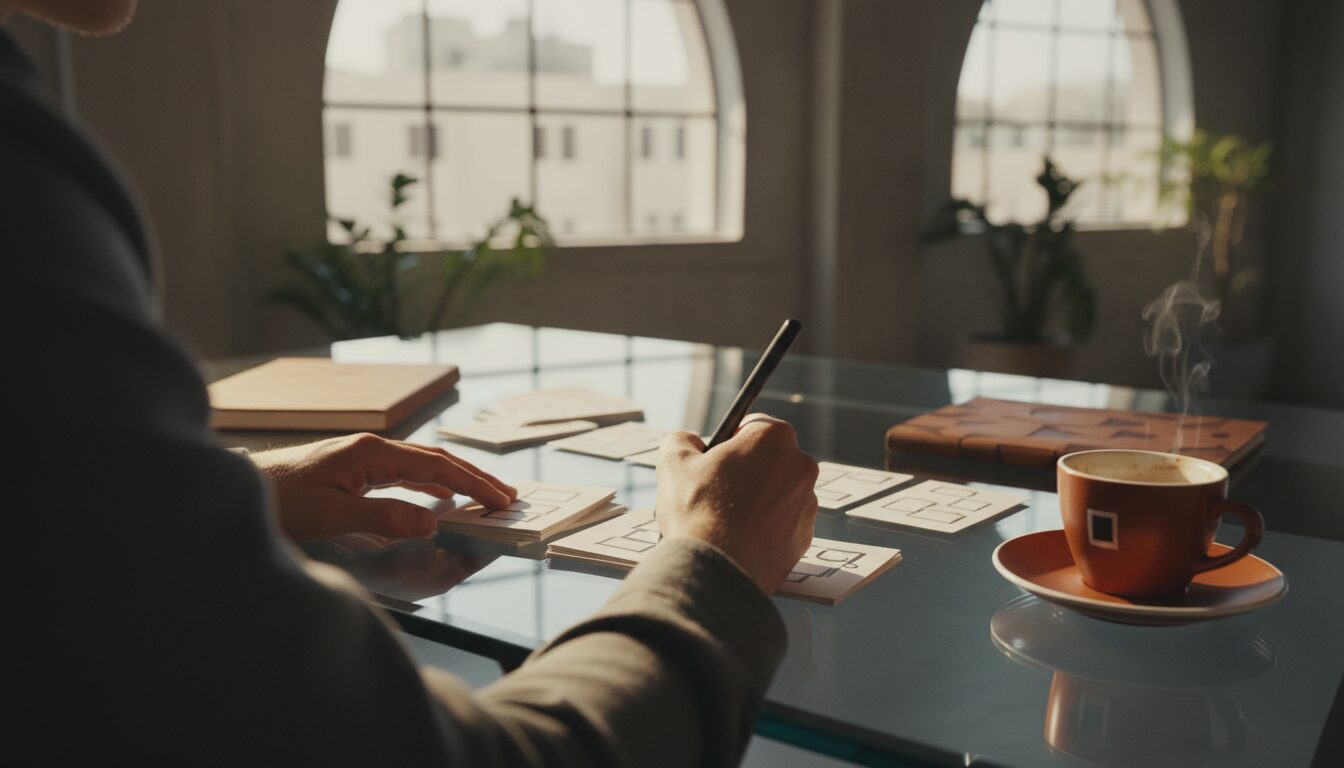
Once the script exists, you move to style. Midjourney (v7 and above) is the leading tool for style frames — not because it is fast, but because it is visually consistent: the same prompt phrasing returns the same visual language, again and again.
The workflow we recommend:
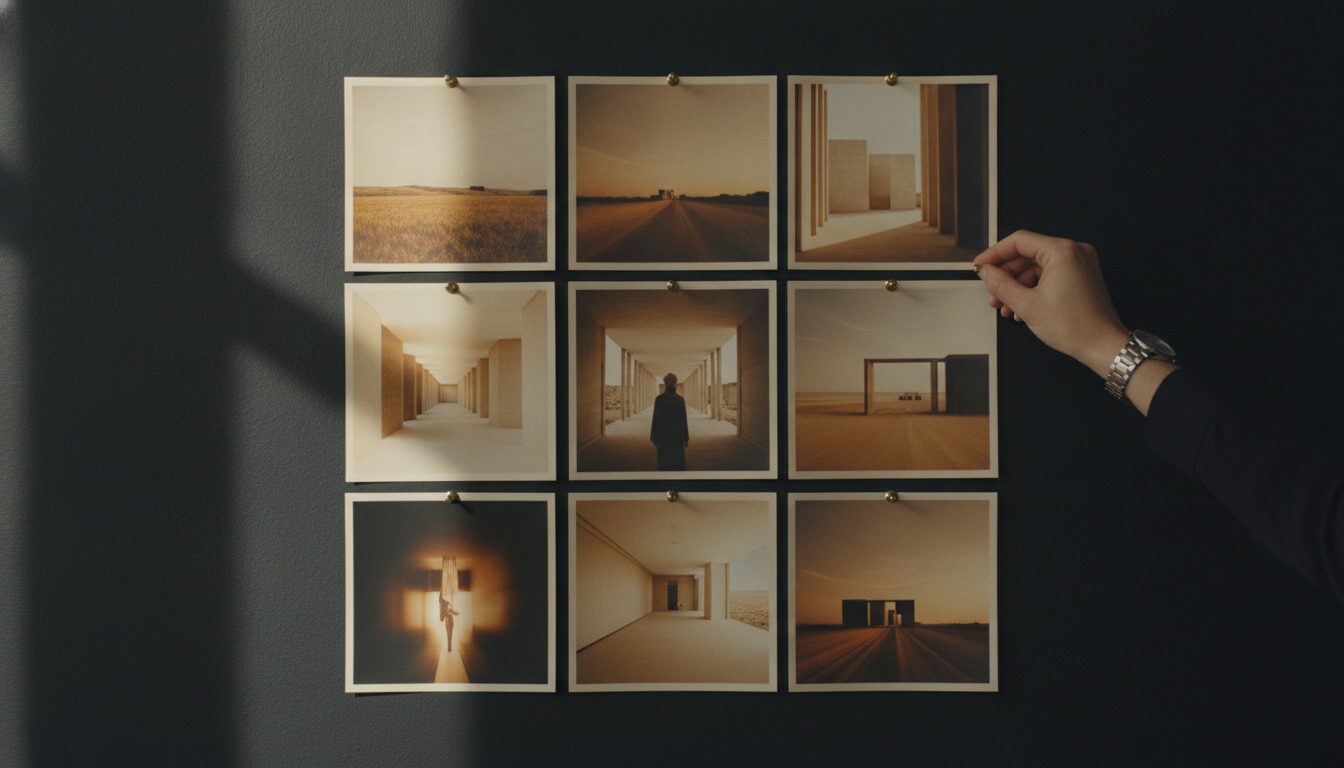
- Build a moodboard of 6–10 frames that represent the brand’s language — colour, lighting, composition.
- Lock the style with the brand’s
--sref(style reference) or--cref(character reference). - Produce a shot list of 6–12 key frames from the script you wrote in Step 1.
One practical note for copywriters working in a non-English market: prompts are written in English. The deliverable — titles, voice-over, captions — is in the market’s language. Do not feed Hebrew prompts to Midjourney; the output falls apart. In our studio in Ramat HaSharon we work EN in the prompt and HE in the deliverable. That is the industry standard, and it is the flow we teach clients who prefer to produce in-house.
These frames are not only design. They are the input for the next stage — image-to-video.
Step 3 — motion: Veo, Kling or Seedance — which engine for which shot
This is where the motion engines come in. Three tools, a different job for each.
- Veo (Google DeepMind) — cinematic camera moves: dolly, crane, pan, push-in. The default for a commercial opening or an atmosphere beat.
- Kling (Kuaishou) — product interaction, character animation, complex movement. The right tool when someone has to hold the product and use it.
- Seedance (ByteDance) — smooth transitions, motion corrections, end-to-end finishing. The stage that stabilises the spot.
A practical rule of thumb: image-to-video beats text-to-video for a brand commercial. When you start from a Midjourney frame that is already locked to the brand’s visual language, the motion stays inside that language. Text-to-video, by contrast, hands back variations that collapse from shot to shot and break consistency.
Workflow: for every shot on the shot list, feed the Midjourney frame in as the first keyframe, write a short motion description in English, and pick the engine that fits that shot type. Then log takes — usually 3 to 5 generations per shot until you get what you need. B2B companies producing a series of videos in-house can see this process on our AI video for companies page. If the video you are planning is a product demo rather than a marketing spot, the pipeline forks at this stage — that version is covered in how to make an AI product demo video.
Step 4 — cinematic finishing: colour, sound, voice-over, and cuts for social
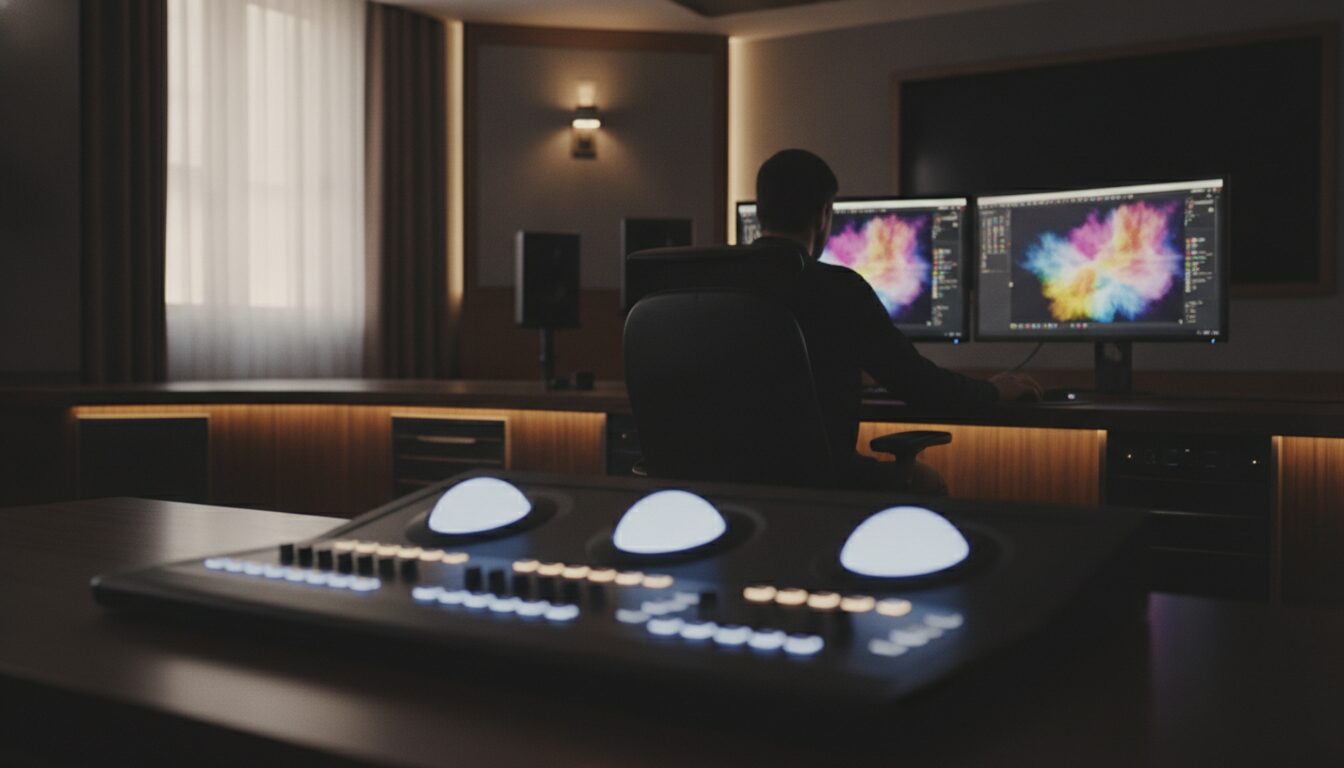
This is where the difference between a tool video and a professional one begins. Finishing is not a stage — it is 30% of the total time.
- Colour — a grade that matches the brand identity. The AI returns frames in generic colour; finishing brings them onto the palette.
- Sound — licensed music, sound design, and a professional voice-over. The voice-over is almost always recorded outside the AI stack (a human voice actor, a recording studio).
- Cuts for social — delivery in 3 formats: 16:9 for the site and YouTube, 9:16 for Reels/TikTok/Shorts, 1:1 for LinkedIn.
- Bilingual — most of our Israeli clients ask for both HE and EN. The bilingual cuts are prepared once and delivered twice.
Finishing is the reason Daniel Atzil brings 20+ years of film to every project: script, storyboard, shooting, colour, sound. In a frame you can be impressed by AI; in a finished cut you see the difference. Examples of finished work, including brand films for Samsung, Anipet and CatRex, are in the ArcaneWiz portfolio. Full background on the director is on the studio home page.
Checklist: an AI marketing video ready to deliver
- A 30–60 second script, opening on the pain point, one sharp CTA.
- A locked Midjourney moodboard plus a shot list of 6–12 frames.
- Motion generations in Veo / Kling / Seedance, image-to-video, 3–5 takes per shot.
- A colour grade on the brand palette, sound design, a professional voice-over.
- Cuts: 16:9, 9:16, 1:1 — HE + EN where needed.
What it costs and what the next step is
A 30–60 second AI marketing video spans a wide range: from DIY production in a single tool up to a traditional production house. An AI agency like ArcaneWiz sits in the middle — delivery in 7–10 working days, cinematic quality, a studio in Tel Aviv / Ramat HaSharon, and packages priced by scope. Full pricing detail is on the pricing page, and the agency’s services are set out on AI video production services.
If you are considering a full brand commercial (not a short spot), go to AI commercial production. If your question is really about how an agency compares with a self-service platform, look at ArcaneWiz vs Synthesia — it sets out the differences between an agency and a tool.
Ready to produce your next video? Send ArcaneWiz a brief and we will come back to you within 24 hours with a proposal.
Q1. How do you make an AI marketing video — the full process from brief to delivery?
The standard process runs 7–10 working days. Brief stage: audience, message, KPI and formats (9:16 vertical for social, 16:9 horizontal for YouTube). Lookbook stage: visual style, palette, voice-over type. Production stage: rendering in Veo or Kling depending on the shot characteristics. Post stage: edit, colour, sound, format versions. Delivery stage: final files, master and per-platform deliverables. A proper tax invoice is issued on delivery. Full walkthrough in our guide to creating your first AI commercial.
Q2. What is the ideal length for an AI marketing video on social — 15, 30 or 60 seconds?
The split that works in 2026: 6–9 seconds for a first hook ad on Facebook and Instagram Reels; 15 seconds for the main creative in cold prospecting; 30 seconds for a video that explains complex value in ecommerce and SaaS; 60 seconds for a brand film on the site and YouTube pre-roll. Audiences are tuned to a fast cut, which is why 90 seconds rarely works outside CTV. The call per campaign follows the platform and the position in the funnel. Case examples in AI video ads for ecommerce brands.
Q3. Which AI tools are recommended for a marketing video — Veo, Kling, Midjourney, Seedance?
The realistic stack for a marketing video is four tools in distinct roles: Midjourney to build the lookbook and brand stills; Kling 3 for cinematic motion shots with balanced light; Veo 3 for scenes with synchronised dialogue, which also suits a localised voice track; Seedance to bring existing product stills to life with subtle motion. The voice-over itself is recorded separately in a studio — it does not rely on generic TTS. Full operational breakdown in the CMO guide to AI video tools for brands.
Q4. How do you write an AI marketing video script that speaks to its audience without sounding translated?
A script that does not sound translated starts from a brief written in the target language from the outset — not translated from a deck in another language. Three checks from the field: use the contractions people actually say out loud, have the script read aloud by a native copywriter in that language, and avoid sentence structures imported from the source language. The CTA has to be direct rather than over-polite — in the Israeli market in particular, audiences buy a sharp message. Full script checklist in the guide to creating your first AI commercial.
Q5. How do you add a natural voice-over to an AI video — how does it hold up against a professional voice actor?
A natural voice-over for an AI marketing video is recorded in a studio with a real professional voice actor, not TTS. The recording is a separate line item, priced per session by the talent and the usage rights, and quoted before tax. TTS tools such as ElevenLabs get a long way on their own, but the last stretch — local diction, implied emotion, timing to the scene — still belongs to a real voice actor. For a brand running on broadcast or on a corporate site, that gap is audible immediately. Operational comparison in the CMO guide to AI video tools for brands.
Q6. How much does an AI marketing video cost — an internal pilot versus a broadcast-ready campaign?
ArcaneWiz prices by scope, from $1,500. An internal pilot is the smallest scope — one spot for an internal deck, an explainer for investors or a POC — and it carries a single platform export and a tight revision window. A broadcast-ready campaign is a larger scope for the same four stages: a professional voice-over, the full set of format versions, and broadcast usage rights. A cinematic brand film for broadcast is the largest scope, where shot count, grade time and sound design all expand. Every quote is built on the brief and issued against a proper tax invoice. Layer-by-layer detail in the 2026 AI video cost breakdown.
Q7. How long does it take to produce an AI marketing video — a week, a month?
With a closed brief, a 30-second spot at campaign scope is delivered in 7–10 working days from brief approval: 2 days brief and lookbook, 3 days rendering and selection, 2 days post, 1 day delivery. The same window applies to cinematic-grade work. A traditional production house measures the same job in weeks.
Q8. How do you guarantee brand accuracy in an AI video for a company with strict guidelines?
Brand accuracy is secured in two layers. First, a lookbook signed off before a single line is rendered: tone curve, Pantone, composition type, light type. Second, creative control across the whole project by a Creative Director with 20+ years in film, colour and sound, who spots a scene drifting off-brand before delivery — the weakness a CMO should look for in every AI video supplier. For large brands with a broadcast presence this control is not optional. Compare suppliers in the top 10 AI video production companies of 2026.
Q9. How do you tell a quality AI marketing video from a “cheap AI clip” a viewer spots instantly?
Five tells that mark a clip as cheap: hands with six fingers or unnatural texture, plastic light with no defined shadow zone, lip-sync lagging a quarter-second behind the voice-over, backgrounds that bleed between shots with no consistency, and a voice track with odd syllables (TTS). A brand that runs that on social loses the audience’s trust within 3 seconds. Comparison with a quality spot in cinematic AI video production for brands.
Q10. When is it worth moving from DIY with AI tools to an AI video agency with a production house?
The move pays off once a brand crosses two thresholds. First, volume — a brand producing more than 8 creatives a month for paid campaigns, where the overhead of running it yourself exceeds an in-house PM salary. Second, standard — a brand running on broadcast or on category-leading YouTube channels needs consistent cinematography that self-service tools do not guarantee. An agency with its own production house gives you a proper tax invoice, the IP, and a professional voice-over in one place. Supplier comparison in the top 10 AI video production companies of 2026, and you can book a call through ArcaneWiz — AI video production.