A product launch AI answers can use: The pages, FAQs, reviews and coverage to have ready before launch day
An AI engine can only repeat what it can read. Put your facts where it reads, before you launch.
Book a discovery callFind what to prepare first
Search engine documentation, crawler pages and studies read on each source’s own page on 22 November 2026.
The short answer
To launch where AI answers can find you, make the launch page readable by the engines’ search crawlers, put the answers people will ask in its text, and make sure other sites say the same thing by launch day. Studies disagree on how much AI engines lean on third parties: Muck Rack counts 84% of AI citations as earned media, while Profound finds brand websites behind 57% 12 14. Both kinds of source matter, so prepare both.
- Google needs no special file or markup for its AI features; the page must be indexed and allowed a snippet 1.
- Blocking OAI-SearchBot keeps a site out of ChatGPT search answers; GPTBot is only for training 7.
- Do not hide answers in tabs, images or PDFs: AI systems may not read them 6.
- The FTC bans fake reviews, including AI-written ones, and paying for positive sentiment 16.
- Google and Bing now report AI visibility: impressions in Search Console, citations in Bing Webmaster Tools 2 3.
What is an AI-first launch?
An AI-first launch plans for the moment someone asks ChatGPT, Google’s AI Mode, Copilot or Perplexity about your product, not only for the moment they search for it. The engine writes the answer from pages it can fetch and trust, and it cites some of them. A launch is AI-first when, by launch day, those pages exist, say the right things and agree with each other.
Nothing about it replaces search engine optimisation. Google says its AI features are rooted in its core ranking and quality systems, so the usual practices still apply and no special optimisation is required 1. What changes is how much each fact on the page matters, because the engine quotes facts, not pages.
- Who reads first
- The engines’ search crawlers, then the people who click the citations
- What they quote
- Facts stated in text: what it is, who it is for, what it costs, how it works
- Where they look
- Your pages, and press, reviews, directories and partners that mention you
- When it counts
- From launch day, and again whenever the facts change
Where do AI answers get their facts?
From your pages and from other people’s. The studies disagree on the mix.
- 84%of AI citations are earned media, in Muck Rack’s count of 25 million links 12
- 57%of AI citations go to brand websites, in Profound’s analysis 14
- 27%of the links AI engines cite are journalism 12
- 0.3%of AI citations are paid or advertorial content 12
The two headline numbers look like a contradiction, and partly they are a matter of definition. Muck Rack’s “earned media” takes in journalism, academic research, government pages, encyclopedic sites and third-party corporate content 12; Profound counts brand websites as such, and finds their share running from 47% of citations on ChatGPT to 69% on Gemini, with earned media’s weight changing sharply by industry 14. An academic study of AI search engines found what its authors call a systematic bias towards earned media, compared with Google’s more balanced mix 15.
For a launch, the practical reading is the same either way. Your own page is where the facts start, and it has to state them clearly enough to be quoted. Other people’s pages are what make an engine confident enough to repeat them. Paid placements barely register: 0.3% of citations in Muck Rack’s data 12.
The rule behind every step below
An AI engine cannot cite a page it cannot read, or trust a fact nobody else repeats.
How does a launch page end up in an AI answer?
Five steps. Choose an AI engine to see what each one needs there.
- Allowed inGooglebot allowed, and the site included in AI featuresOAI-SearchBot allowed in robots.txtBingbot allowed, and no NOARCHIVE on the pagePerplexityBot allowed, and not stopped by the firewall
- FoundIndexed, with a snippet allowedRobots changes take about a day to applyAn IndexNow ping when the page goes liveLinked from pages it already knows
- ReadThe answer in the page text, near the topFacts in text, not only in a video or a PDFHeadings, tables and a FAQ sectionOne topic per page, said plainly
- TrustedReal coverage, not bought mentionsOther sites saying the same thingEvidence: data, examples, sourcesPress, reviews and partners that agree
- CitedA link in AI Overviews or AI ModeA link tagged utm_source=chatgpt.comA citation counted in Bing Webmaster ToolsA numbered source under the answer
From launch page to citation, step by step
- Allow
- Googlebot; inclusion in Search ConsoleOAI-SearchBot (GPTBot is only for training)BingbotPerplexityBot and its IP ranges
- Speed it up
- Request indexing in Search ConsoleAllow the bot well before launch dayIndexNow, shared with other enginesLinks from pages already indexed
- See it in
- Search Console, Generative AI performance reportAnalytics, referrals tagged chatgpt.comBing Webmaster Tools, AI PerformanceAnalytics, referrals from perplexity.ai
Each engine’s own documentation is listed at the end of the guide.
Most launches that never appear in AI answers fail at the first two steps, and nobody notices: a firewall rule that turns away a search crawler, or a page that is not yet indexed when the news breaks. The last two steps are where the weeks before launch show: a page that states the facts plainly, and other sites that repeat them.
Can AI engines read your launch page?
Each engine sends its own search crawler. Blocking the wrong one removes you from its answers.
The crawlers that decide whether you can be citedFrom each company’s own documentation
| AI answers in | Allow this crawler | What blocking it does |
|---|---|---|
| Google AI Overviews and AI Mode | Googlebot (the Search crawler) | The page must be indexed and eligible for a snippet to appear 1 |
| ChatGPT search | OAI-SearchBot | Opted-out sites are not shown in ChatGPT search answers 7 |
| ChatGPT, training only | GPTBot | Keeps content out of model training, not out of search 7 |
| Copilot and Bing | Bingbot | NOARCHIVE keeps a page out of Copilot answers and grounding 5 |
| Perplexity | PerplexityBot | It is the crawler that surfaces and links sites in Perplexity 10 |
| Claude | Claude-SearchBot | May reduce visibility and accuracy in Claude’s search results 9 |
Check this a week before launch, not on the morning. robots.txt is only half of it: firewalls and bot protection decide too. Perplexity notes that on Cloudflare, Bot Fight Mode can still challenge its crawler even when a custom rule allows it 10, and OpenAI suggests allowing OAI-SearchBot’s published IP ranges as well as its user agent 7. A change to robots.txt takes about a day to reach ChatGPT search 7.
Some fetchers act for a person in the moment: ChatGPT-User and Perplexity-User visit a page because someone asked about it, and robots.txt may not apply to them 7 10. They read what anyone can read. A launch page that sits behind a password until 9 a.m., or loads its text only after a script runs, gives them nothing on the day that matters.
What should the launch page say?
Every answer an engine might need, in text, on one page about one product.
A launch page an AI answer can quote
H1:        [product name]: [what it does, for whom, in one line]
Answer:    [two sentences: what it is, who it is for, what it costs or "from"]
Available: [date] · [countries] · [plans or price]

## How does [product] work?        three steps, one sentence each
## What does it cost?              the price, or the floor and what moves it
## Who is it for, and who is it not for?
## How is it different from [the obvious alternative]?
## Specs                           a table, not a picture of a table
## Watch it work                   the video + the same words as text
## Questions and answers           10 to 14, open on the page
## Sources and proof               who tested it, who covered it, links
The answer first
Two sentences under the headline that a stranger could repeat: what it is, who it is for, what it costs or starts at. Bing’s guidelines ask for one topic per URL and the essential information near the top 5; an engine that quotes the page will quote these lines.
Heads that are questions
Microsoft points out that AI assistants do not read a page top to bottom the way a person does: they break it into pieces, and clear H2 and H3 heads mark where one idea ends and the next begins 6. A head phrased as the question people ask is the easiest piece to match.
Text, not pictures of text
Put prices, specs and comparisons in HTML text and tables. Microsoft advises against keeping key information only in images or PDFs, and against hiding important answers in tabs or expandable menus, which AI systems may not render 6.
Markup that matches
Google needs no special schema for its AI features, and no new files 1. Product, Organization and VideoObject markup still help ordinary search, and Microsoft recommends schema in JSON-LD 6. Whatever you mark up must say what the page says.
What should you prepare first?
Four answers about your launch. The shortlist changes as you change an answer.
Find what to prepare first
Answer for this launch. Every launch needs the page; the rest depends on what you already have.
Start with
A rule of thumb from what each asset answers, not a ranking.
How do you write FAQs an AI engine can use?
Start from the questions people really ask: sales calls, support tickets, the queries in Search Console and the grounding queries in Bing Webmaster Tools 3. Write each answer so its first sentence answers the question on its own, then add the detail. Bing names FAQ sections, clear headings and tables among the things that make key information easier to surface and reference 3.
Keep the answers visible. An accordion that hides every answer until a click is exactly what Microsoft warns against: AI systems may not render content in tabs or expandable menus 6. If the page needs to stay short, open the answers by default and let people close them.
Before a FAQ goes live
When should each part be ready?
Six weeks out to one month after. The facts are fixed before anything is published.
Six weeks to one month after
- Six weeks outList the questions buyers will ask
- You approveFour weeks outWrite the page, the FAQ and the specs
- Three weeks outMake the launch film and its transcript
- Two weeks outBrief press, partners and early users
- One week outCheck crawlers, firewall and markup
- Launch dayPublish, ping IndexNow, request indexing
- Month oneRead the AI reports; fix what they get wrong
The approval in week four is the one that matters: the facts in the page, the FAQ, the press kit and every profile come from that one approved set. When an engine finds the same price, date and description in five places, it has no conflict to resolve.
On launch day, tell the engines. IndexNow passes one submission to every engine that uses it, Bing among them, up to 10,000 URLs at a time 11; Bing recommends it so AI systems reference the current version of a page 3. Google is not an IndexNow engine 11: request indexing for the launch page in Search Console.
Which outside coverage do AI engines use?
The places that say your facts back to the engine. None of them can be bought into an answer.
Journalism
27% of citations
Articles that cover the launch. The share of AI citations in Muck Rack’s data, and fresher is better.
- Why
- More than half of journalism citations are from the past 12 months 12
- Prepare
- A press kit with the facts, numbers and pictures
Press releases
with numbers
A release can be cited, mostly in answers about industry trends, and only if it says something.
- Why
- Cited releases carry about twice the statistics 13
- Prepare
- Facts, figures and plain sentences, no slogans
Reviews
real ones only
What users say on review sites and marketplaces. Early users can review on day one if they had access.
- Rule
- No fake, bought or undisclosed insider reviews 16
- Prepare
- An early-access group, asked honestly
Directories and profiles
the same facts
Business directories, marketplaces, app stores and your social profiles. They should match the launch page word for word.
- Why
- Engines repeat what several sources agree on
- Prepare
- One approved description, pasted everywhere
Partners and customers
their pages
Integration pages, case studies and announcements from the companies you work with.
- Why
- Third-party corporate content counts as earned media 12
- Prepare
- Copy and a picture they can use
Research and data
something new
A number nobody had before: a test, a survey, a benchmark. It is what journalists and engines quote.
- Why
- Academic and research sources count as earned media 12
- Prepare
- The method and the data, published
Google is blunt about the shortcut: seeking inauthentic mentions is not needed for its AI features 1. Bing’s guidelines now treat content engineered to trigger citations, and prompt injection aimed at its models, as abuse 5. The coverage that works is the kind a launch earns by having something to say.
How should you handle reviews at launch?
Reviews are the part of a launch most likely to be faked, and the part regulators watch. The FTC’s rule on reviews and testimonials, announced in August 2024, bans fake reviews, including AI-generated ones, offering incentives for reviews that express a particular sentiment, insider reviews that do not disclose the connection, company-controlled sites posing as independent reviewers, and the suppression of negative reviews 16. It lets the FTC seek civil penalties against knowing violators 16.
Do
- Give early access to real users before launch day
- Ask everyone who used it, not only the happy ones
- Disclose any free product, payment or connection
- Answer critical reviews in public, with facts
Honest reviews also serve the AI answer better. An engine summarising a product from ten real reviews will say what users liked and what they did not; that is the answer a buyer trusts, and the one you can stand behind.
How do you make a launch video AI engines can read?
Give it its own page. Google’s video guidance is built around the watch page, a page whose main purpose is to show one video; a video embedded beside a blog post does not count as one 17. The watch page needs a valid thumbnail, structured data that matches the video, and a video file Google can fetch 17.
Mark the moments. Clip markup lets you name the key moments yourself, and SeekToAction lets Google find them; Google prioritises the moments you set 17. For a launch film, the moments are the questions: what it is, how it works, what it costs.
Write down what it says. A video’s words are invisible to a system that reads text, and Microsoft warns against keeping key information only in images or PDFs 6. Publish the transcript on the watch page, in the same words as the launch page. Bing asks for the same consistency: text, images and video describing the same product in the same terms 3.

How do you know AI engines picked up the launch?
Two engines now report it directly. For the rest, read your analytics and ask the engines.
Where to see the launch in AI answersFrom each company’s own documentation
| Engine | Where to look | What it shows |
|---|---|---|
| Google AI Overviews and AI Mode | Search Console, Generative AI performance report | Impressions by page, country, date and device; live for all sites since 31 August 2026 2 |
| Copilot and Bing | Bing Webmaster Tools, AI Performance | Citations, cited pages, grounding queries; intents, topics and citation share since June 2026 3 4 |
| ChatGPT search | Your analytics | Visits tagged utm_source=chatgpt.com 8 |
| Perplexity and Claude | Your analytics | Referral visits from their domains |
Read the grounding queries in Bing first. They are the phrases the AI used to retrieve your pages, a sample rather than a full list 3, and they tell you which questions the launch is answering and which it is not. Bing calls citation share an observational metric, not a ranking or a scoreboard 4; use it to watch your own trend.
Then ask the engines. Each week after launch, put the twenty questions from your FAQ to ChatGPT, Google AI Mode, Copilot and Perplexity, and note what they say and what they cite. When an answer is wrong, the fix is almost always on a page: yours, or one you can ask to be corrected.
Do you need llms.txt or special AI markup?
Not for Google. Its guidance says you do not need new machine-readable files, AI text files, markup or Markdown to appear in its AI features, and that Google Search ignores llms.txt; creating one neither helps nor harms there 1. llms.txt was proposed in September 2024 by Jeremy Howard as a Markdown file that gives language models an overview of a site 18. None of the crawler pages from OpenAI, Anthropic or Perplexity listed in this guide asks for one 7 9 10.
It is cheap to add and harmless, and some tools read it; this site publishes one. But it is a summary of pages, not a substitute for them. An engine that cannot read your launch page will not be rescued by a text file that links to it.
Generative engine optimisation for creative agenciesVideo on your website
What are the most common launch mistakes?
Six that keep a launch out of AI answers. Turn each card for the fix.
Timing
Publishing at the last minute
The fix
A page that goes live at 9 a.m. has not been crawled by noon. Check access a week before; on the day, ping IndexNow and request indexing 11.
Text
The answer only in a video or PDF
The fix
Engines quote text. Put the price, the specs and the transcript on the page 6.
FAQ
Answers hidden behind clicks
The fix
AI systems may not open tabs or accordions 6. Open the answers by default.
Reviews
Reviews written or bought
The fix
Fake, AI-written and sentiment-bought reviews are banned by the FTC 16. Ask real users, and disclose what they got.
Facts
Five versions of the same fact
The fix
A different price on the page, the press release and the directory. Approve one set of facts and paste it everywhere.
What do the terms mean?
- AI Overviews and AI Mode
- Google’s generative AI features in Search; Search Console reports their impressions together 2.
- Grounding query
- A phrase an AI system used to retrieve a page while writing an answer; Bing reports a sample of them 3.
- Citation
- A link to a source shown with an AI answer.
- Citation share
- Bing’s measure of how much of the citations for one grounding query go to your site 4.
- OAI-SearchBot
- OpenAI’s crawler for ChatGPT search; separate from GPTBot, which collects training data 7.
- IndexNow
- A protocol for telling search engines a URL was added, changed or removed; one submission reaches every engine that uses it 11.
- Earned media
- Coverage you did not pay for: journalism, research, reviews and third-party pages 12.
- Watch page
- A page whose main purpose is to show one video, the unit Google’s video search is built on 17.
Where does a launch film fit?
It is the piece of the launch people share. Plan it with the page, not after it.
A screen recording
- Fast, and honest about the product
- Right for docs, help pages and changelogs
- Little story, little brand
- Made by the team in a day
A directed launch film
- The demo people retell, with a story and a look
- Cut for the watch page, social and the press kit
- ArcaneWiz: from $5,000 a project
- 7–10 working days from an approved brief

AI product videosVideo for software companiesArcaneWiz pricing
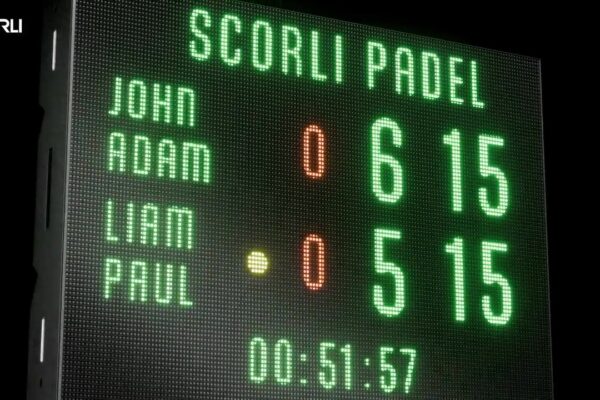
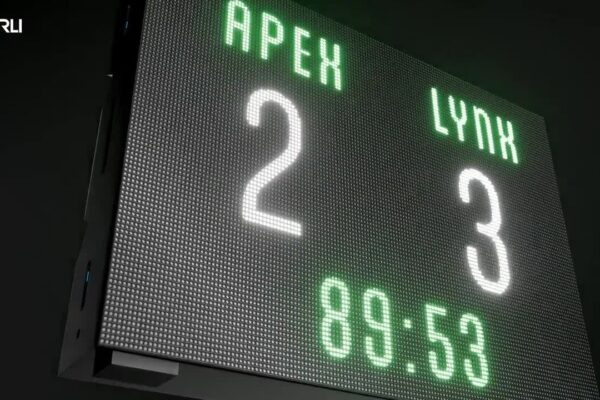
Frames from the studio’s films
Samsung, proteanTecs, Scorli and TRUE NORTH, directed by Daniel Atzil and his team.

proteanTecs Scorli TRUE NORTH proteanTecs Scorli 
TRUE NORTH proteanTecs 
Scorli




Questions and answers: what else do launch teams ask about AI search?
How do you get a new product into ChatGPT’s answers?
Let OAI-SearchBot crawl the launch page, since OpenAI says sites that opt out are not shown in ChatGPT search answers, and allow its IP ranges in your firewall. Put the facts in the page text, near the top. Then make sure press, reviews and profiles say the same thing, because AI engines cite third-party sources heavily.
Does Google need special markup for AI Overviews or AI Mode?
No. Google says you do not need new machine-readable files, AI text files, markup or Markdown, and that there is no special schema.org markup for its AI features. The page must be indexed and eligible to be shown with a snippet, and the site must be included in Search generative AI features in Search Console.
Should I block GPTBot before a launch?
That is a choice about training, not about search. GPTBot collects content that may train OpenAI’s models; blocking it does not remove you from ChatGPT search, which uses OAI-SearchBot. If you block training bots, name them one by one, and keep the search crawlers of OpenAI, Anthropic and Perplexity allowed.
How early should a launch page go live?
As early as secrecy allows. A robots.txt change takes about a day to reach ChatGPT search, and a new page needs to be crawled before it can be cited. If the page must stay private until launch, prepare everything, check access on a test URL, and on the day ping IndexNow and request indexing in Search Console.
Do AI engines prefer press coverage or the brand’s own site?
The studies disagree. Muck Rack’s May 2026 count of 25 million links puts earned media at 84% of AI citations; Profound’s analysis puts brand websites at 57%. Definitions explain part of the gap. For a launch, prepare both: your page states the facts, and other sites repeating them make engines confident.
Do press releases still matter for AI search?
Some do. In Muck Rack’s data, press releases appear mostly in answers about industry trends, and the releases AI engines cite carry about twice as many statistics and more plain, objective sentences than the ones they ignore. A release with real numbers and facts can be cited; a release of slogans will not be.
Is llms.txt worth adding?
It is cheap and harmless, but it is not what gets you cited. Google Search ignores llms.txt, and the crawler documentation from OpenAI, Anthropic and Perplexity does not ask for one. Spend the time on the launch page itself: readable text, the answers near the top, and a FAQ that is open on the page.
How do I see if Google’s AI features show my launch page?
Open the Generative AI performance report in Search Console. It shows how many times links to your site appeared in AI Overviews and AI Mode, by page, country, date and device, and Google rolled it out to all websites worldwide by 31 August 2026. The report may not appear until the site has enough impressions.
What does Bing’s AI Performance report show?
Citations of your pages in Copilot, AI summaries in Bing and some partner integrations: total citations, average cited pages, a sample of grounding queries and citations per page. Since June 2026 it also groups queries by intent and topic, shows your citation share for a query, and compares periods.
Can I ask customers for reviews at launch?
Yes, if you ask honestly. The FTC’s rule bans fake reviews, including AI-generated ones, rewards conditioned on a positive sentiment, and insider reviews that hide the connection. Give early access to real users, ask all of them, disclose any free product or payment, and do not suppress the critical ones.
Should FAQ answers be hidden in an accordion?
Better not. Microsoft advises against hiding important answers in tabs or expandable menus, because AI systems may not render them. Open the answers by default and let readers close them. Keep each answer complete in its first sentence, so the piece an engine lifts still makes sense alone.
How does a launch video help in AI search?
Through its page, not the file. Google’s video guidance centres on a watch page with one video as its main purpose, a valid thumbnail, structured data that matches the video and a file Google can fetch. Publish the transcript there too, so the words in the film exist as text an engine can read.
What is IndexNow and does Google use it?
IndexNow is a protocol for telling search engines that a page was added, changed or removed. One submission is shared with every participating engine, among them Bing, Yandex, Naver, Seznam.cz, Yep and Amazon. Google is not listed as a participant, so request indexing in Search Console as well.
How long after launch do AI answers pick up a product?
There is no fixed time. It depends on when the pages are crawled and indexed, and on how many other sources repeat the facts. Prepare access a week ahead, ping IndexNow on the day, then check Search Console and Bing Webmaster Tools weekly and ask the engines your FAQ questions to see what they say.
Sources
Read on 22 November 2026. Search engines change their documentation; the dates are on each page.
- Google Search Central, “Optimizing your website for generative AI features on Google Search” (updated 10 July 2026)
- Google Search Console Help, “Generative AI performance report (Search)”
- Bing Webmaster Blog, “Introducing AI Performance in Bing Webmaster Tools Public Preview” (10 February 2026)
- Bing Search Blog, “New AI Visibility Insights in Bing Webmaster Tools: Intents, Topics, Citation Share, Compare” (16 June 2026)
- Search Engine Journal, “Bing adds GEO to official guidelines, expands AI abuse definitions” (27 February 2026)
- Microsoft Advertising, “Optimizing your content for inclusion in AI search answers” (8 October 2025)
- OpenAI, “Overview of OpenAI crawlers”
- OpenAI Help Center, “Publishers and developers FAQ”
- Claude Help Center, Anthropic’s crawlers and robots.txt
- Perplexity, “Perplexity crawlers”
- IndexNow, FAQ
- Muck Rack, “What Is AI Reading?” (May 2026)
- GlobeNewswire, “New Research Finds Earned Media Accounts for 25% of All Large Language Model Citations” (30 March 2026), on Muck Rack’s December 2025 data
- WARC, “AI cites brand websites more than press, Reddit or YouTube” (1 September 2026), on Profound’s analysis
- Chen, Wang, Chen and Koudas, “Generative Engine Optimization: How to Dominate AI Search” (arXiv, 10 September 2025)
- US Federal Trade Commission, “Federal Trade Commission Announces Final Rule Banning Fake Reviews and Testimonials” (14 August 2024)
- Google Search Central, “Video SEO best practices” (updated 18 December 2025)
- Answer.AI, “/llms.txt, a proposal to provide information to help LLMs use websites” (3 September 2024)
Further reading on this site
A launch film people repeat needs a director.
Tell Daniel Atzil and his team what your launch has to say. You get a fixed scope and a fixed price, from $5,000, before any work starts, and a film with its watch page and transcript in 7–10 working days from an approved brief.