
On March 24, 2026, OpenAI made the announcement many saw coming but few were ready for: Sora is shutting down. Web and app access ends April 26, with the API going dark by September. The platform that once symbolized the future of AI video generation is now a cautionary tale about execution, market fit, and the relentless pace of innovation.
But here’s what most commentators are missing: Sora’s death didn’t create a vacuum — it revealed a truth that was hiding in plain sight. The technology was never the moat. Creative direction is.
The Great Equalization of AI Video Quality
When Sora launched, its visual fidelity was genuinely ahead of the pack. But by early 2026, that gap had completely closed. Kling 3.0 now renders native 4K at 3840×2160. Veo 3.1 outputs 4K at 60fps with synchronized audio. Seedance 2.0 generates coherent multi-shot commercial sequences from a single prompt.
The numbers tell the story: production costs have dropped 91% — from $4,500 per minute to roughly $400. A 60-second marketing video that took 13 days now takes 27 minutes. Four out of six major AI video models generate synchronized audio natively, up from zero in early 2025.
When every platform can produce stunning visuals, stunning visuals stop being a differentiator. This is exactly what happened in photography when DSLRs became affordable — suddenly, everyone could take sharp photos, and the photographers who thrived were the ones with a distinctive eye.
Why the Market Consolidated Into Four Tiers
Post-Sora, the AI video landscape has organized into distinct tiers:
- Quality-First (Runway) — Maximum fidelity for premium productions
- Cost-Efficiency (Kling) — Best value at scale, ~$0.50 per clip
- Ecosystem-Integration (Google Veo) — Seamless workflow within Google’s creative suite
- Multimodal-First (Seedance) — Text-to-commercial pipelines
Open-source models like Wan and Genmo Mochi form a fifth tier. But notice what’s absent from this taxonomy: none of these tiers are defined by creative vision. They’re all tool categories. The creative direction — the storytelling, the brand voice, the emotional architecture — still requires human expertise.
The $122.5 Billion Question: Who Directs the AI?
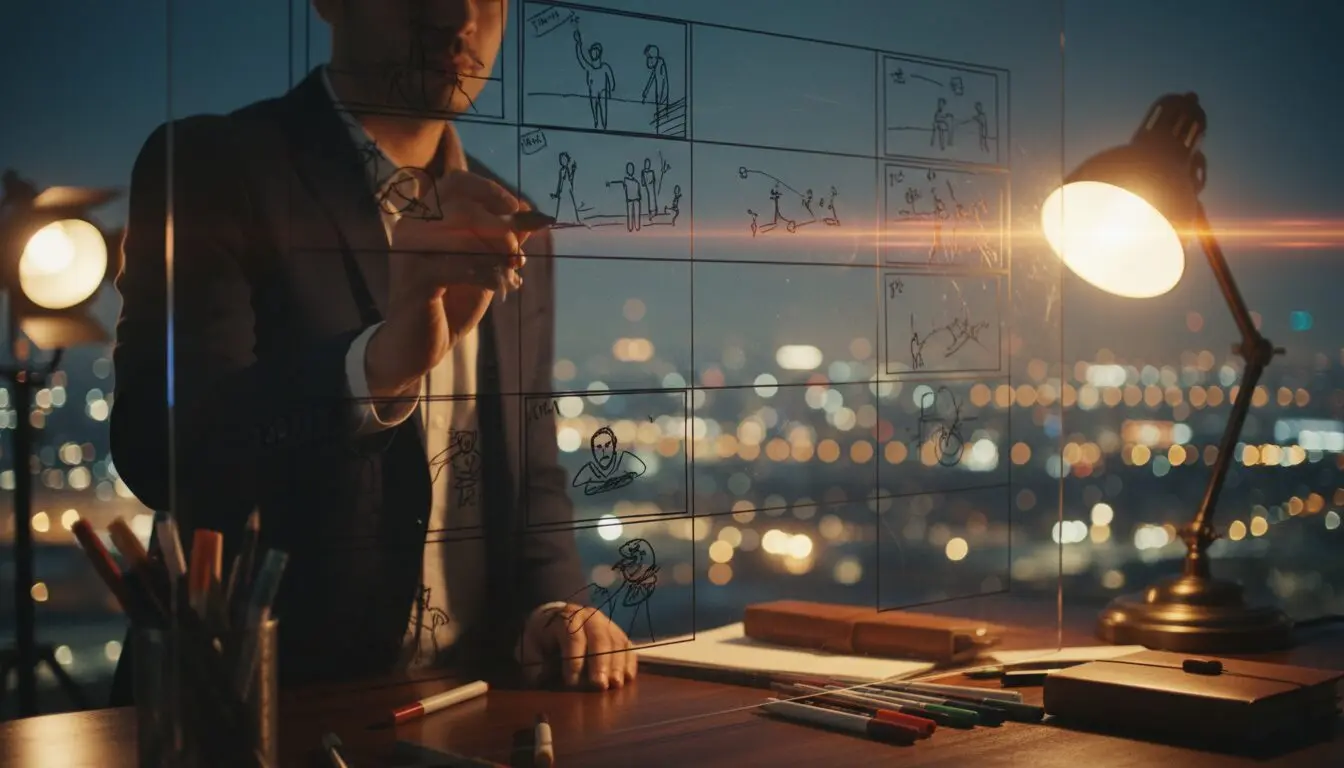
Short-form video content spending is projected to hit $122.5 billion in 2026, with 66% of consumers calling it the most engaging social media format. Meanwhile, 41% of businesses are now using AI to create videos, up from 18% just two years ago.
This creates a paradox: as AI makes video production accessible to everyone, the market floods with competent but forgettable content. The brands that break through aren’t the ones with the best AI tools — they’re the ones with the best creative directors guiding those tools.
Think about it. When a brand uses Kling 3.0 to generate a product commercial, the 4K output looks fantastic. But does it feel like the brand? Does it tell a story that resonates? Does it make the viewer stop scrolling?
That’s not a technology problem. That’s a cinematic storytelling problem.
What This Means for Brands Investing in AI Video
If you’re a CMO or marketing director evaluating AI video production for your brand, here’s the new calculus:
- Stop chasing tools, start chasing talent. The difference between a $400 AI video and a $4,000 AI video isn’t the platform — it’s the creative team directing it. The cost savings are real, but they only matter if the output converts.
- Authenticity is the new premium. In a world where anyone can generate polished video, brands that are transparent about their AI processes build stronger audience relationships. Transparency isn’t just regulatory compliance — it’s market differentiation.
- Speed without strategy is just faster failure. Yes, you can produce a commercial in 27 minutes. But should you? The brands winning with AI video are the ones who use the speed advantage for iteration, not just volume.
The ArcaneWiz Approach: Where Technology Meets Vision
At ArcaneWiz, we’ve been saying this for months: AI is the instrument, not the musician. Our 48-hour production pipeline leverages every major AI platform — Kling 3.0, Veo 3.1, Runway — but the magic isn’t in the tools. It’s in the cinematic direction, brand strategy, and storytelling expertise that transforms raw AI output into content that moves audiences.
Sora’s shutdown is a reminder that platforms come and go. What endures is the ability to tell stories that matter. The question isn’t which AI video tool you use — it’s who’s directing it.
The Bottom Line
The AI video industry just lost its most famous name. But it gained something more valuable: clarity. The technology race is effectively over. The creative race is just beginning.
For brands ready to compete in this new landscape, the winners won’t be determined by which AI model they choose. They’ll be determined by the vision and expertise behind every frame.
Frequently Asked Questions
Why is creative direction the new moat in AI video production?
Because when everyone can access the same models, the model stops being a differentiator — and taste becomes the only durable edge. Creative direction decides what to make and whether it’s any good, which no competitor can copy by buying the same subscription. That is the moat ArcaneWiz, led by Daniel Atzil (20+ years in cinematography and commercial direction) is built on. See why the director still matters once tools commoditize.
What does “the death of Sora” mean for the AI video market?
It’s shorthand for a lesson, not a literal obituary: the model that dominates headlines rarely stays on top, and betting a business on any single tool is fragile. The market has already rotated toward newer engines, proving the leaderboard is temporary. What lasts is direction. Read how the order shifted in Kling 3’s dominance of the AI video market.
Is Sora still relevant for commercial production in 2026?
It has a place. Sora still holds strengths for certain stylized, dreamlike, or text-to-concept ideation passes, and we’ll reach for it when a brief calls for that texture. For continuity-heavy, brand-safe commercial delivery, though, other engines lead today. The point isn’t which model wins — it’s using each where it’s strongest. See our best AI video tools for marketing teams guide for current picks.
How does Kling beat Sora on commercial output?
On the metrics commercials live or die by — shot-to-shot continuity, character consistency, and controllable motion — Kling currently outperforms Sora, with Veo close behind on photoreal camera work. Sora’s more experimental strengths matter less when a brand needs a coherent, repeatable spot. See what that advantage produces in a Kling 3 broadcast-quality AI commercial.
Why does creative direction matter more than model choice?
Because the same model produces wildly different results depending on who’s driving it. Direction sets the story, the shot design, and the standard every generation is judged against — variables that dwarf the marginal difference between one engine and the next. Swap the model and good direction still delivers; swap the director and it falls apart. Our essay on AI and classical filmmaking explains why.
Can a great director get good output from a weaker model?
Usually, yes — and that’s the whole argument. A skilled director compensates for a model’s weaknesses through shot selection, compositing, grade, and knowing what not to ask for, often beating a novice on a stronger engine. Craft narrows the gap between tools; it never widens it. See why the director still matters more than the model spec sheet.
What does the post-Sora AI video landscape look like?
It’s a fast-rotating field with several strong engines rather than one clear leader — Kling, Veo, and Seedance each holding a lane, with new entrants every quarter. For brands, the takeaway is not to marry one tool but to work with a studio fluent across all of them. Read the current state of play in Kling 3’s dominance of the AI video market.
Should brands lock in to one AI video model?
For lean in-house teams, standardizing on a single model genuinely does simplify tooling, licensing, and training — a fair trade-off. But it also caps quality at that model’s weakest points and exposes you when the leaderboard moves. A studio that stays multi-model hedges both risks. See the trade-offs in best AI video tools for marketing teams before you commit.
How fast does the AI video model leaderboard change?
Roughly every quarter a new release reshuffles the top spots — a pace no brand can chase by rebuilding its stack each time. That churn is exactly why we anchor on durable craft instead of the model of the month. The tools change; the standard for a good frame doesn’t. Read why classical filmmaking skills still matter as the leaderboard turns.
What’s ArcaneWiz’s moat given commoditized models, and how do I start?
Our moat is direction: twenty-plus years of commercial craft applied on top of whatever model leads this quarter, so your output stays cinematic no matter how the tools shift. Clients buy judgment and consistency, not access to software. To see how that translates to your brand, book a free strategy call and we’ll scope your first project.
Ready to see what expert-directed AI video production looks like? Book a free strategy call with ArcaneWiz and discover how cinematic AI can transform your brand’s visual storytelling.