
The short answer
The AI art revolution in video is not that machines now make films. It is that a film’s look, which used to be gated by locations, crews and budget, is now gated mainly by taste and direction. For brands, that changes three things: what is affordable to imagine, how quickly an idea can be tested on screen, and what a buyer should actually ask a studio. This guide takes the buyer’s view of that shift, with a decision framework at the end.
Making a film for a tech company? See AI video production for tech companies — investor, launch, demo and training films from $5,000, in 7–10 working days.
It has a different job from the craft guide on videomaking with AI, which covers how a director makes an AI film shot by shot. This page covers the larger question: what has changed, what has not, and what that means when you commission a film.
Every new image technology went through this
Each time a technology changed how images are made, the same three reactions followed. First, a claim that it was not real art. Second, a wave of work that mostly looked alike because everyone used the defaults. Third, a smaller group of people who treated the new tool as a medium, learned its limits and made work that could not have existed before.
| Shift | What it changed | What it did not change |
|---|---|---|
| Photography | Portraits and records no longer needed a painter’s hours. | Composition, light and the choice of what to show. |
| Sound and color in film | Stories could carry voice, music and mood. | Pacing and the cut. |
| Digital cameras and editing | Shooting and cutting became affordable far beyond studios. | Taste, and the ability to tell a story in order. |
| Generative video | The look of a scene can be specified without building it. | Deciding which version is right, and why. |
The pattern is useful because it tells you where the value sits in the current shift. When the tool gets easier, scarcity moves from execution to judgement. The people who direct well become more valuable, not less. That is the position ArcaneWiz works from: the studio is led by Daniel Atzil and his team, with more than 20 years of directing and editing behind the choices on screen.
What actually changed for brands
1. The impossible shot became a briefing item
A camera that flies through a glass city or a product that assembles itself in the air used to mean a visual-effects studio and a long schedule. Now it is one line in a brief. That does not make every impossible shot a good idea. It means the question moves from “can we afford it?” to “does it serve the message?”
2. Concepts can be seen before they are committed to
Style frames and short test shots make an idea visible early. A brand can look at three directions on screen before choosing one, instead of choosing from a storyboard and hoping. That is the real change in risk: you can disagree with the look while it is still cheap to change.
3. Lower cost for the same ambition
Production cost is typically 40–60% lower than traditional production. The honest reading is not “film for free” but “a higher ambition for the same budget, or the same ambition for less.” What a given film costs is on the pricing page: video work starts from $3,000, and tech films from $5,000.
4. More versions of a film are practical
When each version does not need a new shoot, a brand can have a hero film plus cuts for different placements and audiences. The constraint becomes having something worth saying in each, not the logistics of recording it.
What did not change
- A film still needs an idea. A beautiful, empty film is still empty.
- A film still needs a viewer in mind. The same film cannot serve an investor, a customer and a recruit.
- Taste is still the scarce skill. Models produce plausible footage; deciding which footage is right is a human act.
- Claims still need sources. A film that states a fact needs a documented source for it. We do not invent numbers, testimonials or results.
- Truth in advertising still applies. A product film should show the real product.
“Is AI art real art?” A buyer’s answer
The argument runs in circles because it is usually about the tool. A more useful question for a buyer is whether a human being made decisions you can see. If you can point to the framing, the light, the cut and the sound and say “someone chose that”, the film has an author. If you cannot, you are looking at output, whatever it was made with.
This matters commercially for a simple reason: audiences and the platforms that carry your film do not reward sameness. A film built on defaults looks like every other film built on defaults. A film with an author looks like it came from somewhere.
Evidence on the record
Rather than ask you to take a trend on trust, here is what the studio has documented. Each of the films below has its own page, was directed by Daniel Atzil and his team, and was made with an end-to-end AI production pipeline.
| Film | Format | On the record |
|---|---|---|
| Samsung Galaxy S25 commercial | 16:9, 0:29 | A 29-second commercial made with AI. No result is claimed. |
| Anipet brand film | 16:9, 1:02 | The page states it passed 5.4 million views, counted on YouTube. |
| Anipet recruitment video | 16:9, 0:21 | A recruitment video ad. No result is claimed. |
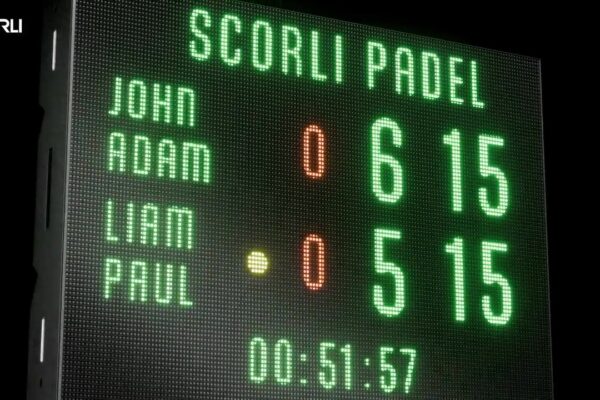
| Scorli investor film | 16:9, 1:00 | A one-minute investor film. No result is claimed. |
A note on reading numbers like these. A view count tells you how many times a film was played on a particular platform. It does not tell you how many people watched, whether the audience was paid for, or whether the film caused any business result, and we do not claim any of those. Be sceptical of any studio, including us, that offers a number without saying where it was counted.
The studio’s cleared credits include Saatchi Gallery (ArtEvol 2025), Kunstmeile Basel, BAIFF Venice, AI Design Awards / Marte Gallery Medellín, Prompt Magazine Book 16, La Garriga Film Fest (the winning trailer), LOST FOUND Tel Aviv, 365 Art Plus Magazine x Japan and Bifnoho Art Gallery. They are the art-world side of the same craft, and a reason to treat these films as authored work rather than automation.
A decision framework: when AI, when live action, when both
The revolution does not mean every film should be generated. Use this table before you commission.
| If your film needs… | AI production fits when… | Live action fits when… |
|---|---|---|
| Impossible or expensive worlds | The concept is the point and the setting is not real. | The real place or person is the point. |
| A known person on screen | You can use a stylised or non-specific character. | The viewer must trust a real, named person. |
| Fast iteration across versions | You will test several looks or cuts. | There will be one version and no changes. |
| Product accuracy | You can provide precise reference images. | The product must be filmed physically in use. |
| Documentary truth | The film is illustrative and labelled as such. | The film documents an event or testimony. |
| Budget flexibility | You want more ambition per dollar. | The shoot already exists and the footage is paid for. |
Many projects use both: real footage where truth matters, generated sequences where the image cannot be shot. If you are weighing the options for a technology company, AI film versus live action for tech companies goes through the trade-offs; for the broader cost comparison, see AI vs traditional production.
Myths and facts
| Myth | What is actually true |
|---|---|
| “AI video is typing a sentence and waiting.” | A finished film is the result of a treatment, style frames, a shot list, many rejected generations, an edit, sound and a grade. The typing is the smallest part. |
| “It will look the same as everyone else’s.” | Defaults look the same. A locked look, approved in style frames and held across every shot, does not. |
| “It means no people are involved.” | Every film here was directed by Daniel Atzil and his team. People make the decisions; the model produces candidates. |
| “It is only for flashy, unreal ads.” | It is also used for investor films, product demos, recruitment and local commercials, as the documented films show. |
| “Cheaper means lower quality.” | Cost is typically 40–60% lower than traditional production and the standard is set by the direction, not by the cost. |
| “A big view count proves it worked.” | A view count is a count of plays on a platform. It says nothing about who watched or why, and it should never be read as a guarantee. |
An illustrative plan for a brand’s first AI film
The plan below is an illustration of how a first project can be sequenced, not a client case and not a promise of results. It is written so you can adapt it to your own timetable.
- Decide the single job. “Make people in our category understand we exist” is not a job. “Make a procurement lead understand in thirty seconds what the product replaces” is. Write the job as one sentence.
- Pick the placement before the length. A spot for a website hero, a vertical social placement and an event screen are different films with different pacing. Decide which comes first.
- Gather the fixed assets. Logo files, palette, reference images of the real product, any required claims with their sources, and two or three reference films.
- Approve the look first. Review style frames before motion. Ask yourself whether you would be comfortable if the whole film looked exactly like these frames. If not, say so now.
- Review the first cut with one voice. Collect notes internally and send a single consolidated list with timestamps.
- Plan the second life of the film. Decide which shorter cuts and formats you will need, so they are in the brief rather than in a later request.
Following this order shortens the work because the expensive questions get answered while they are cheap. It also tends to make the finished film better, because the idea has been argued with before it is produced. If you want help turning this into a brief, the project planner is the place to start.
How to tell a directed film from generated filler
When you watch a studio’s showreel, look for these signs. They are quick to check and hard to fake.
| Look for | Directed film | Generated filler |
|---|---|---|
| Opening | Starts on a decision: a specific image that sets up the idea. | Starts on a generic establishing shot. |
| Continuity | Light, color and character agree across cuts. | Each shot looks like it came from a different film. |
| Rhythm | Shot lengths vary on purpose; there is a held beat. | Every shot is the same length. |
| Detail | Hands, text and product details are correct. | Warped text, melted hands, drifting logos. |
| Sound | Designed: music, effects, silence. | A single music bed over everything. |
| Ending | A deliberate last image and a clear next step. | Fades out when the footage runs out. |
Questions to ask any studio before you commission
- Who directs, and what have they directed before?
- Can I see style frames and a shot list from a finished project?
- How do you keep light, character and product consistent across shots?
- What happens in a revision round, and how many are included?
- What are my rights to the finished film?
- What will you not do (invented claims, fake testimonials, lookalikes of real people)?
- What does the quote cover, and what would change it?
The last question is the one most buyers skip. How to read an AI video quote explains what to compare. On rights, ArcaneWiz grants full worldwide, perpetual commercial and broadcast use of the final film from final payment; who owns an AI-generated commercial sets this out.
Risks worth naming
The revolution has real downsides, and a studio that does not mention them is not being straight with you.
- Sameness. If everyone uses defaults, the feed fills with look-alikes. The answer is direction, not a different tool.
- Likeness and authenticity. Do not generate a real person who has not agreed. Label illustrative content as illustrative. For testimonials, read whether AI testimonial videos are authentic.
- Over-promising. A film cannot guarantee a business result. Treat any promise of one as a red flag.
- Brand drift. Many fast versions can wander off-brand. Lock the look in style frames and hold every cut to it.
What to do next
If you have a film in mind, write the one-page brief first: the viewer, the job of the film, where it plays and who approves. Then pick the service that matches. For a 30-second spot, start with the AI commercial page; for paid creative, AI video ads; for a launch or investor film, the investor pitch video and product demo video pages. Delivery is 7–10 working days from approved brief.
Frequently asked questions
What is the AI art revolution in video production?
It is the shift from film looks being limited by locations, crews and budgets to being limited mainly by direction and taste, now that scenes can be specified and generated. Studios like ArcaneWiz pair classical directing with AI generation.
Can AI-generated video be considered real art?
The tool does not decide that; the decisions do. If a human made visible choices about framing, light, cut and sound, the work has an author. The strongest AI film work comes from people with long experience directing and editing.
Does AI replace filmmakers?
No. It changes where the skill is applied. Execution that used to take a crew is faster; judgement about what to show and how to cut it still sits with the director.
Is AI video cheaper than a traditional shoot?
Cost is typically 40–60% lower than traditional production. The saving depends on the project, and some films, such as documentaries, are better filmed.
How long does an AI film take?
Delivery is 7–10 working days from approved brief. A rush option exists with a surcharge agreed in the quote.
How much does it cost?
Video work starts from $3,000 and tech films from $5,000. See the pricing page for what each tier covers.
What are my rights to the film?
Full worldwide, perpetual commercial and broadcast use of the final film from final payment.
Can you show results for brands that used AI video?
We show documented films and only the figures each page states, with the platform where given. We do not promise results or imply a film caused a view count.
Have a film in mind?
Delivery is 7–10 working days from approved brief. Video work starts from $3,000; tech films from $5,000. See pricing.