A fully AI commercial is a finished advertisement in which every frame, from the first storyboard image to the final mix, is generated and assembled with AI tools under a director’s control. It is the right choice when the idea would be unaffordable or impossible to film, and the wrong choice when the film depends on a real product, real person or real place that the viewer must recognise as real. This guide is the buyer’s version: how to decide, how to brief, how to review, and what to refuse to approve.
Making a film for a tech company? See AI video production for tech companies — investor, launch, demo and training films from $5,000, in 7–10 working days.
Most of what is written about AI commercials is about the tools. This is about the decisions around them, because the tools are no longer what separates a commercial that works from one that embarrasses the brand. Direction does. Daniel Atzil has directed and edited for more than 20 years, and Daniel and his team apply the same discipline to a generated film that a set would demand: a locked idea, a storyboard that is approved before anything is generated, and an edit that decides what stays.
What “fully AI” means, and what it does not
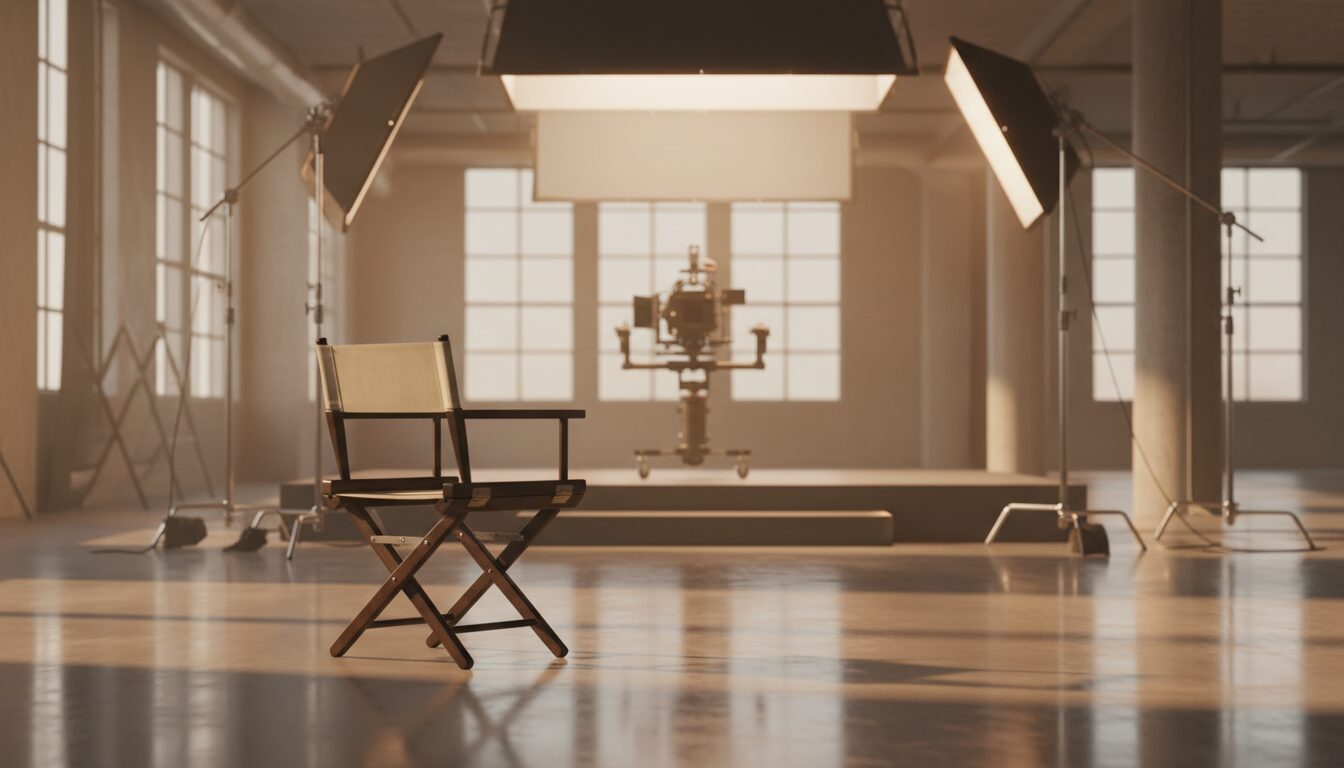
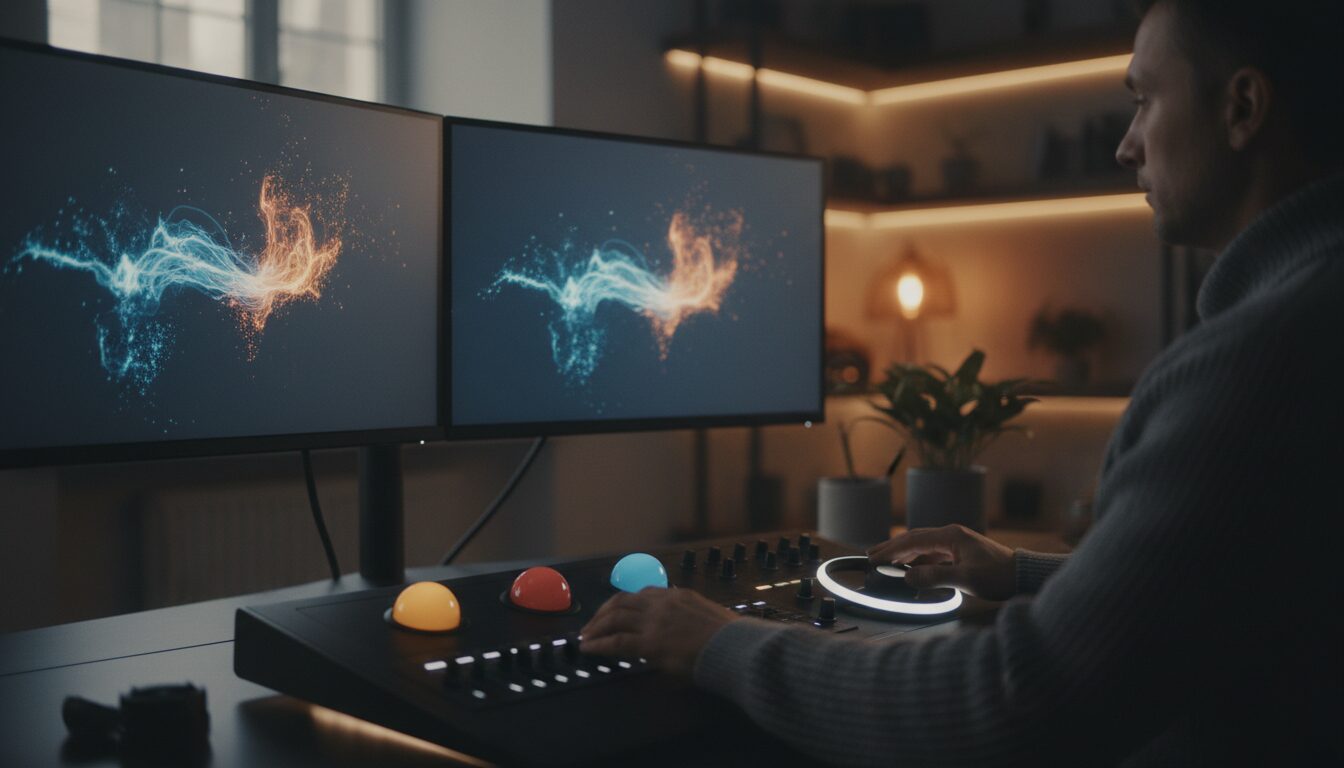
The phrase gets used loosely, so here is the working definition we use with buyers. In a fully AI commercial there is no camera crew, no location, no cast to book and no physical set. The imagery comes from image and video generation models. At ArcaneWiz that pipeline has included Midjourney for look development, Veo, Kling and Seedance for motion, and conventional editing, grading and sound tools to finish the film. The models produce raw material. The commercial is what a director does with it.
That last sentence is the whole argument of this post. A model can give you a hundred beautiful seconds. It cannot decide that the product should appear at second twenty-four rather than second six, that the music should drop out before the line, or that the third shot is a lovely image that belongs in a different film. Those are directing decisions, and they are the reason a generated film either feels like an advertisement or feels like a screensaver.
“Fully AI” also does not mean “no humans”. It means no physical production. People write the idea, direct every shot, choose between generations, cut the film and sign it off. When a studio tells you a commercial was “made by AI”, ask who decided what stayed in the cut. If the answer is a prompt operator, you are buying footage. If the answer is a named director with a film background, you are buying a commercial.
Fully AI, hybrid or live action: a decision table
The honest question is not whether AI is better than a shoot. It is which method fits this particular film. Use the table below before you brief anyone, including us.
| Your film needs | Fully AI | Hybrid | Live action |
|---|---|---|---|
| A world that does not exist or cannot be reached (another planet, a macro view inside a machine, a city in a different century) | Strong fit | Possible | Very costly |
| A product shown exactly as manufactured, with legible labels, ports and finishes | Needs care: real product assets must be supplied and checked | Strong fit: real product plates, generated surroundings | Strong fit |
| A named real person speaking in their own voice | Not appropriate without that person’s explicit agreement | Possible with agreement | Strong fit |
| Many variations of one idea (formats, cutdowns, regions) | Strong fit: a locked look makes variants cheaper | Strong fit | Costly per variant |
| A real location the audience will recognise (your shop, your office) | Weak fit | Possible | Strong fit |
| Proof of a real result or a real customer | Do not fabricate it | Use real footage | Strong fit |
Two rows in that table are deliberate warnings. A generated person must never be presented as a real customer giving a real testimonial, and a generated product must never misrepresent what the buyer will receive. Both are ethical failures before they are legal ones, and both are the fastest way to turn a clever commercial into a brand-trust problem. If you want a longer treatment of that boundary, our note on who owns an AI-generated commercial covers rights, and the AI testimonial video page states plainly where we draw the line.
Where a fully AI commercial earns its place
Four situations come up repeatedly in the briefs we read.
The idea is bigger than the budget
If the concept needs scale, a stylised world or a visual metaphor, the cost of building it physically is the usual reason it is cut from the brief. Generation removes that reason. The question then becomes whether the idea is good enough to deserve the budget you saved.
You need the same film in several formats
A brand that runs a 16:9 film, a vertical cutdown and a few shorter versions is paying for the same look several times in a conventional production. With a locked visual language, adapting a film is mostly editorial work. This is where the 40–60% lower than traditional production that ArcaneWiz quotes is easiest to see, and it is why we recommend asking for the variants in the original brief rather than as an afterthought. For the numbers behind that, see the AI video production cost breakdown.
The product cannot be photographed
Software, chips, infrastructure and financial products have no natural subject. A fully AI film can build one. Our company film for a deep-tech client explains chip-health monitoring, a product you cannot point a camera at, and the Scorli investor film is a one-minute 16:9 film made the same way. Both are on the AI video production for tech companies page, and tech films start from $5,000. See pricing for what a tech film includes.
You need to move before a shoot can be scheduled
Standard delivery is 7–10 working days from approved brief. Where a launch date is fixed and the schedule is tight, a rush option exists with a surcharge agreed in the quote.
A documented example: the Samsung Galaxy S25 commercial
The clearest example on this site of what “fully AI, directed” looks like in practice is the Samsung Galaxy S25 AI commercial: a 29-second, 16:9 film made by Daniel Atzil and his team with an end-to-end AI production pipeline. It is worth watching with the questions in this guide open next to it.
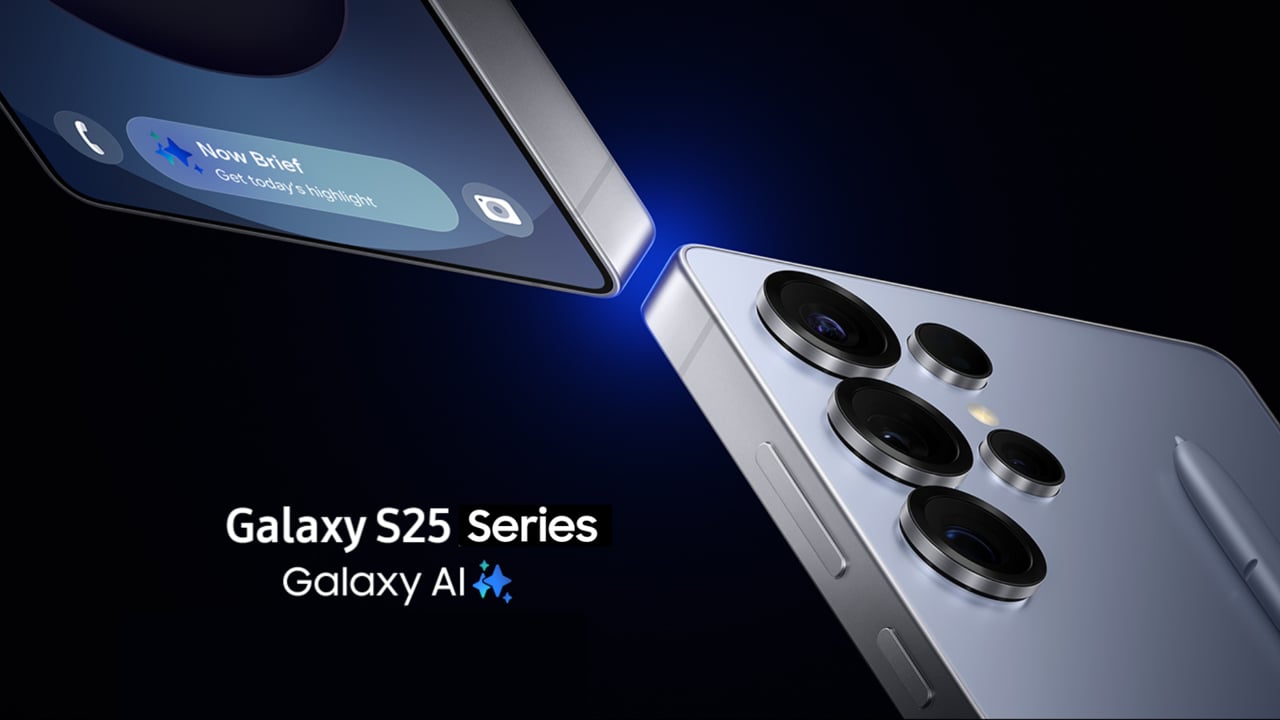
Notice what a 29-second film has to do. It has to establish the product quickly, hold a single visual idea, keep the object looking like the object it is, and end on a frame a viewer can remember. There is no room for a shot that is merely impressive. That constraint is the director’s job, and it is the same constraint whether the footage came from a lens or a model.
For a different kind of proof, the Anipet brand film runs 1:02 in 16:9 and has passed 5.4 million views, counted on YouTube. The CatRex commercial, a 23-second vertical film made for Anipet, passed 3.3 million views on Anipet’s TikTok. Views are views, not people, and we do not claim that either film caused a particular sales result. We cite them because they show these formats being watched at volume, not because they predict what your campaign will do.
How to brief a fully AI commercial
The quality of a generated film is decided largely before generation starts. A thin brief produces generic imagery because the model fills every gap with the most average answer available. A good brief closes the gaps on purpose. Here is a template you can copy into an email.
The one-page brief template
- The viewer. One sentence on who is watching, where, and what they were doing a second before the ad appeared.
- The single message. One thing the viewer should believe or do afterwards. If you have three, you have three films.
- The product truth. What must be shown accurately: the logo, packaging, interface, colour. Attach the real files. Anything not supplied will be invented.
- The feeling. Three adjectives and one reference (a film, a photograph, a painting). References beat adjectives.
- The do-not-show list. Competitor cues, regulated claims, anything legal has already vetoed.
- The formats. Length, aspect ratios, where each will run, and which cutdowns you need.
- The approvers. Who signs off, and whether anyone outside the room (legal, regulator, agency) must see it first.
- The audio. Voiceover language, music direction, and whether the film must work with the sound off.
Item three is the one most often skipped, and it is the one that prevents the most rework. If the product has a precise look, it should be supplied, not described.
From brief to final cut: what you should expect to see
You should see the film at several stages, and be asked to approve each one before the next begins. The sequence below is the shape of a well-run job. The detail of how we run it is on the brief-to-final-cut process page.
| Stage | What you receive | What you decide |
|---|---|---|
| 1. Concept | A written idea and a short treatment | Is this the film we want to make? |
| 2. Look development | Reference frames that fix colour, light and style | Does this look like our brand? |
| 3. Storyboard | A shot-by-shot board | Approve before anything is generated |
| 4. Motion | Generated sequences, selected by the director | Does the movement feel right? |
| 5. Edit and sound | A rough cut with music and voice | Pacing, message and claims |
| 6. Finish | Grade, final mix and the deliverables | Final approval |
The storyboard gate is the important one. Approving it is cheap; changing the idea after generation is the expensive thing you are trying to avoid. A studio that cannot show you a storyboard before it generates is asking you to approve a film it has not yet planned.
How to review a generated commercial: the checklist
Reviewing a generated film is different from reviewing a shot one. Footage from a camera is physically consistent; footage from a model is only consistent if somebody made it so. Use this list on every cut.
- Product accuracy. Pause on every frame that shows the product. Check shape, proportions, logo, text and colour against your supplied files.
- Hands, faces and text. These are where generated images most often break. Look at fingers, teeth, eyes, and any lettering that should be legible.
- Continuity. Does a character, a prop or a costume change between shots? Does the lighting direction hold?
- Physics. Do liquids, cloth and smoke behave plausibly for the length of the shot, not only the first second?
- Motion that means something. Is the camera moving because the story needs it, or because the model could do it?
- Claims. Is every statement on screen and in the voiceover one you can substantiate? A beautiful film cannot make an unsupported claim safe.
- Sound with the picture off. Does the audio carry the message by itself? Does it work with the sound off?
- The first and last two seconds. Most viewers decide in the first, and remember the last.
Common mistakes, and how to avoid them
| Mistake | Why it hurts | The fix |
|---|---|---|
| Briefing with adjectives only (“cinematic, premium, modern”) | Every model reads these the same way, so every ad looks the same | Give one visual reference and the real product files |
| Cramming three messages into one spot | The viewer remembers none of them | One message per film; make a second film for the second message |
| Judging on a single hero frame | A frame can be perfect while the movement is not | Review the moving cut, at full speed and frame by frame |
| Approving the idea after generation | Changing the idea means regenerating | Lock the storyboard first |
| Treating the model as the creative | You get footage with no point of view | Hire the person who decides, not the person who prompts |
| Unclear usage rights | You discover the limits after the campaign is live | Ask for the rights in writing before you approve the quote |
| Skipping the sound | Silence, or generic music, makes an expensive picture feel cheap | Treat audio as part of the brief, not a finishing touch |
What it costs, and what is included
An AI commercial at ArcaneWiz starts from $3,000 per video, and tech films (investor, demo, onboarding, training and product films) start from $5,000. Those are floors; the price of your film depends on length, complexity and the number of deliverables, and the pricing page explains what is in each tier. At comparable craft, that typically lands 40–60% lower than traditional production. If you want to understand how to compare a quote from us with a quote from anyone else, how to read an AI video quote walks through the line items.
On rights, you receive full worldwide, perpetual commercial and broadcast use of the final film from final payment. Read that sentence carefully and ask every studio for the equivalent in writing. It is a statement about what you can do with the film, and it should be as precise as the price.
Is a fully AI commercial right for your next campaign?
Run these five questions. If you answer yes to the first three and no to the last two, a fully AI commercial is probably a good fit.
- Is the idea stronger when it is stylised or imagined than when it is documentary?
- Can the product be supplied as accurate files and checked frame by frame?
- Do you need more than one format or cutdown from the same idea?
- Does the film depend on a real, recognisable person or place?
- Is the point of the film to prove a real result or customer?
If the answers are mixed, a hybrid is usually the honest recommendation, and a studio worth hiring will say so before taking your money. The same applies to AI commercial production as a service: the right first step is a conversation about the film, not a quote for a format.
When you are ready, send the one-page brief through get started. Daniel and his team read it and reply with an honest view of whether this is a film worth making this way.
Keep reading
- Behind the scenes: how ArcaneWiz produces a broadcast-quality AI commercial
- What makes an AI commercial look cinematic: the 7 principles we follow
- AI video production cost breakdown 2026
Frequently asked questions
What is a fully AI commercial?
A finished advertisement in which every frame is generated and assembled with AI tools under a director’s control, with no physical set, crew or location. People still write the idea, direct each shot, choose between generations and cut the film.
Can a fully AI commercial be used on television?
Yes, when it is finished to broadcast specification. What matters is the finishing: resolution, grade, audio levels and the delivery format the broadcaster asks for. Our rights wording covers full worldwide, perpetual commercial and broadcast use of the final film from final payment.
How much does a fully AI commercial cost?
AI commercials at ArcaneWiz start from $3,000 per video, and tech films start from $5,000. The final price depends on length, complexity and the number of deliverables. See the pricing page.
How long does it take?
Standard delivery is 7–10 working days from approved brief. A rush option exists with a surcharge agreed in the quote.
Will it look like real footage of my product?
Only if you supply accurate product files and the film is reviewed frame by frame against them. Anything not supplied will be invented by the model, which is why product accuracy is the first item on the review checklist above.
Do I need to supply a script?
No. A one-page brief is enough to start: the viewer, the single message, the product truth, the feeling, the formats and the approvers. Daniel and his team develop the concept and the storyboard from it, and you approve the storyboard before generation.
Can I get the same film in vertical and widescreen?
Yes, and it is cheaper to ask in the original brief. A locked visual language makes cutdowns and alternative aspect ratios mostly editorial work. Name every format and placement up front.
Who owns the finished film?
You receive full worldwide, perpetual commercial and broadcast use of the final film from final payment. Ask any studio for the equivalent wording in writing before you approve a quote.